Olduvai Gorge
Nicknamed the "Cradle of Mankind," Olduvai Gorge is a 30-mile canyon and one of the world's most vital paleoanthropological sites. Explore millions of years of history through fossil treasures, an insightful museum, and lectures at the gorge’s edge.
Details
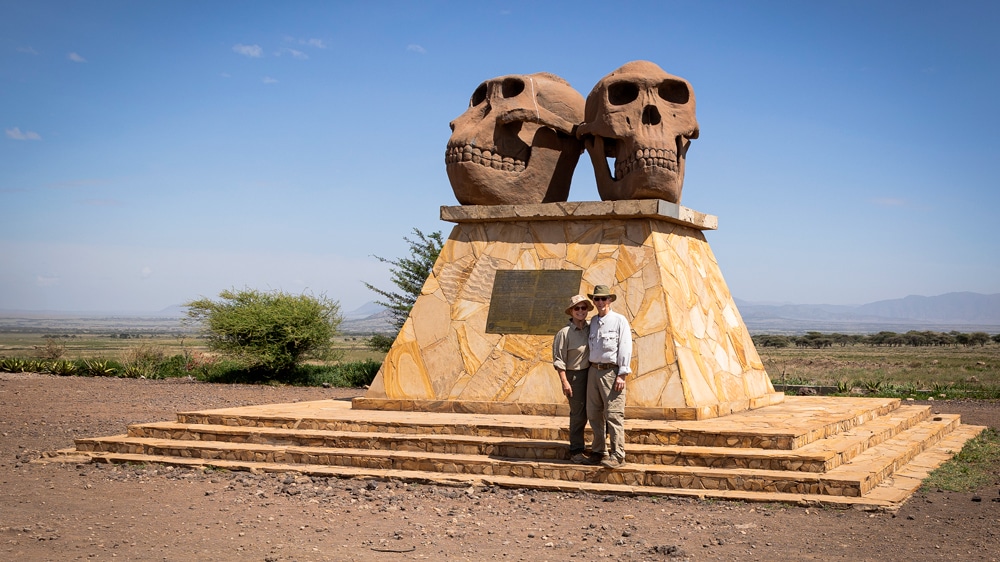
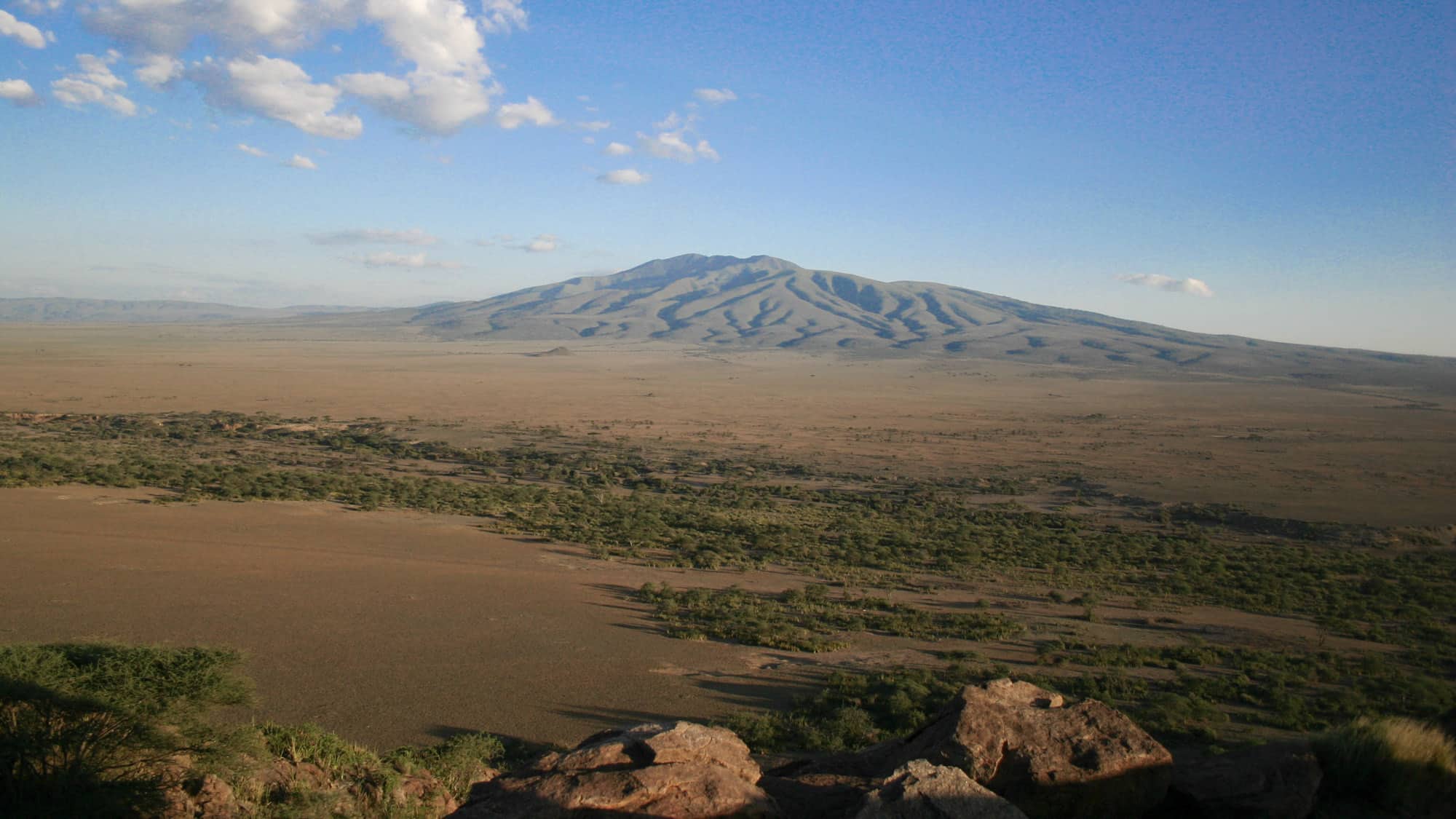
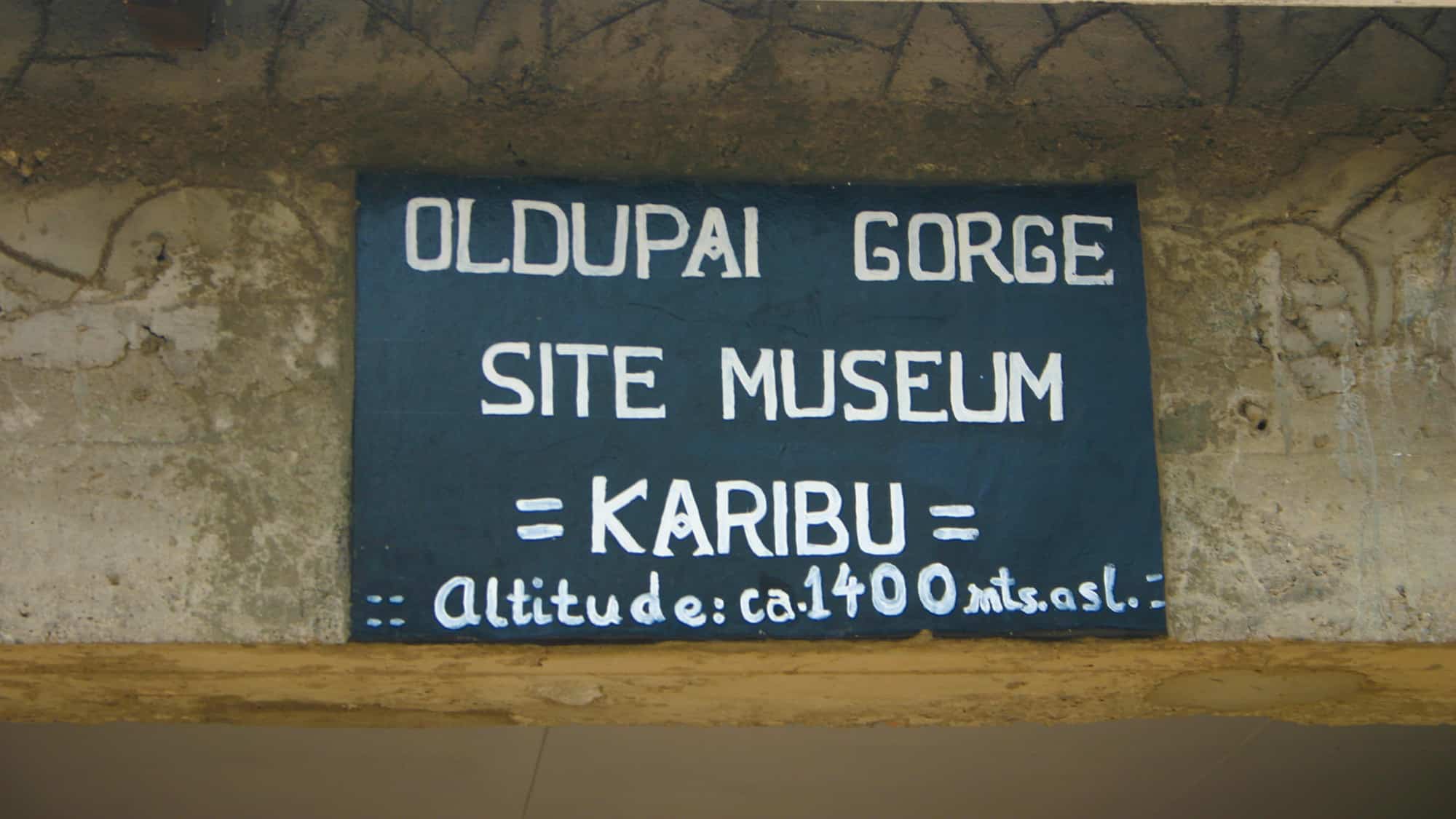
Olduvai Gorge is arguably the most important paleoanthropological site in the world. Located within the Ngorongoro Conservation Area, this 30-mile-long canyon has earned the title “Cradle of Mankind” for providing a nearly continuous record of human evolution spanning the last two million years. It is a place where the deep past feels tangible, offering visitors a unique opportunity to stand on the very ground where our earliest ancestors walked, hunted, and developed the first tools. The site features a state-of-the-art museum and a visitor’s center perched on the edge of the gorge, providing a gateway to understanding the origins of the human story.
The fame of Olduvai Gorge is inextricably linked to the work of Louis and Mary Leakey, who began exploring the site in the 1930s. Their decades of meticulous research yielded discoveries that fundamentally changed our understanding of human origins:
- *Zinjanthropus boisei: In 1959, Mary Leakey discovered the skull of Paranthropus boisei (then called Zinjanthropus), an early hominid with massive jaws that proved humans had a much older ancestry in Africa than previously thought.
- *Homo habilis: Shortly after, the Leakeys discovered “Handy Man,” the first known tool-maker, who lived roughly 1.8 million years ago.
- The Laetoli Footprints: While located slightly south of the gorge proper, the 3.6-million-year-old bipedal footprints discovered by Mary Leakey’s team were processed through the Olduvai research hub, providing the earliest proof of upright walking.
- The Oldowan Tool Culture: The gorge gave its name to the “Oldowan” industry—the world’s earliest stone tool technology, consisting of simple choppers and flakes used by our ancestors to butcher meat and crack bone.
The gorge’s significance is primarily due to a unique geological fluke. Millions of years ago, a large lake covered the area, and volcanic eruptions from the nearby Highlands (like Ngorongoro and Olmoti) repeatedly layered the region in ash, perfectly preserving fossils and artifacts.
Roughly 30,000 years ago, a seasonal river began cutting through these layers, exposing a vertical timeline of Earth’s history. The gorge is approximately 290 feet deep, and its walls reveal five distinct “beds” or layers. Each layer represents a different era, climate, and suite of species, allowing scientists to date finds with incredible precision through a process called potassium-argon dating of the volcanic ash.
Though the “treasures” of Olduvai are buried in the earth, the surface remains a vibrant, hardy ecosystem:
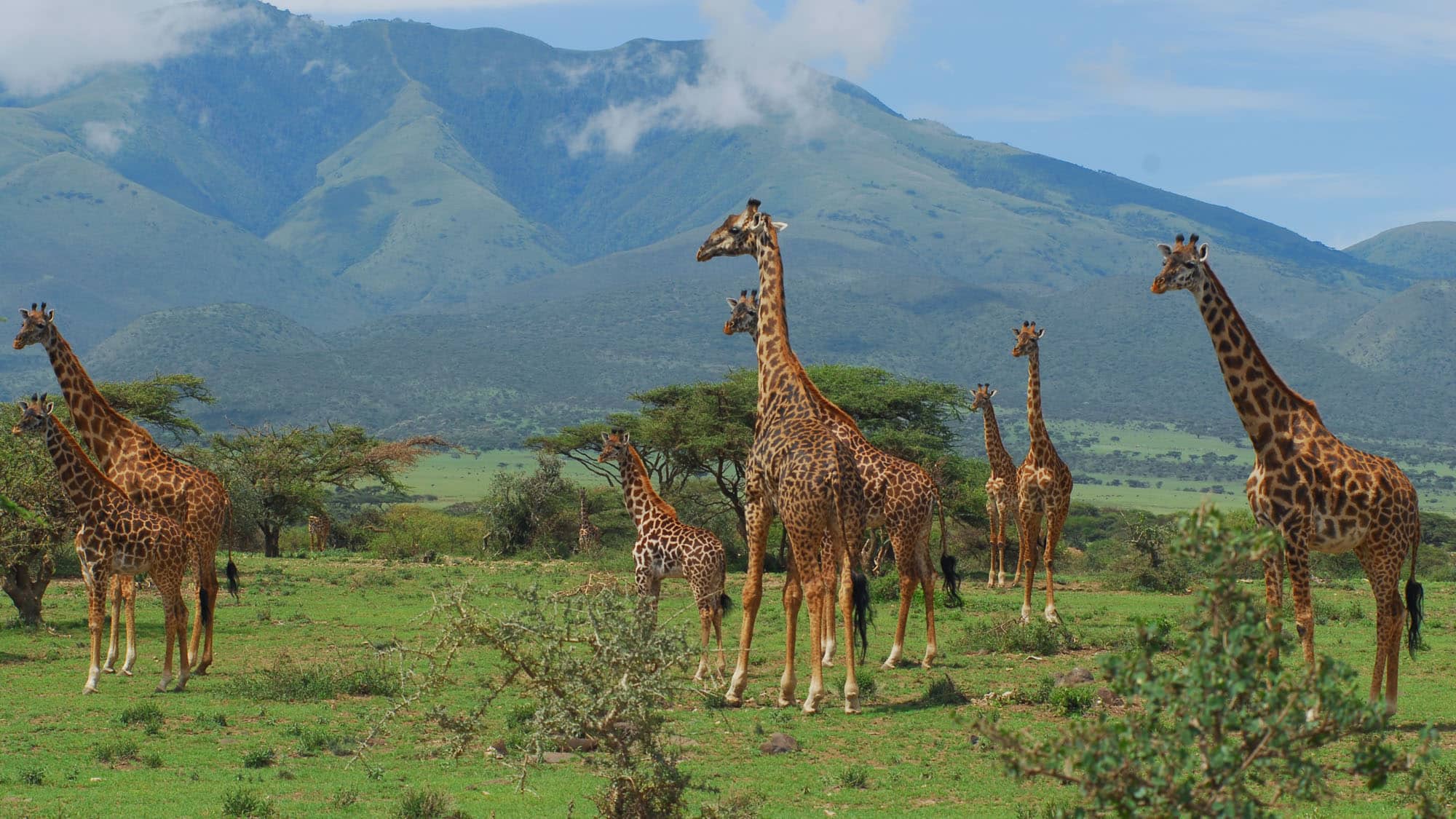
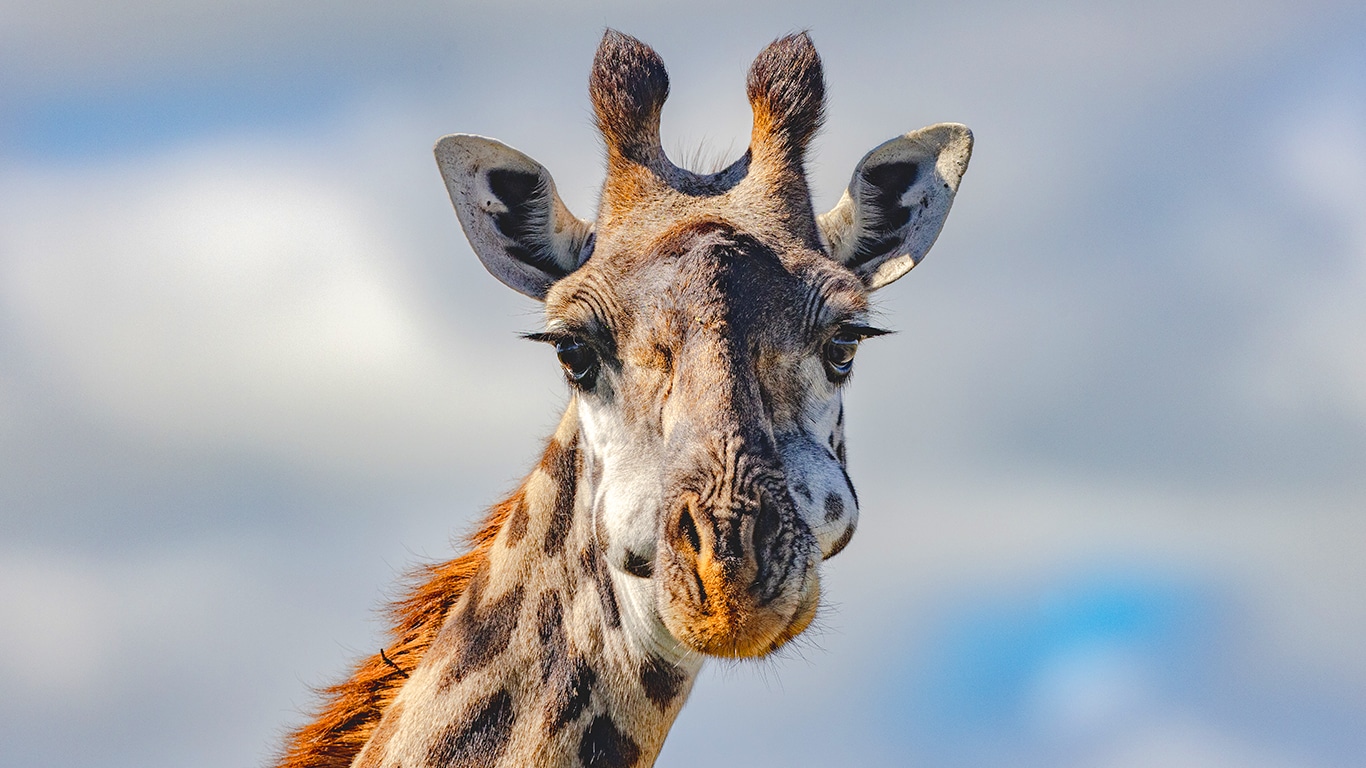
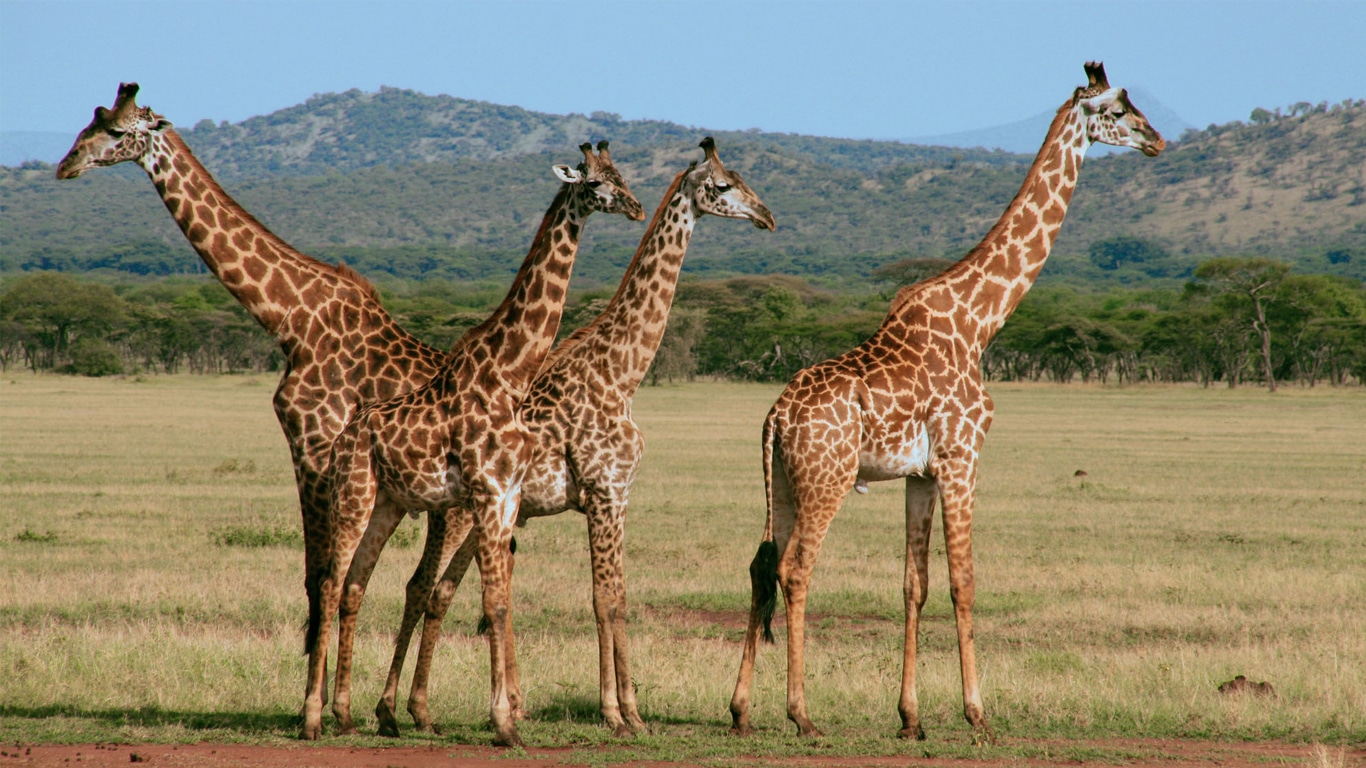
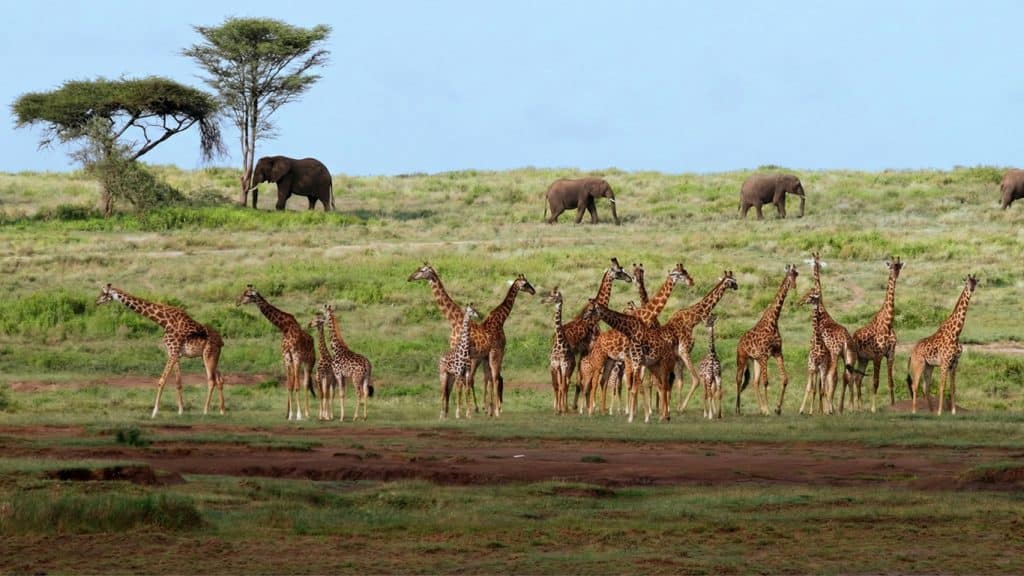
- The Browse: Because the rim is dotted with acacia and desert-adapted shrubs, it is a favorite haunt for resident giraffes, whose silhouettes against the deep canyon are a photographer’s dream.
- Micro-Fauna: The rocky outcrops and hot, dry floor of the gorge are perfect for the Agama lizard—famed for the males’ bright orange and blue breeding colors—and the Leopard tortoise.
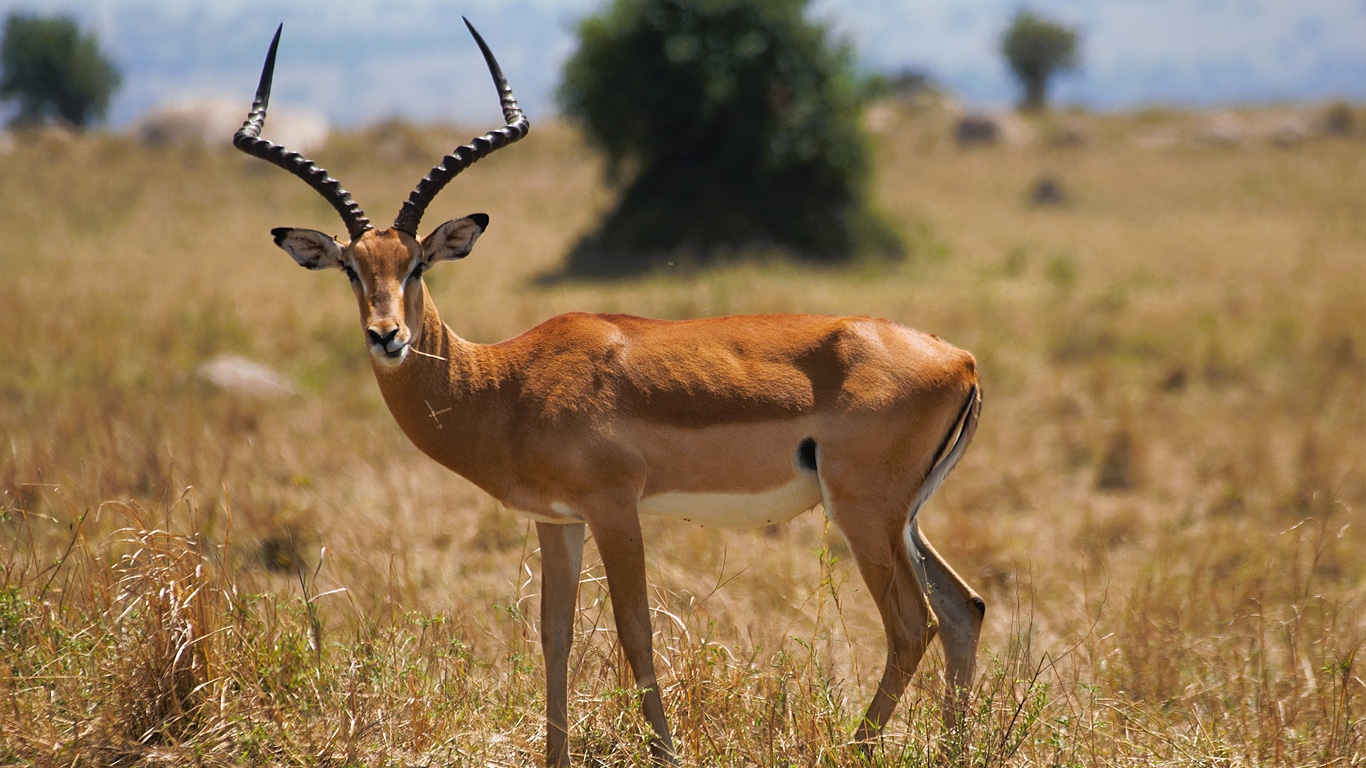
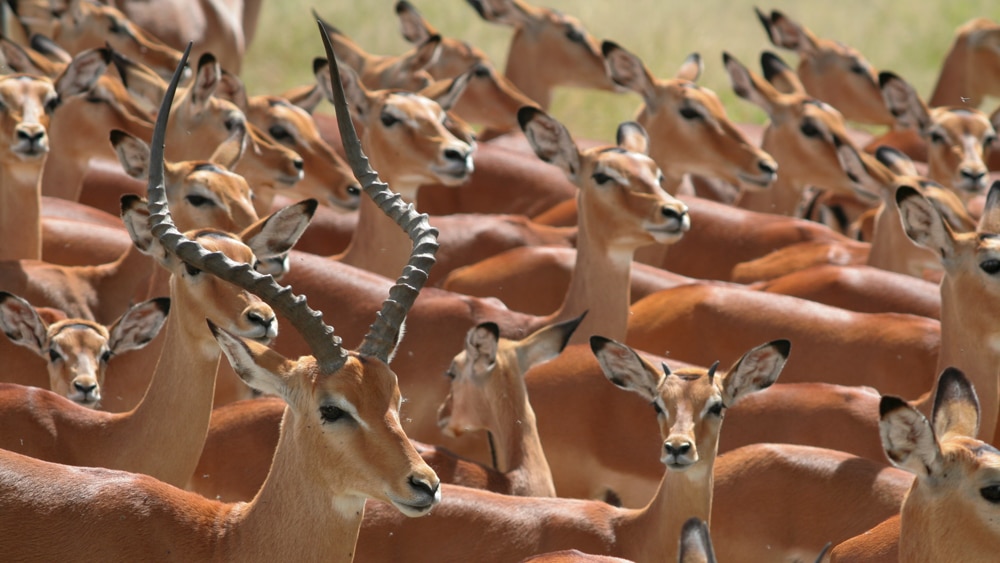
- Arid-Land Specialists: Look for the tiny Kirk’s Dik-Dik and the Grant’s gazelle, both of which can survive with very little water.
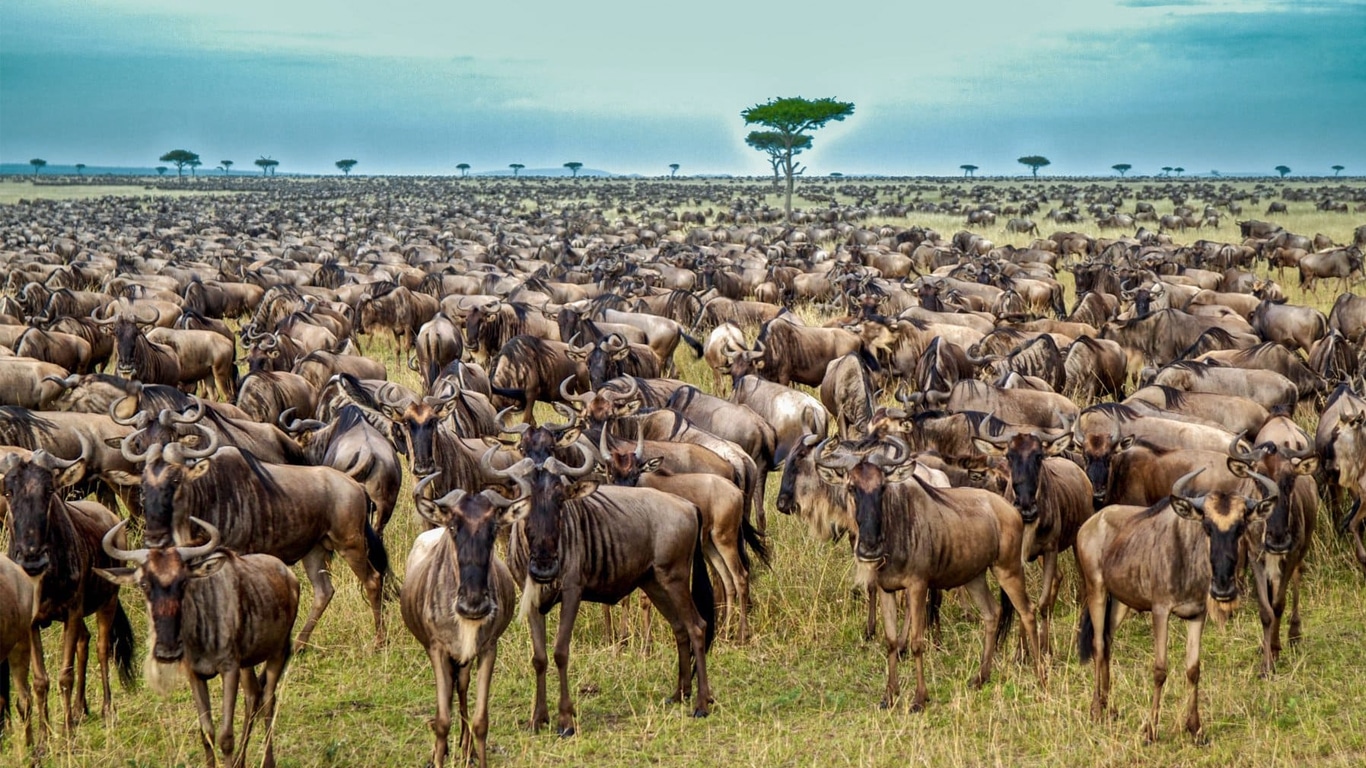
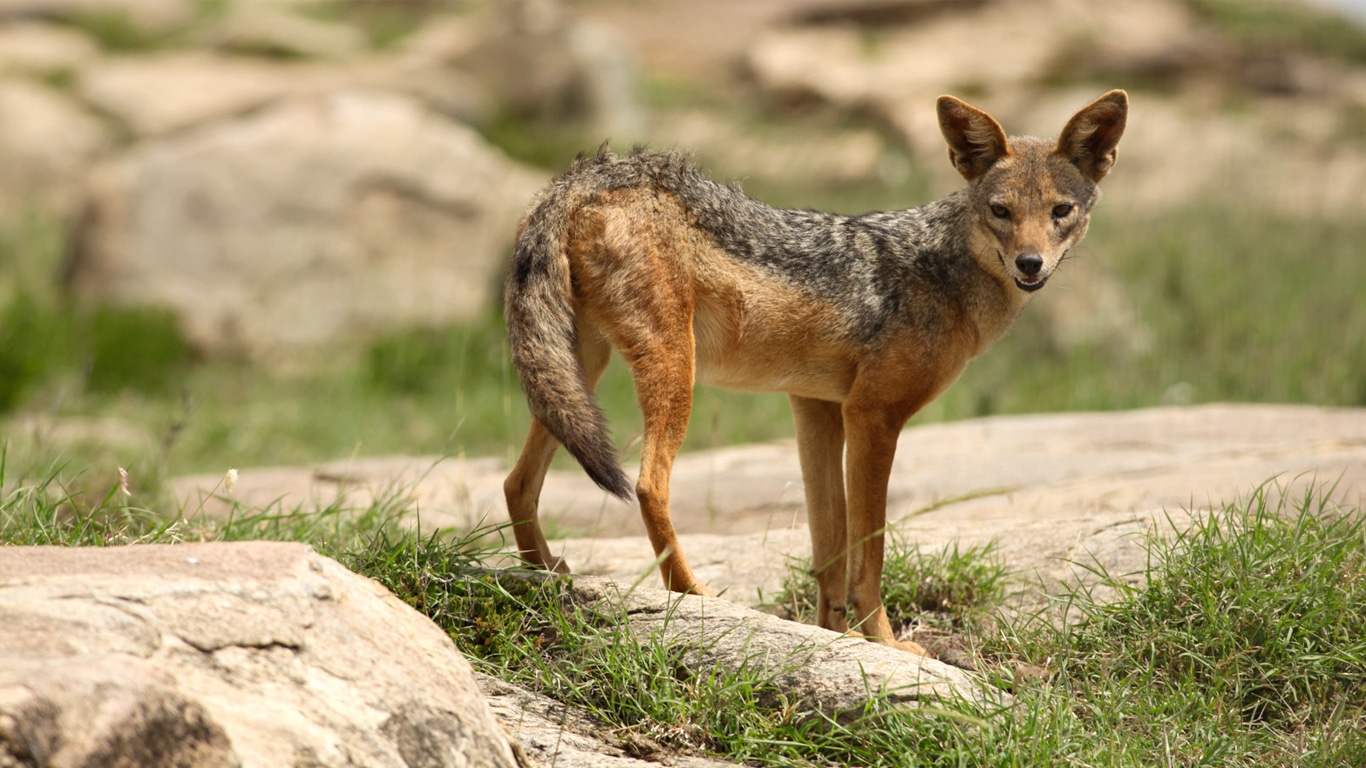
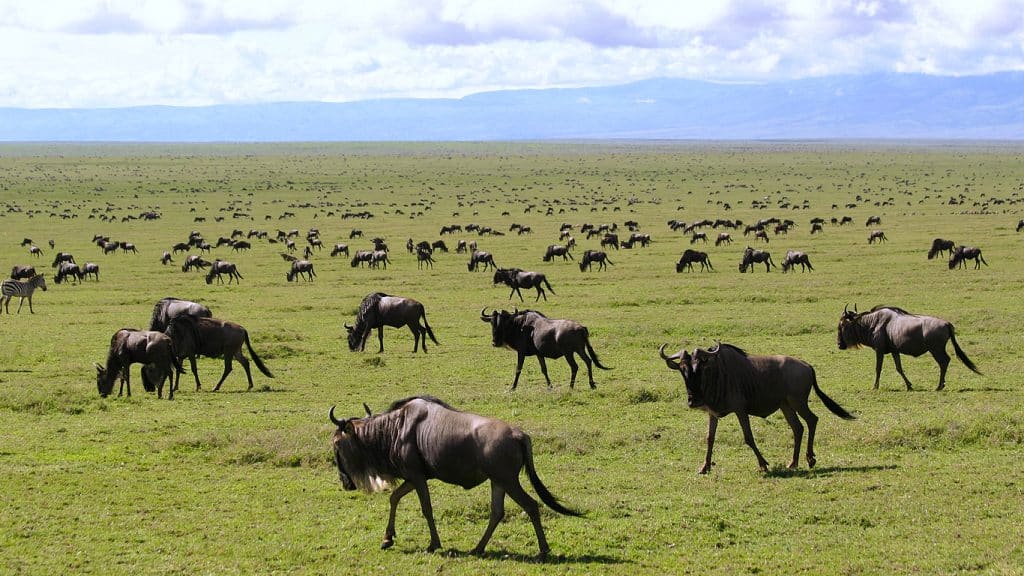
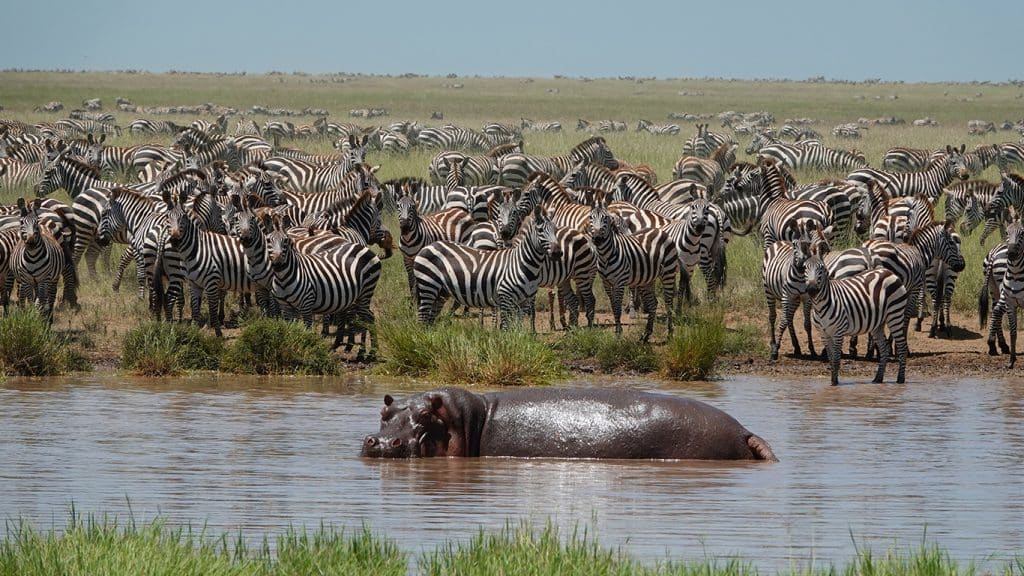
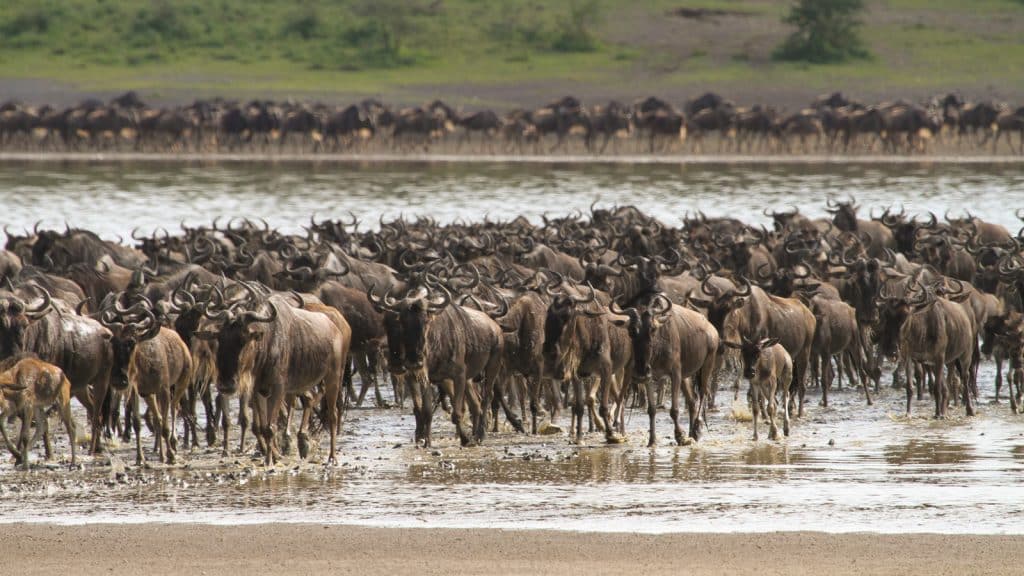
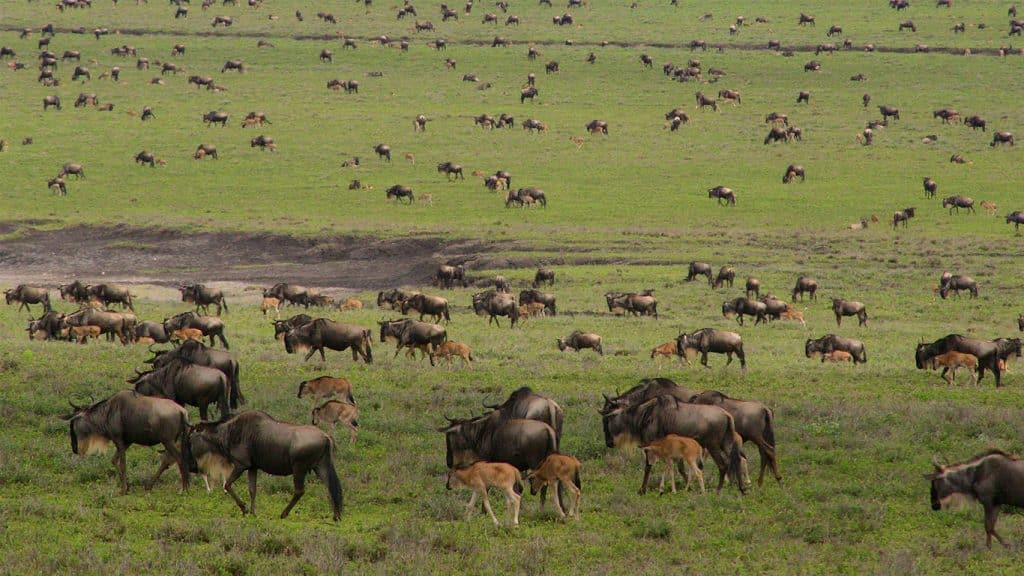
- The Rim: In the green season, the surrounding plains are occupied by the Great Migration, but the gorge itself remains a permanent home to golden jackals and specialized birdlife like the Verreaux’s Eagle, which hunts along the cliffs.
Seasonal Highlights
| Month | Season | Weather | Wildlife Sightings | Rec. |
|---|---|---|---|---|
| Jan | Green Season | 60 - 85 F Mostly sunny with few showers |
Wildebeest Migration and Zebra Migration, Lion, Cheetah, Elephant | No |
| Feb | Green Season | 60 - 85 F Mostly sunny with few showers |
Wildebeest Migration and Zebra Migration, Lion, Cheetah, Elephant, Wildebeest Calving | No |
| Mar | Green Season | 60 - 83 F Mostly sunny with few showers |
Wildebeest Migration and Zebra Migration, Lion, Cheetah, Elephant | No |
| Apr | Green Season | 60 - 83 F Mostly sunny with few showers |
Wildebeest Migration and Zebra Migration, Lion, Cheetah, Elephant | No |
| May | Northward Migration | 56 - 81 F Mostly sunny |
Wildebeest Migration and Zebra Migration, Lion, Cheetah, Elephant | No |
| Jun | Beginning of Dry Season | 56 - 81 F Mostly sunny |
Wildebeest Migration and Zebra Migration, Lion, Cheetah, Elephant (early June only) | No |
| Jul | Dry Season | 60 - 83 F Mostly sunny |
- - - - - | No |
| Aug | Dry Season | 55 - 81 F Mostly sunny |
- - - - - | No |
| Sep | Dry Season | 55 - 81 F Mostly sunny |
- - - - - | No |
| Oct | Dry Season | 60 - 83 F Mostly sunny |
- - - - - | No |
| Nov | Southward Migration | 60 - 83 F Mostly sunny with few showers |
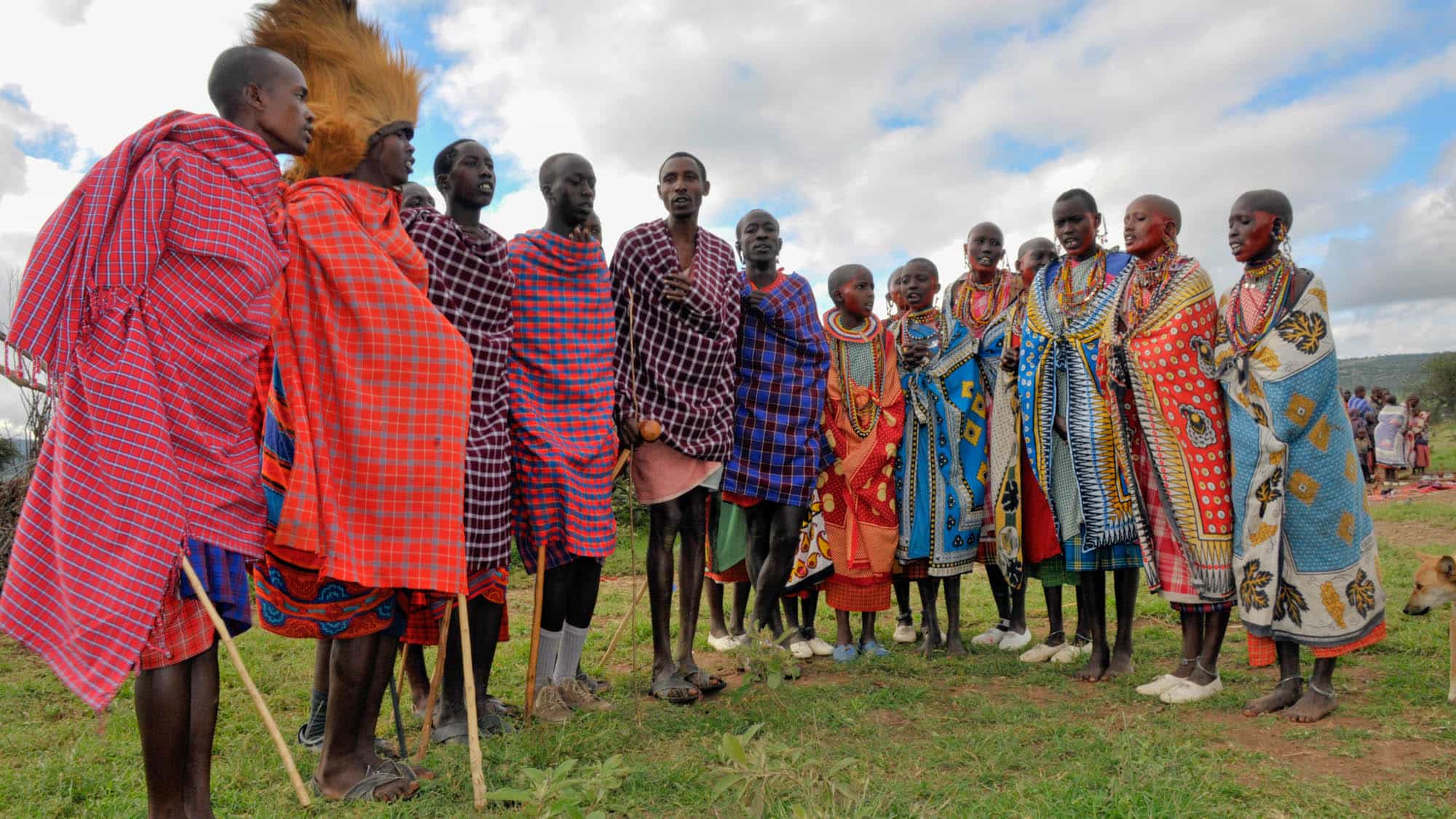
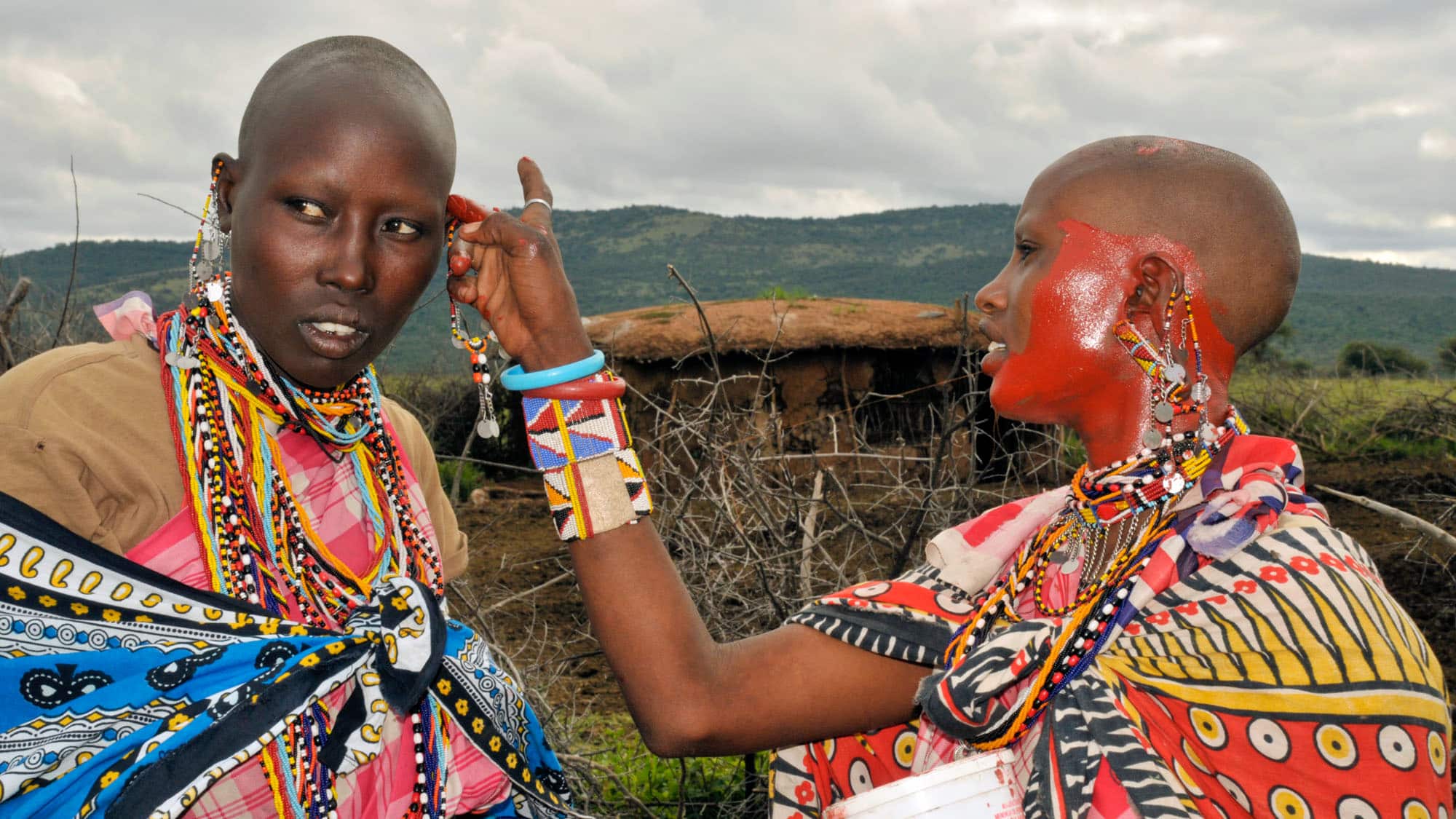
Giraffe, gazelle, Walking Safaris and Cultural Interactions | Yes |
| Dec | Beginning of Green Season | 60 - 83 F Mostly sunny with few showers |
Wildebeest Migration and Zebra Migration, Lion, Cheetah, Elephant | Yes |
Nearby Lodges
Nearby Attractions

What are you waiting for?
Create Your Own Itinerary
Receive instant day-by-day trip details designed just for you including rates, seasonal highlights, guest testimonials, photos & more!
Get In Touch
Our Safari Specialists Are Ready to Help Kickstart Your Adventure
Toll-Free
US Office
31244 Palos Verdes Dr. West, Suite 239 Rancho Palos Verdes, CA 90275
Hours: Daily 8AM - 8PM PST
Drop Us A Line
Leave your contact info below