January 
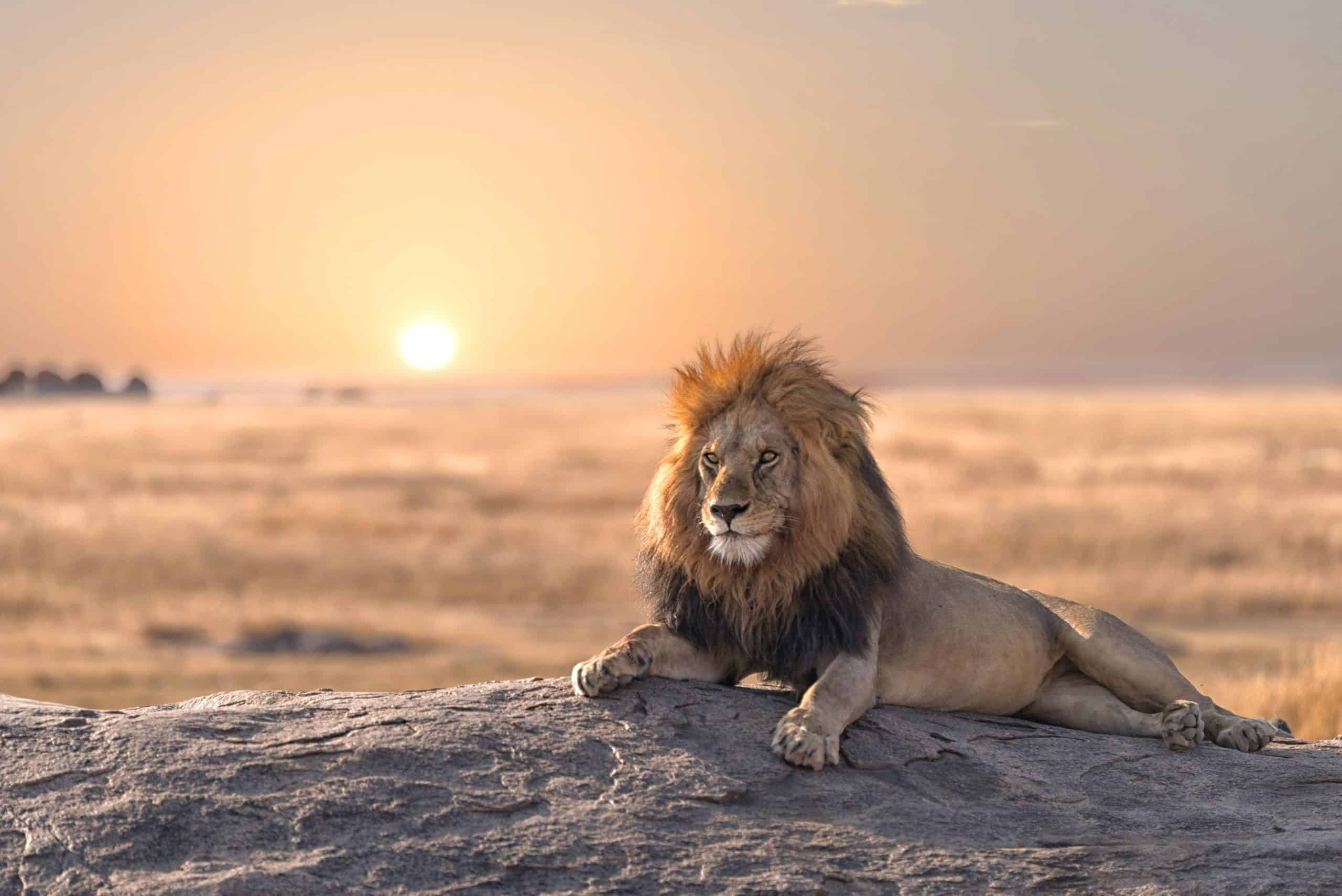
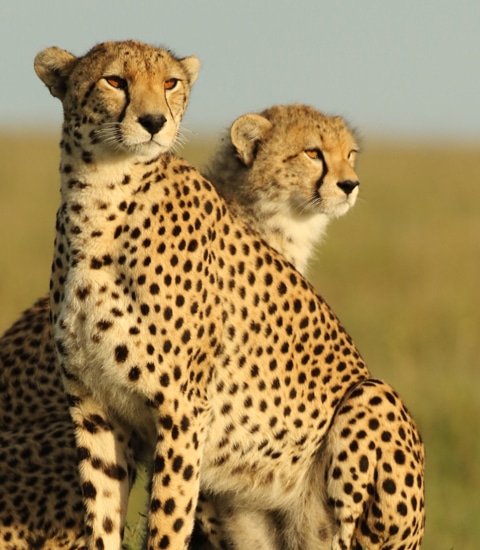
January marks the breathtaking start of the Green Season. The Serengeti transforms into an emerald paradise with minimal dust and crystal-clear air. The Great Migration is densely concentrated on the southern plains, where the short grass makes predator spotting—especially cheetahs and lions—effortless.
As a time of abundance, many species time their births to these lush conditions. While sporadic afternoon showers may occur, they are typically localized and brief, rarely impeding your adventure. Thanks to our strategic planning, you’ll find yourself in the quietest, most wildlife-rich corners of the park, even during the early-month festive peak.
Pro Tip: This is the best month for “high-definition” photography. The lack of dust and the vibrant green backdrop make for incredibly sharp, professional-grade images.
February
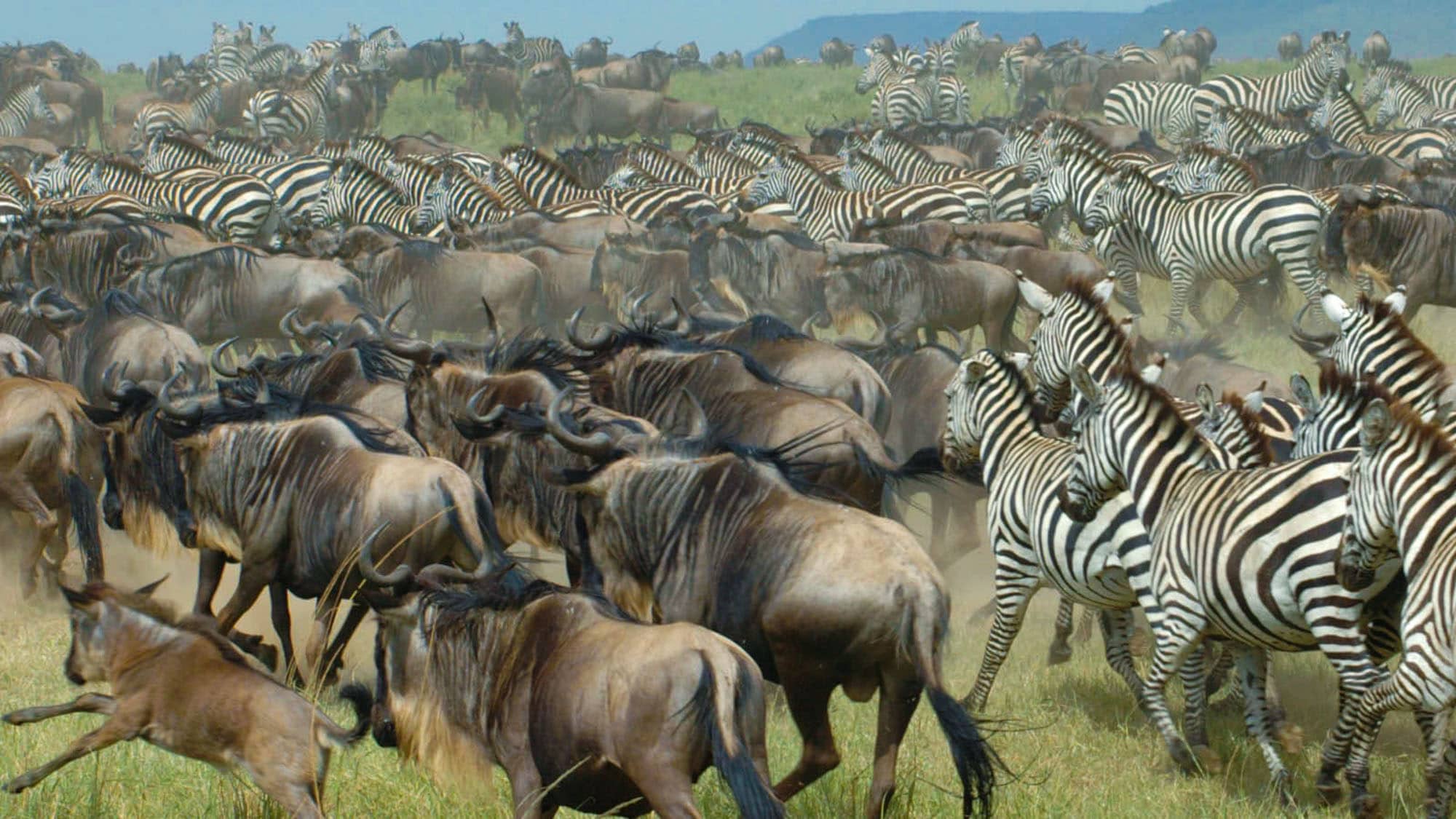
February is a photographer’s dream and the heart of the wildebeest calving season. Hundreds of thousands of foals are born within a three-week window on the southern plains, creating a “moving buffet” that keeps predators in a state of constant activity.
Because the grass is short, you can witness entire hunts from start to finish. While this is a popular month, the ADS advantage means we steer you away from the “package tour” crowds to private corners of the southern Serengeti. Here, rain is minimal due to the rain-shadow effect of the Ngorongoro Highlands, ensuring your game drives remain focused on the high-stakes action.
Pro Tip: Look for “the nursery.” Predators are highly active, but so are the social interactions between mothers and newborns, offering heart-warming behavioral sightings you won’t see any other time.
March
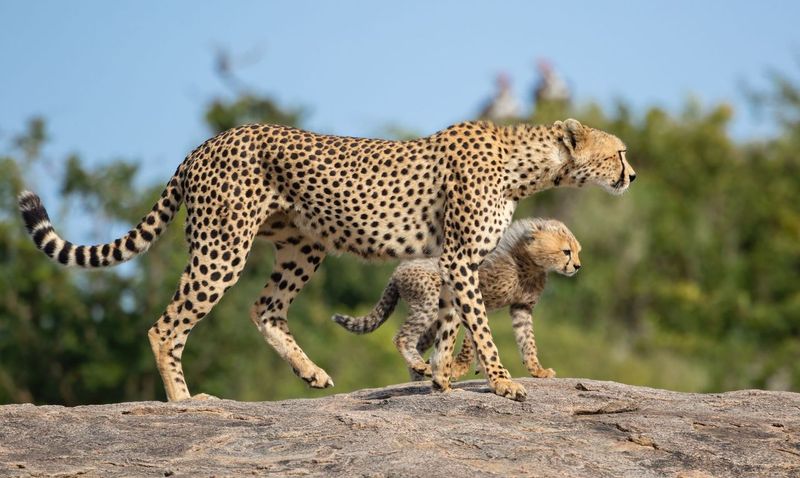
March is arguably the best-kept secret in the safari world. As the Green Season reaches its peak, the parks are remarkably quiet, and the wildlife concentrations are staggering. You’ll enjoy lush, vibrant landscapes and the rare luxury of having the Serengeti almost entirely to yourself.
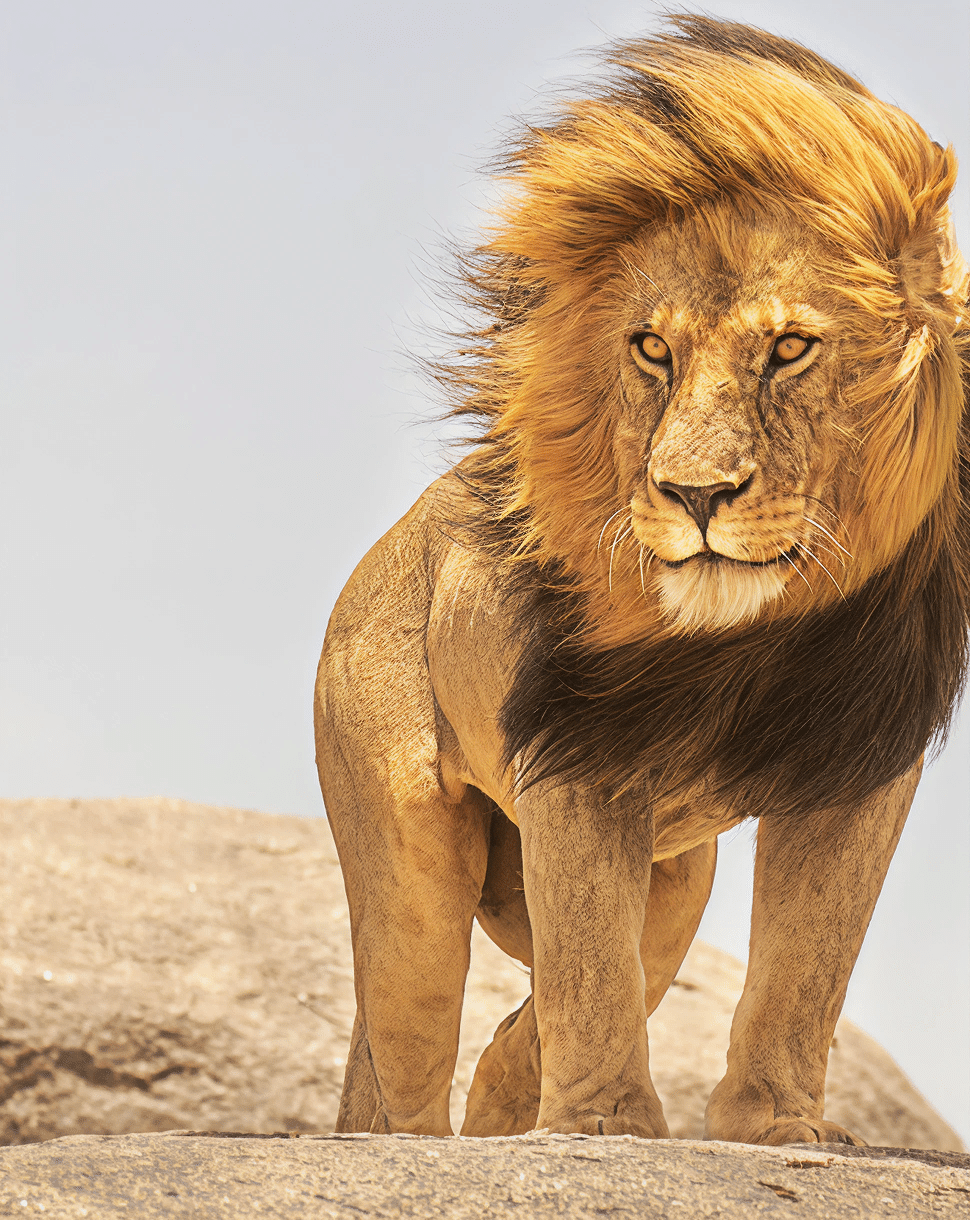
The big cats are exceptionally healthy and active, often found lounging on the iconic kopjes (rock outcroppings) that dot the southern plains. While the “long rains” begin elsewhere in East Africa, the Serengeti plains remain accessible. We recommend a longer duration this month to act as “weather insurance,” allowing you to fully immerse yourself in this tranquil, high-action period.
Pro Tip: Focus on the Kopjes. These ancient rock formations act as natural lookout towers for lions and cheetahs; in March, they provide the perfect dry “throne” above the lush grass.
April
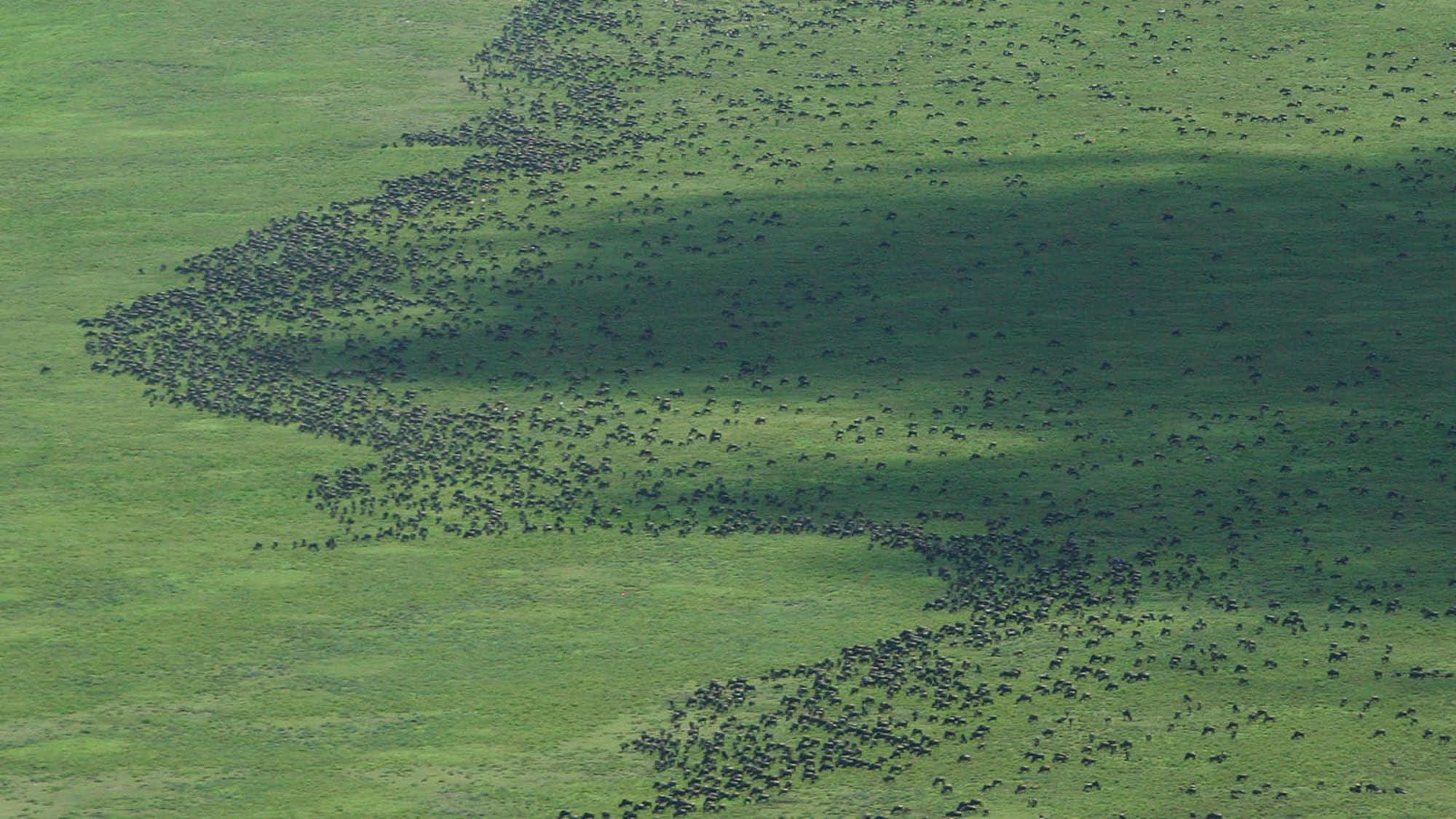
April is the month favored by safari purists and our own ADS staff. The landscape is a vivid, deep green, and the parks are virtually empty of other tourists. Because “rain means game,” wildlife viewing is at its most intense; the animals are revitalized and the predators are out in force.
While you can expect afternoon thundershowers, they usually clear within an hour. Since we focus your safari on the Southern Serengeti—which receives significantly less rain than the north—the weather rarely poses a challenge. Enjoy reduced lodging costs and the most exclusive, “off the beaten path” experience possible.
Pro Tip: Take advantage of “Low Season” luxury. You can often secure the most exclusive, high-end lodges at a fraction of their peak-season price while enjoying total solitude in the bush.
May 
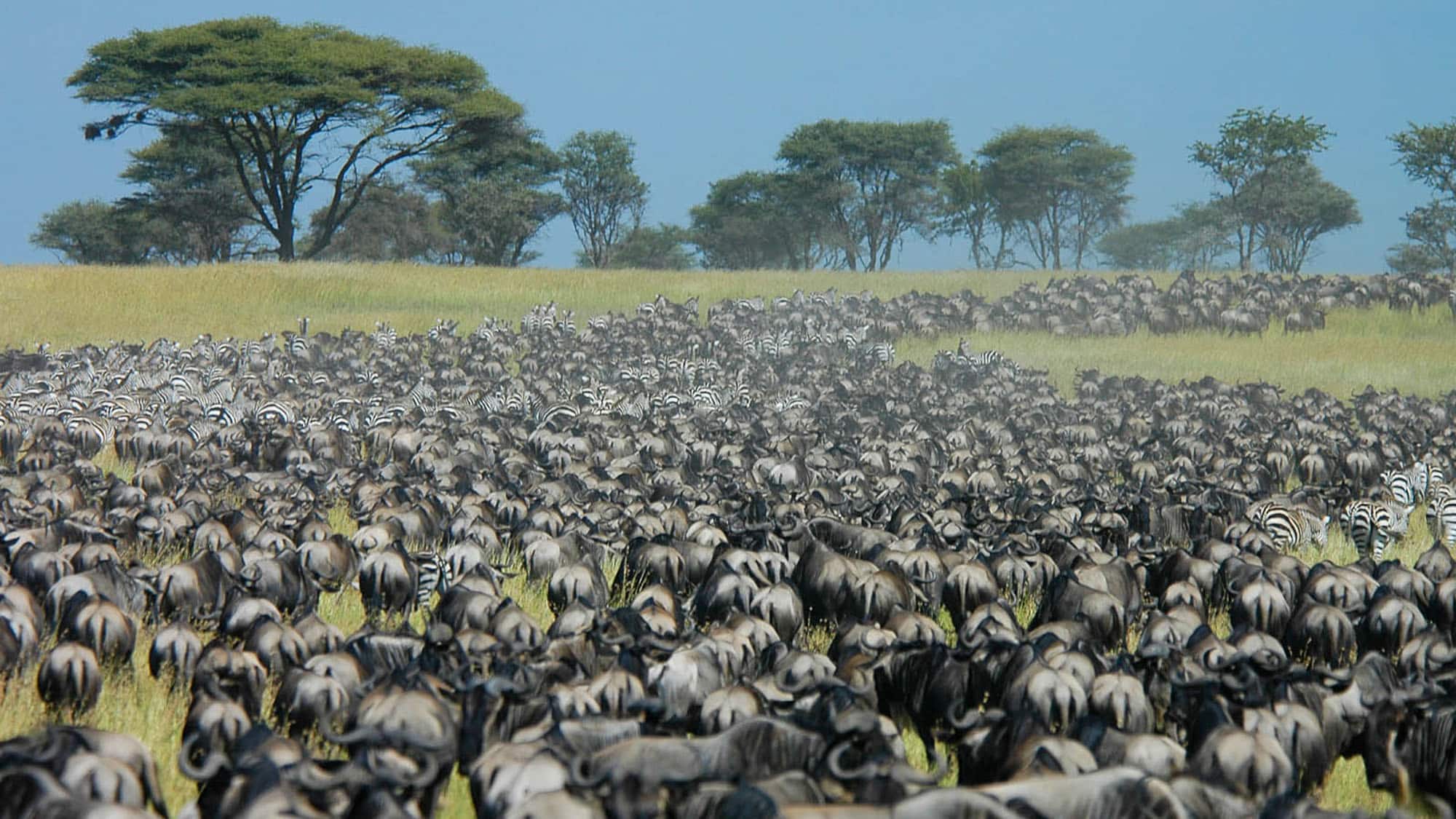
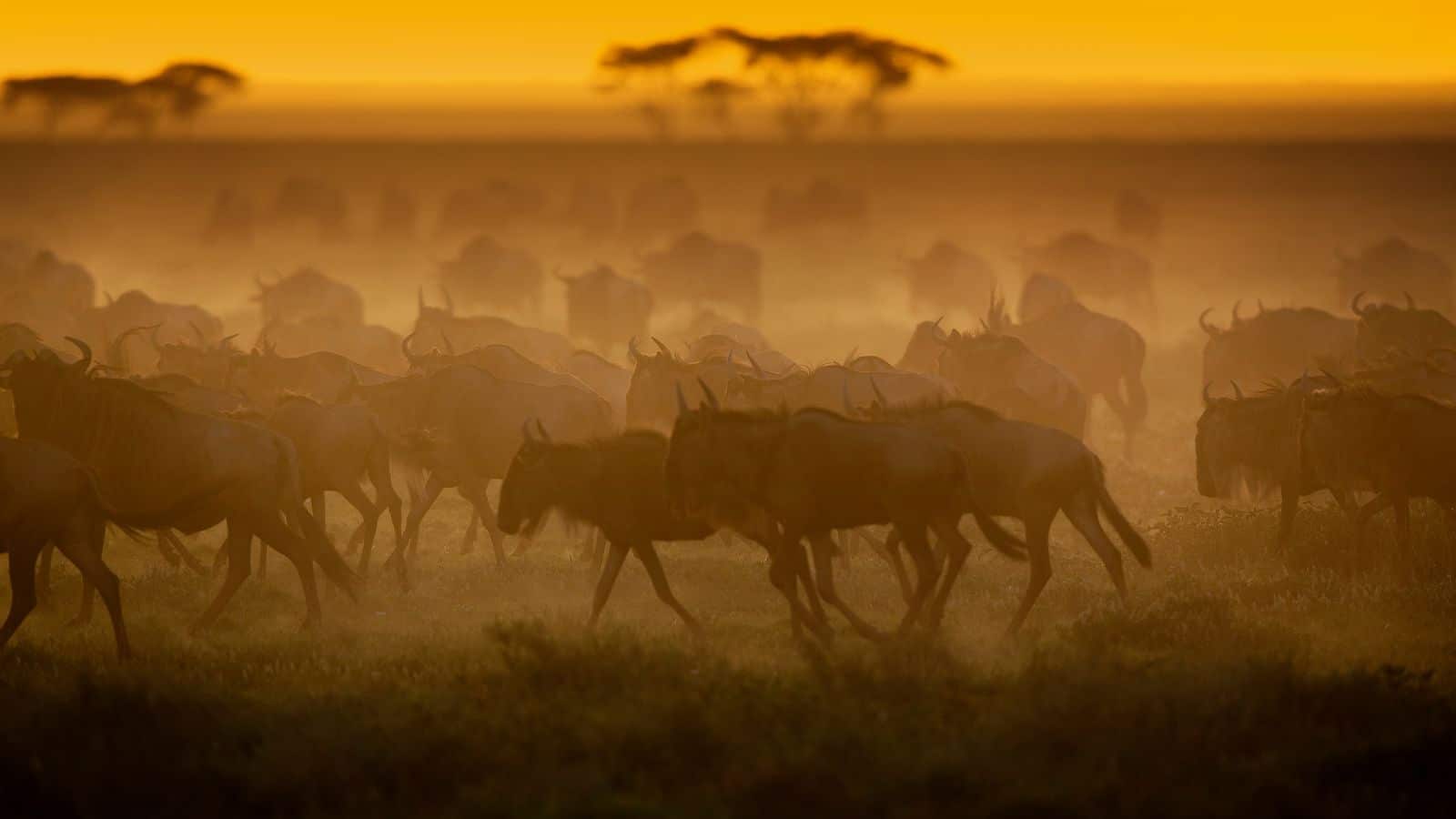
In May, the dry season begins to take hold and the Great Migration starts its legendary trek north. This is the time of the wildebeest “rut,” a spectacular display of mating pandemonium as the herds march through the Central and Western regions.
The weather clears, temperatures remain pleasant, and the occasional evening shower provides a welcome refresh to the savanna. With fewer visitors and extraordinary predator-prey interactions, May offers a superb balance of beauty and high-octane wildlife viewing as the herds move through the more wooded “corridor” areas.
Pro Tip: Watch for the “Rut” behavior. The male wildebeests are full of energy, dashing about and rounding up harems, which creates a high-energy atmosphere unlike the calmer grazing months.
June 
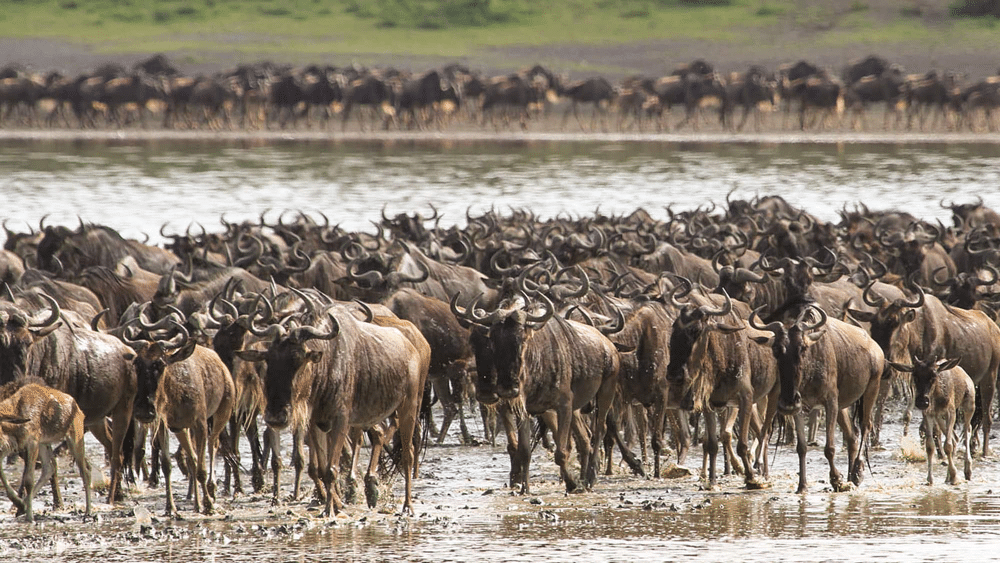
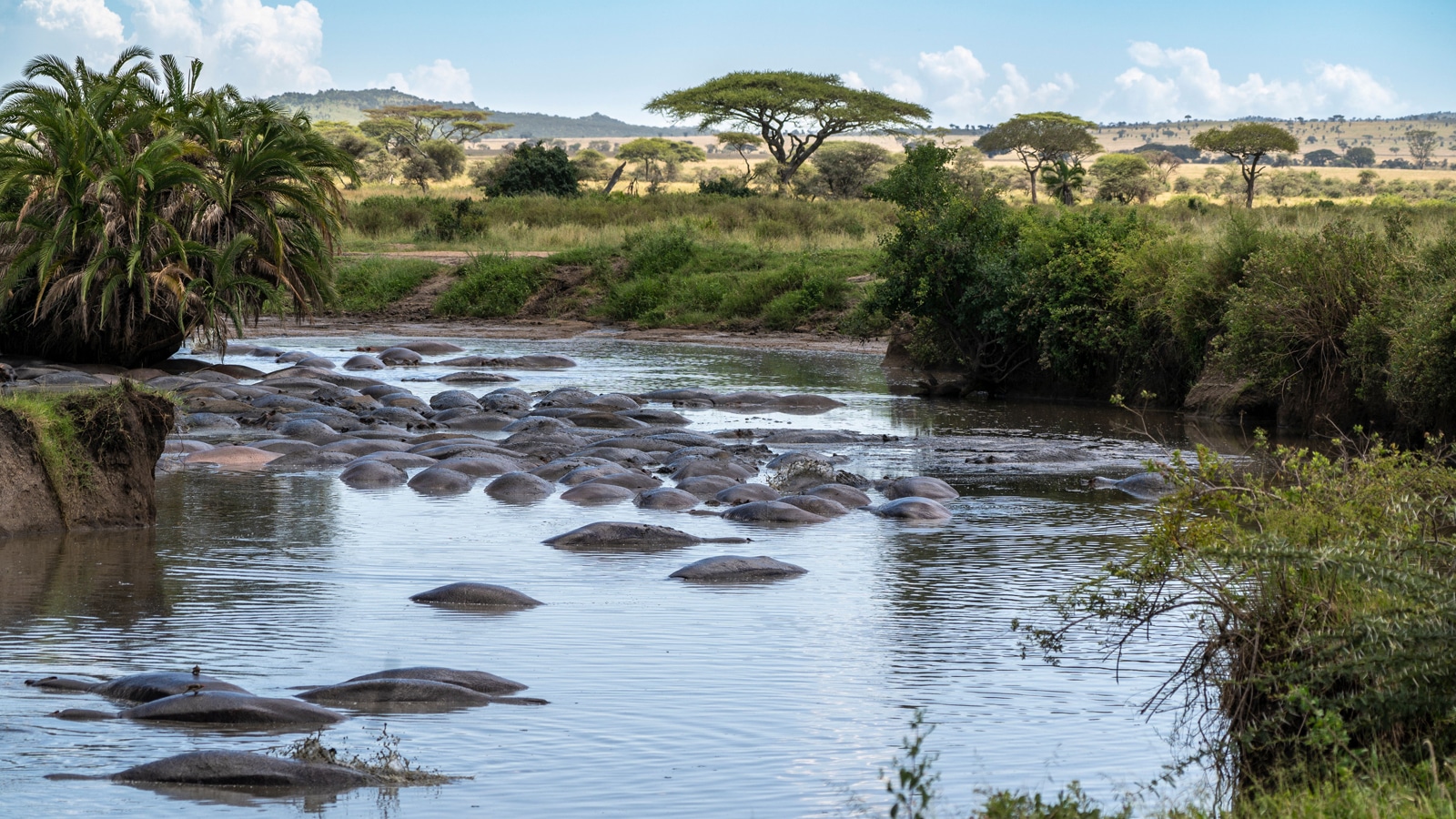
June heralds the official start of the Dry Season. The skies clear to a brilliant blue, and the landscape begins its dramatic transition from green plains to golden woodlands. As smaller water sources dry up, resident animals begin to congregate around permanent rivers, making them much easier to spot.
This is the prime time to see the migration funneling through the Western Corridor, often facing the first of the major river obstacles at the Grumeti River. With visitor numbers still relatively low, June is a fantastic month for those seeking predictable weather and thundering herds.
Pro Tip: Keep an eye on the Grumeti River. Before the famous Mara crossings, the migration must face the Grumeti in June, where giant crocodiles lie in wait for the first herds to arrive.
July 
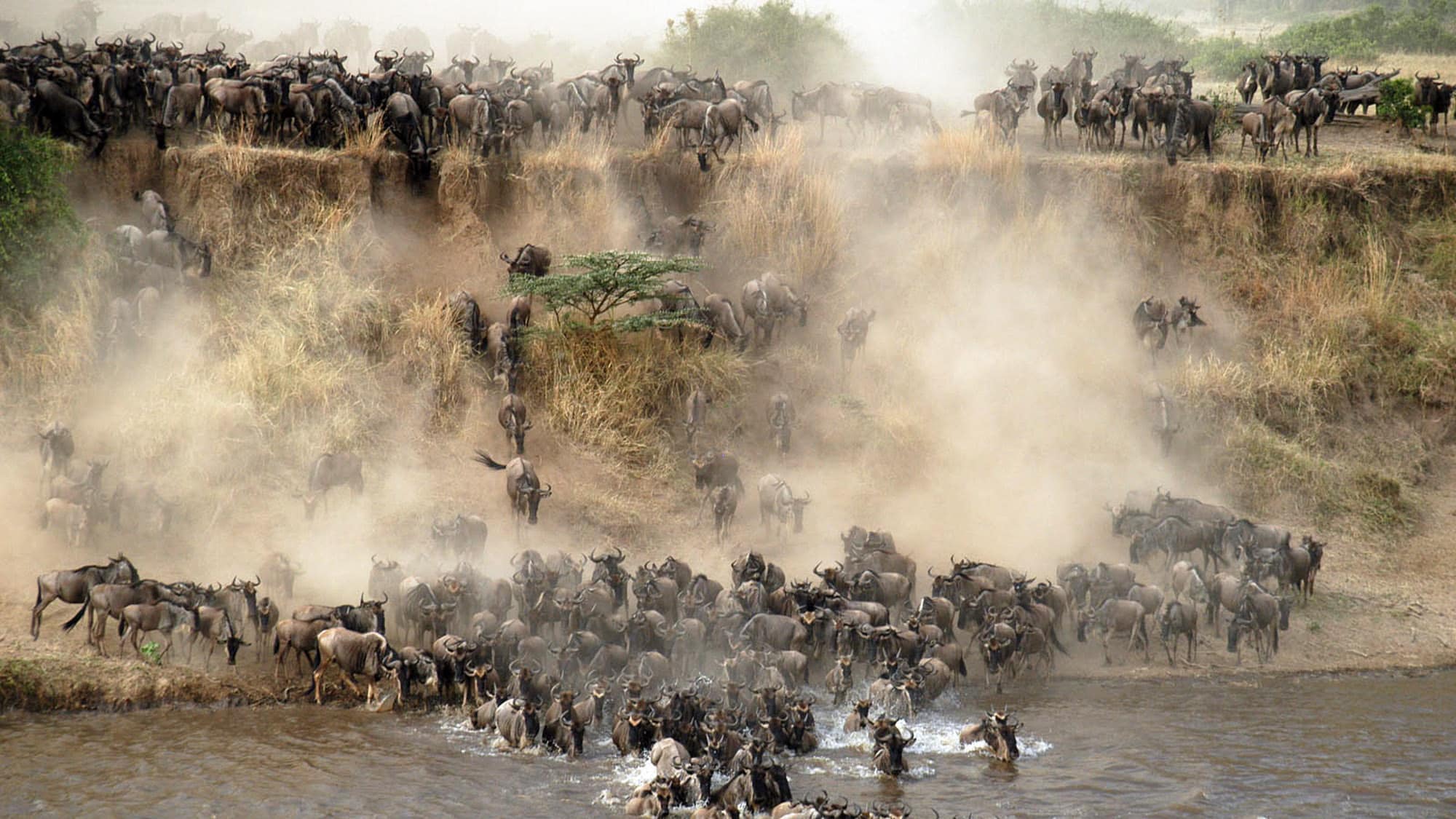
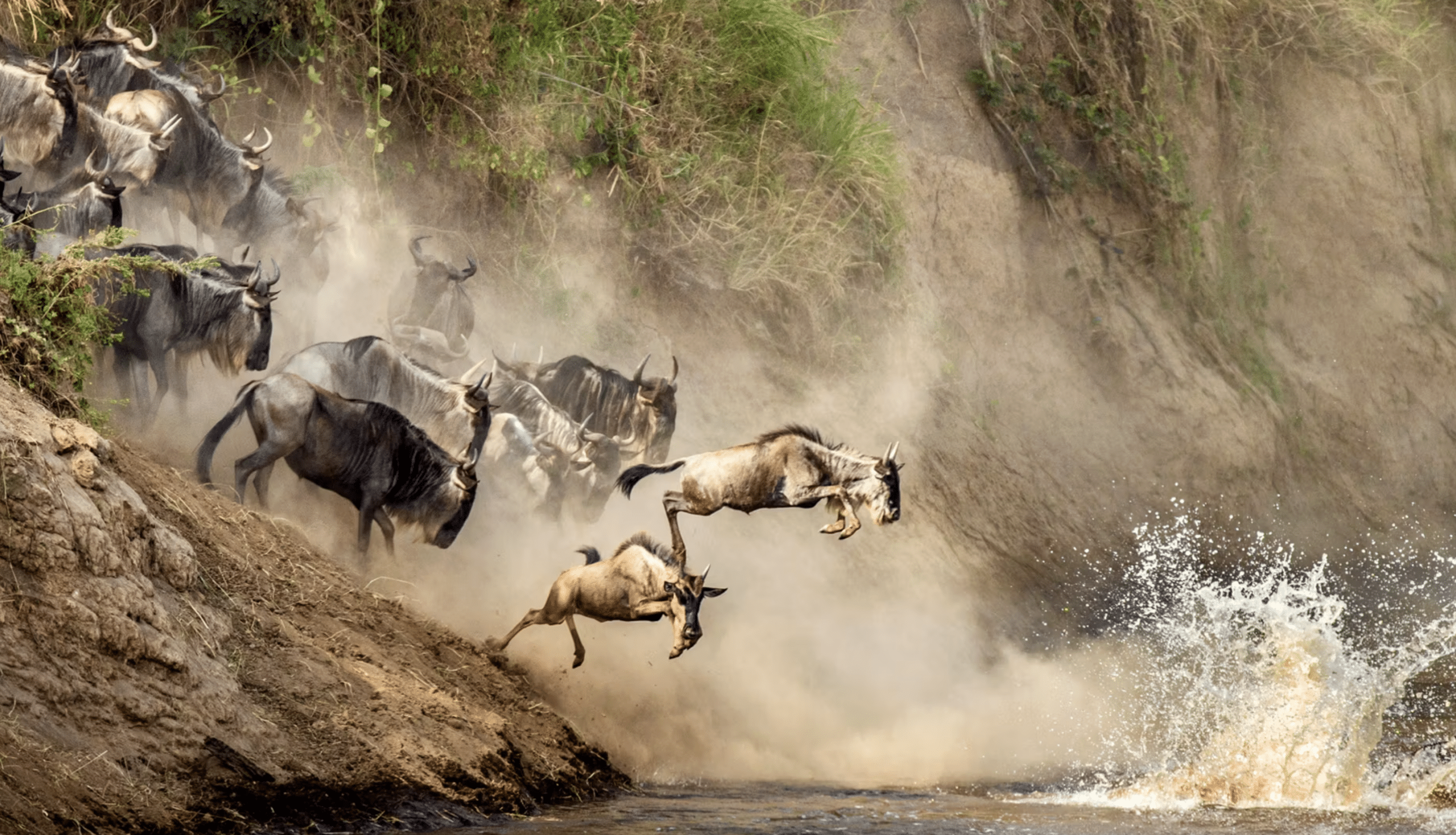
July is a “bucket-list” month. The grass is dying back, making elusive big cats—especially leopards—much easier to find as they hunt in the thinning foliage. This is the start of the world-famous river crossings along the Mara River in the North Serengeti.
These high-drama events are a test of survival for the herds. While visitor numbers rise, our expert guides navigate you to private areas and exclusive camps, ensuring you witness the Great Migration’s surge in peace. Expect dry, sunny days and cool, crisp nights on the Ngorongoro rim.
Pro Tip: Bring a good pair of binoculars and patience. River crossings are unpredictable; the best sightings come to those who are willing to wait with their guide for the “herd mentality” to kick in.
August
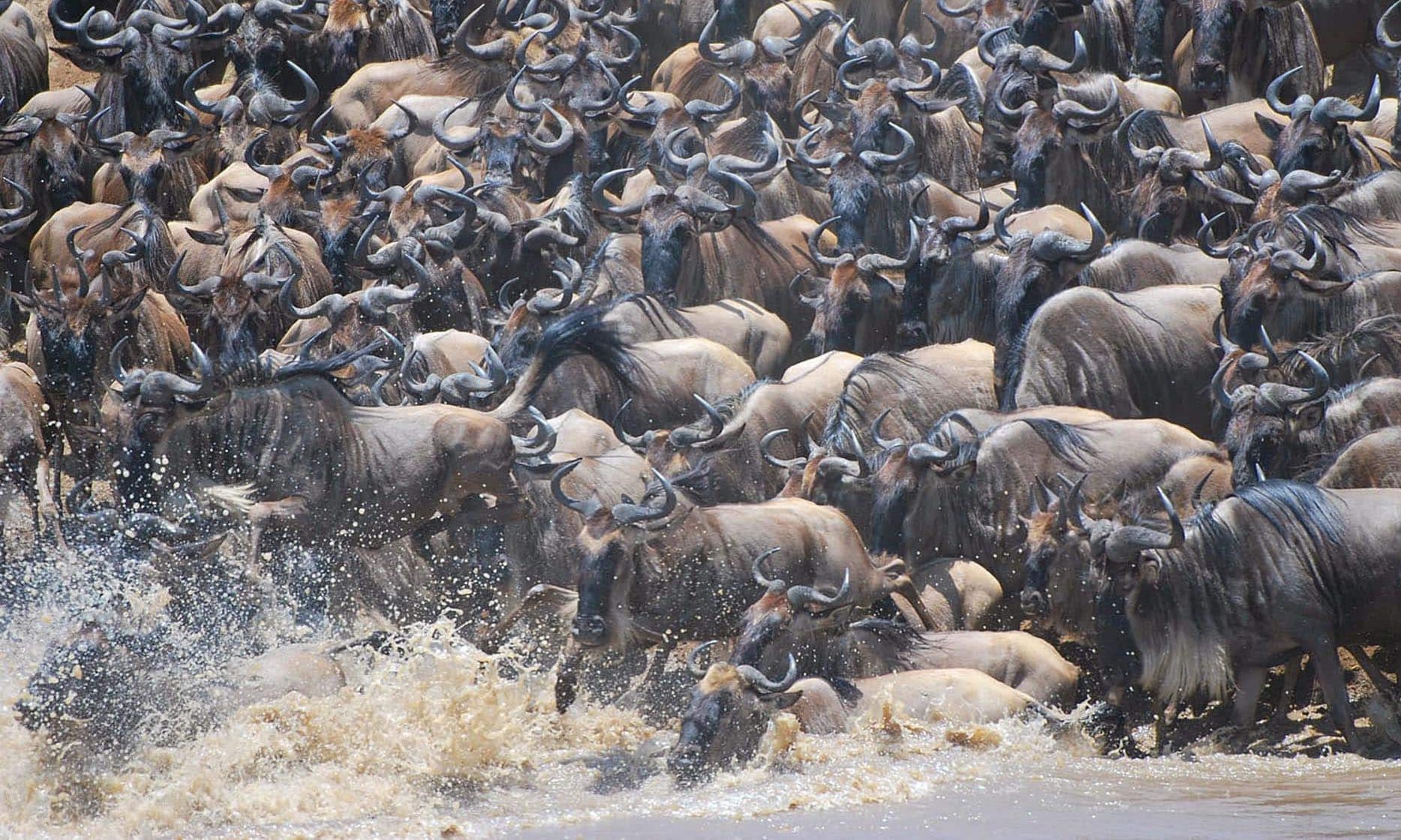
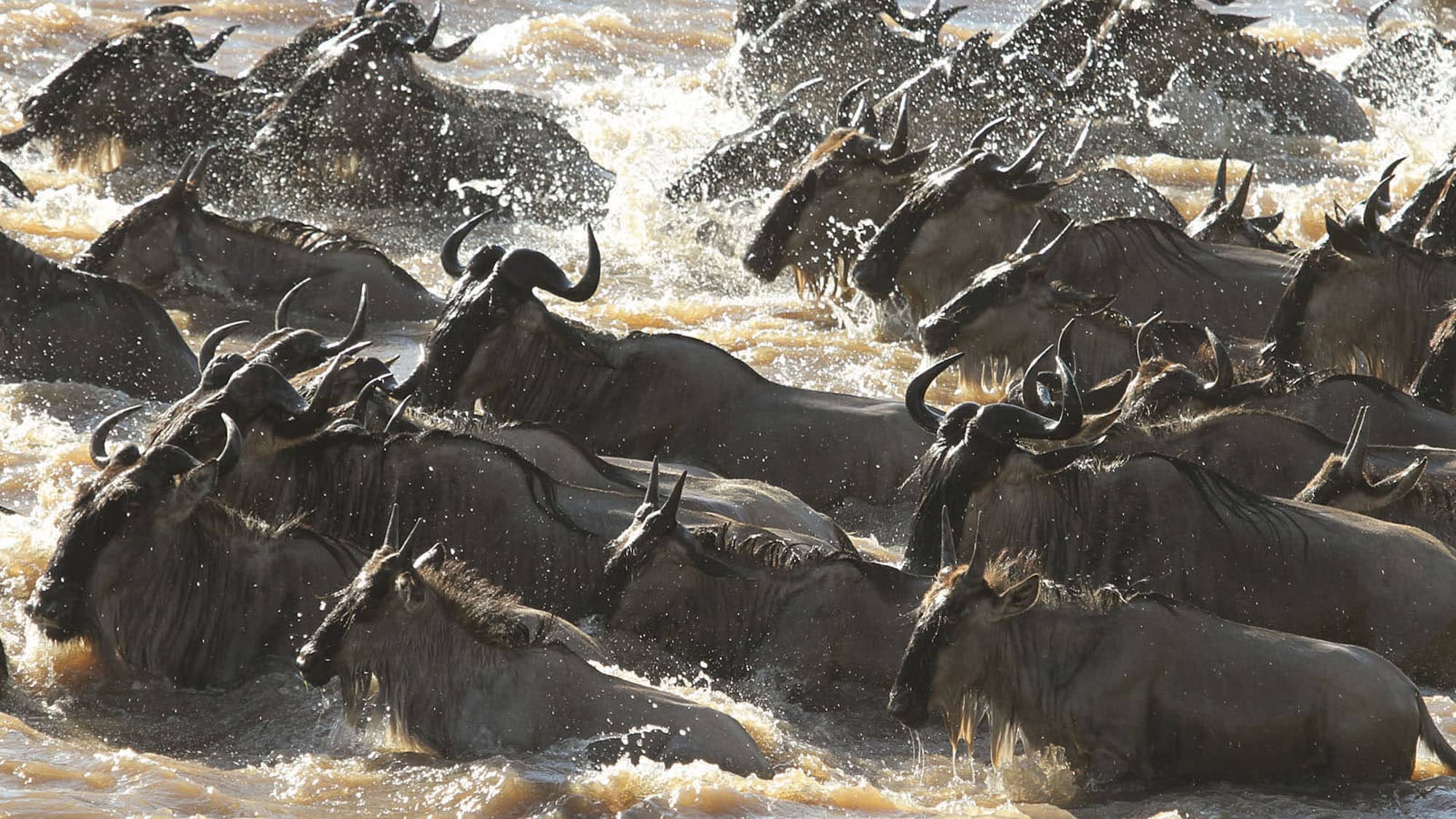
August is the busiest month in Tanzania for a reason: the wildlife viewing is unparalleled. The Great Migration is in full swing in the Northern Serengeti, and the dramatic Mara River crossings are at their peak.
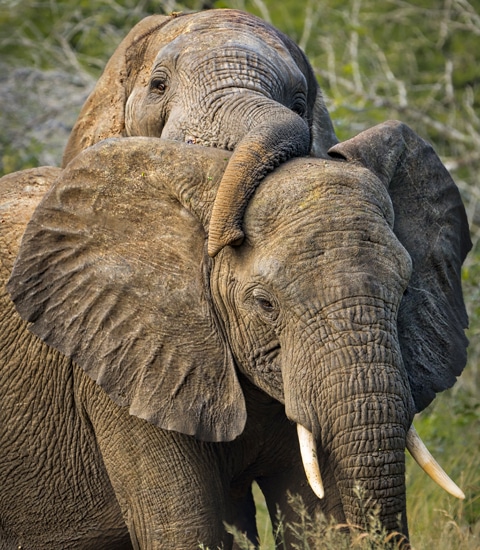
Because the savanna is parched, massive herds of elephants congregate in Tarangire, and lions are easily spotted as they lounge near remaining waterholes. Even in this “high season,” ADS’s custom routing ensures you encounter “more lions than people” by avoiding the standard tourist circuits and focusing on the rugged north.
Pro Tip: Visit Tarangire National Park. While everyone else is in the North Serengeti, the elephant density in Tarangire during August is among the highest on earth.
September
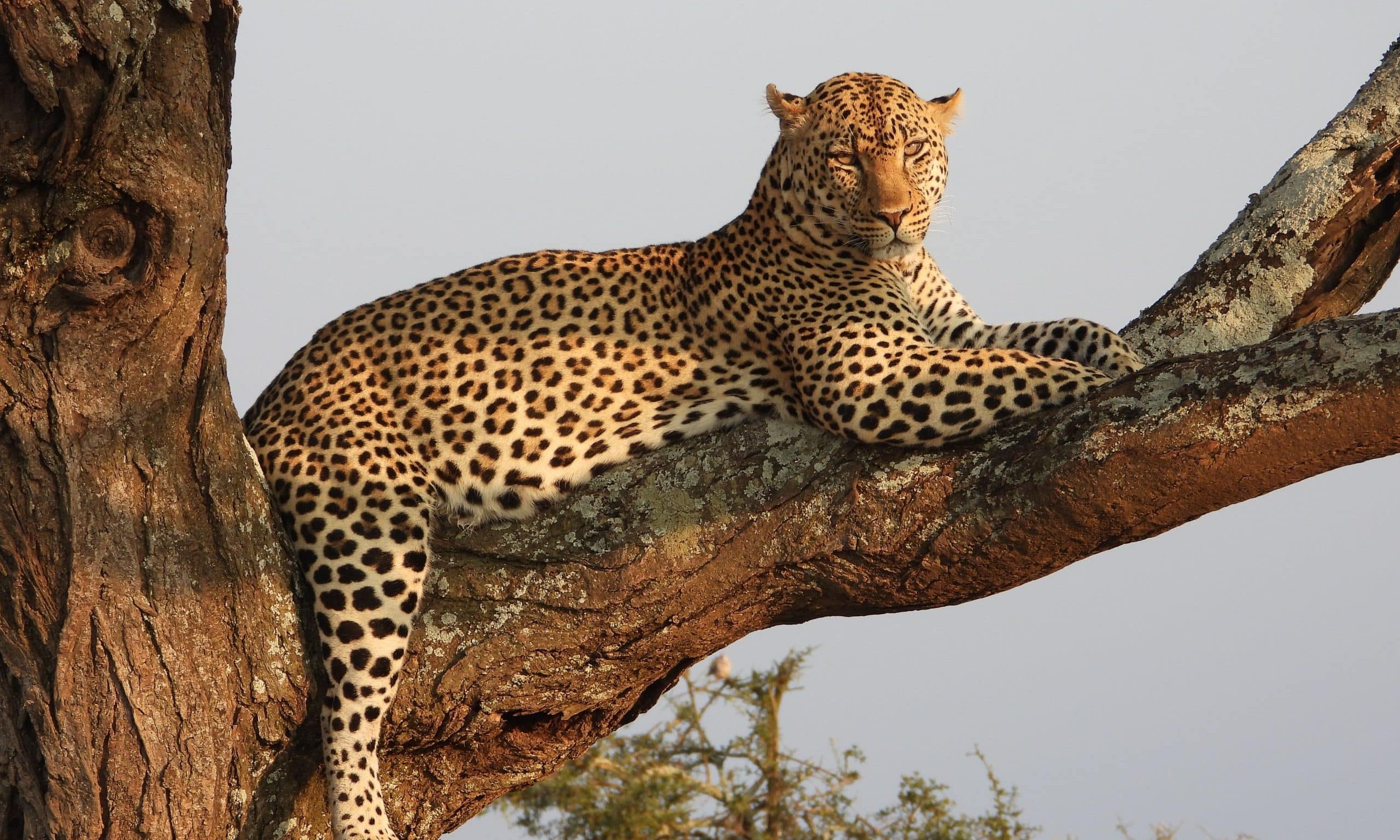
September offers some of the most consistent wildlife viewing of the year. As the dry season reaches its conclusion, every water source becomes a magnet for life. This is a premier month for leopards, who are often spotted draped over the branches of acacia trees.
The Great Migration continues to surge through the beautiful, wooded landscapes of the North, providing constant action for the resident lion prides. Mid-to-late September sees a dramatic drop in visitor numbers, making it a highly recommended “sweet spot” for travelers seeking peak action with more privacy.
Pro Tip: This is the best month for leopard “spots.” With the foliage at its thinnest, your guide can more easily spot the dangling tail or paw of a leopard camouflaged in a tree.
October
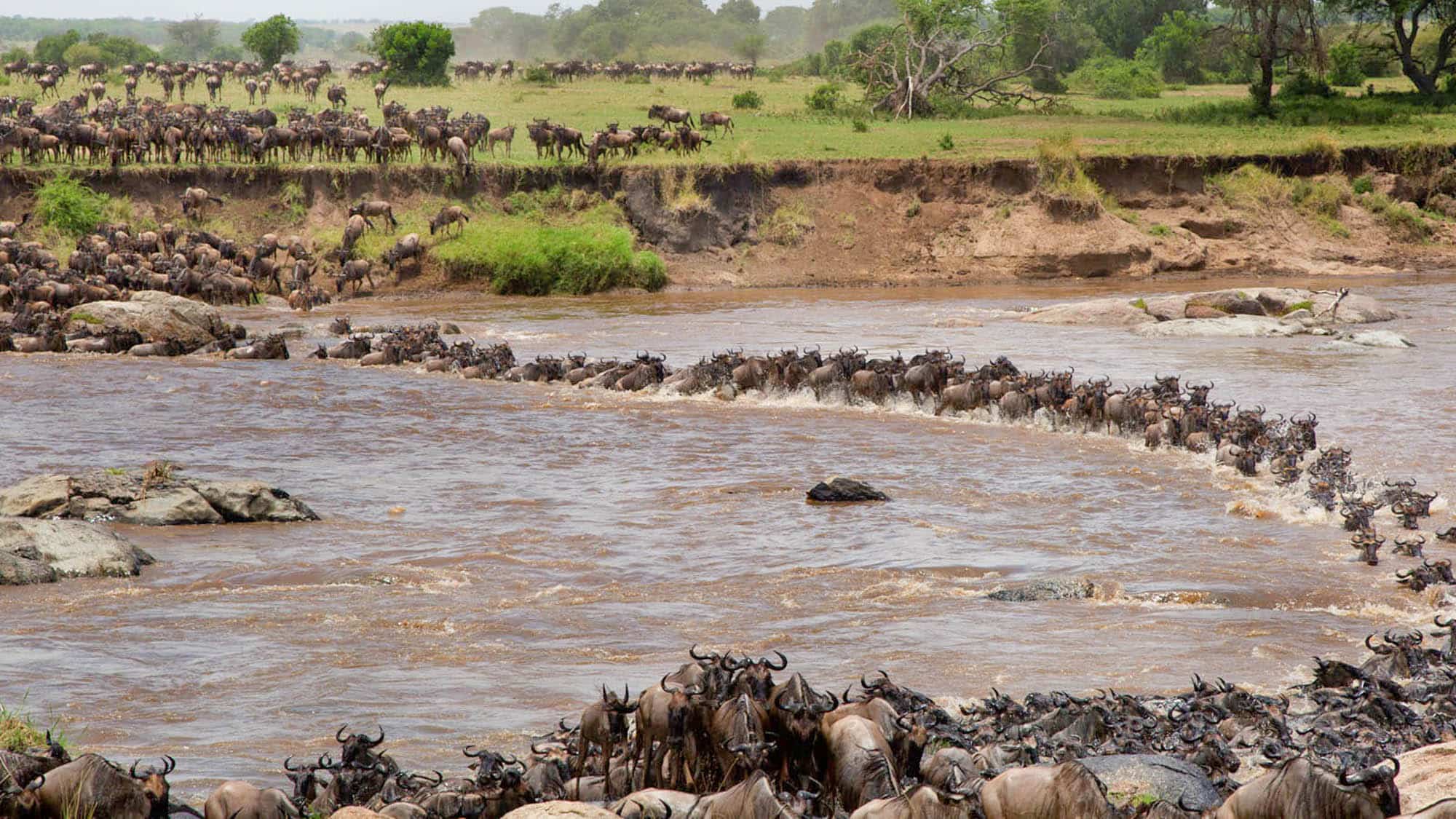
October is an exceptional choice for a safari. While the landscape is parched and wildlife is highly concentrated, the summer crowds have vanished. You’ll enjoy the best of the Dry Season—including potential late river crossings and easy predator spotting—with the added luxury of low visitor numbers.
The herds are often at their most desperate and concentrated, leading to intense wildlife interactions. Occasional light showers may appear late in the month, refreshing the air and signaling the transition to the Green Season.
Pro Tip: Enjoy the “Return of the Silence.” October offers peak-season wildlife viewing quality but with the peaceful, low-traffic feel of the shoulder season.
November 
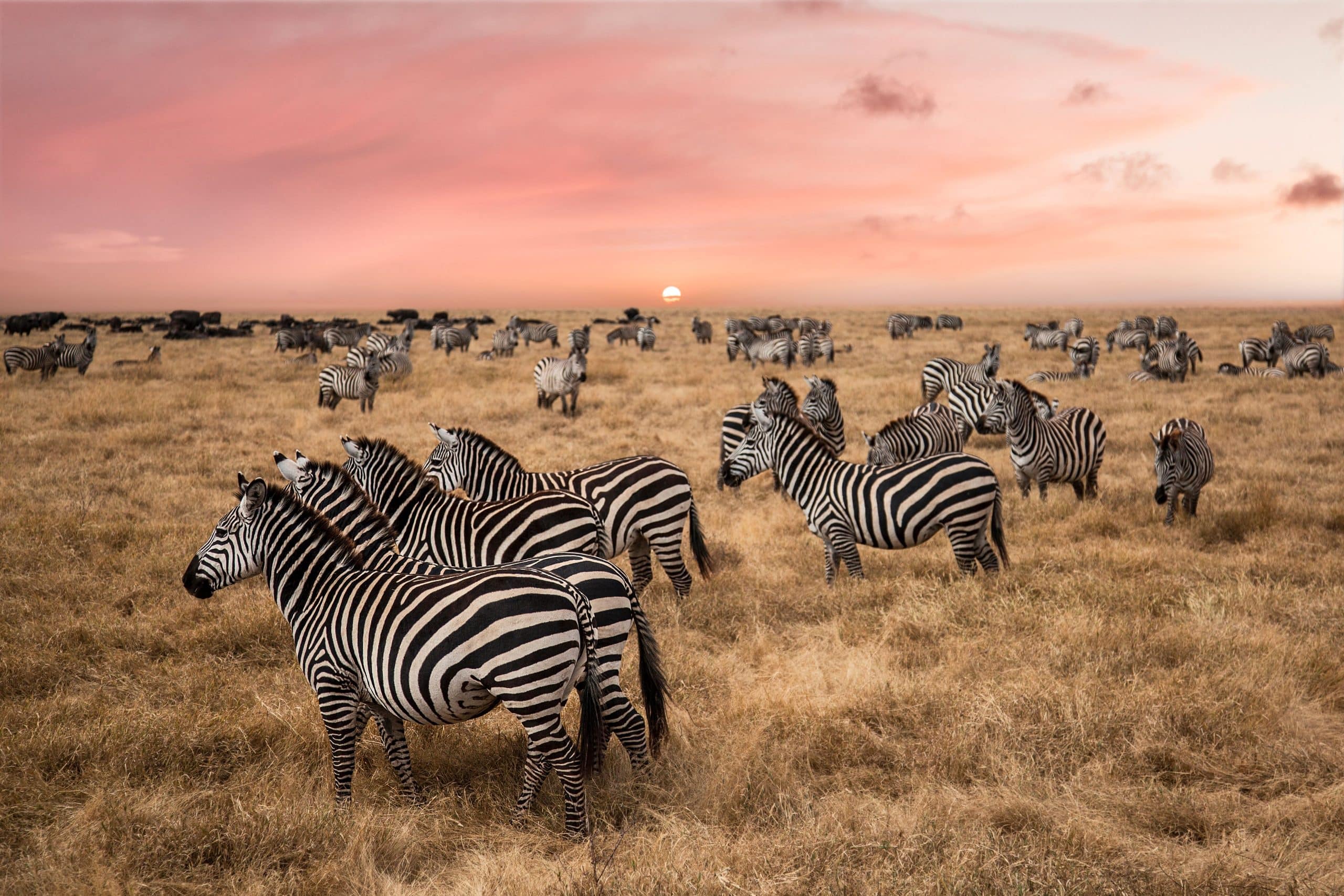
November is a period of spectacular change. As towering thunderclouds form, the Great Migration begins its rapid surge back south to the plains in anticipation of the rains. Seeing thousands of wildebeest and zebra thundering across the savanna against a backdrop of dramatic storms is a sight you will never forget.
November is the perfect “gap” month—nestled between the busy summer and holiday peaks—offering incredible “off the beaten path” opportunities and tremendous predator action as they shadow the returning herds.
Pro Tip: Look for the “Thundercloud Backdrop.” The dramatic afternoon storms create some of the most spectacular, moody lighting conditions for wildlife photography.
December 
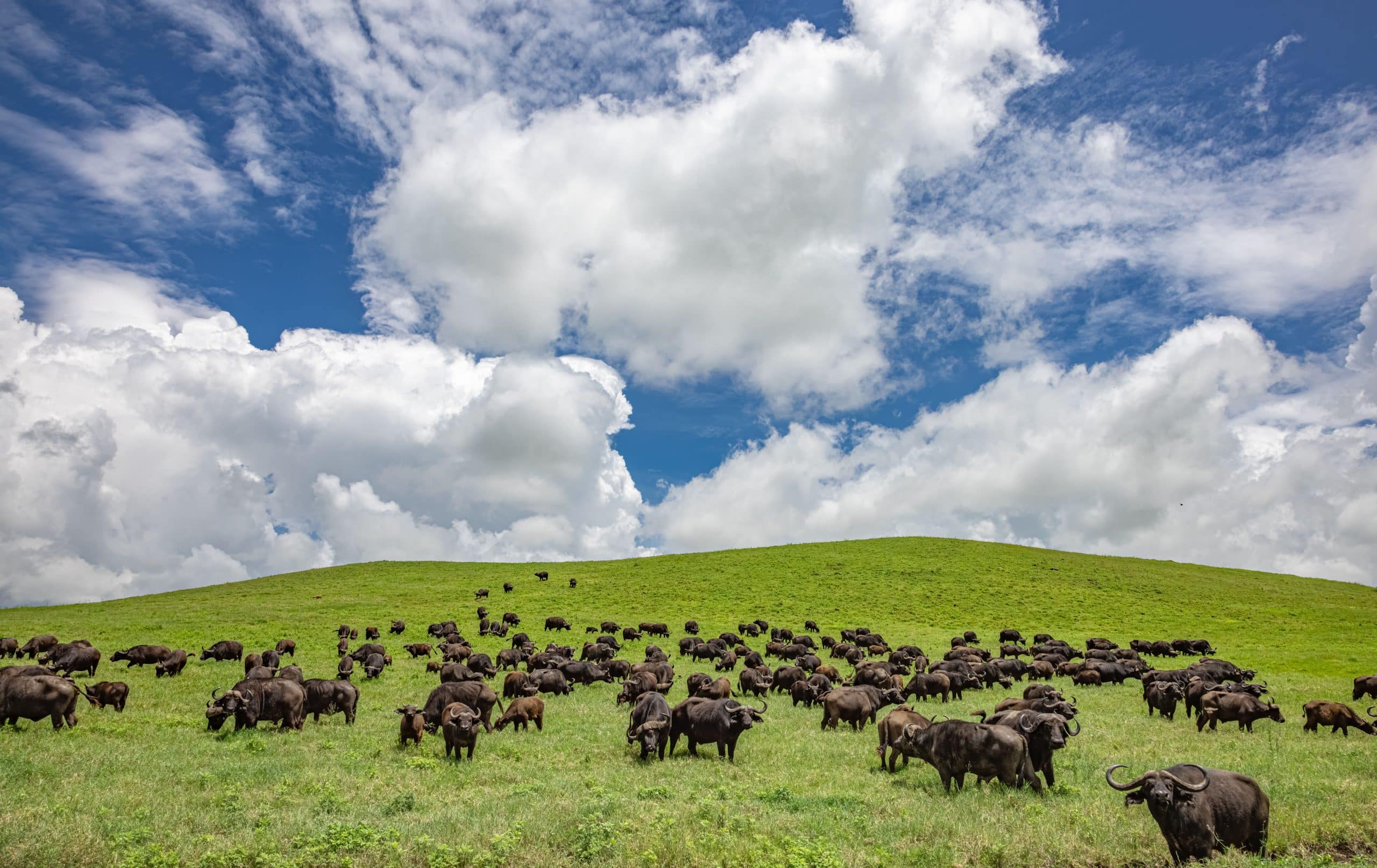
December brings the return of the lush Green Season. The Serengeti plains “reset” into a beautiful velvet green, dust vanishes, and the migration settles onto the southern and eastern plains.
It is a time of rebirth and plenty, with many animals beginning their calving cycles. While late December is a festive peak for travelers, our private itineraries are designed to find the “hidden” Serengeti, ensuring that your holiday season is filled with wildlife, not crowds. The contrast of the golden lions against the vibrant green grass is a holiday gift unlike any other.
Pro Tip: Book early! The last two weeks of December are the most sought-after dates in the calendar. Plan at least 12–18 months in advance to secure your first-choice lodges.