
January 

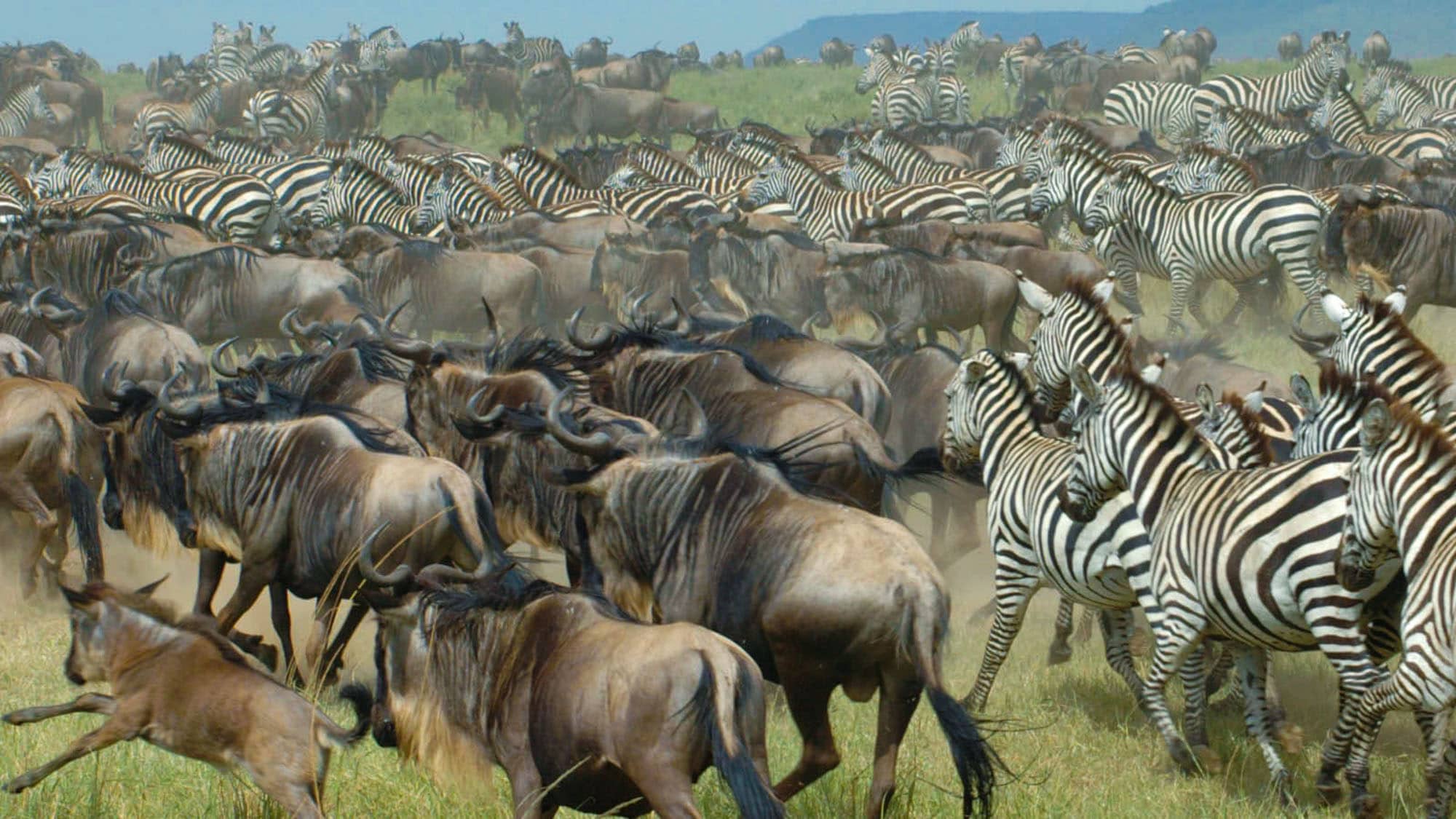
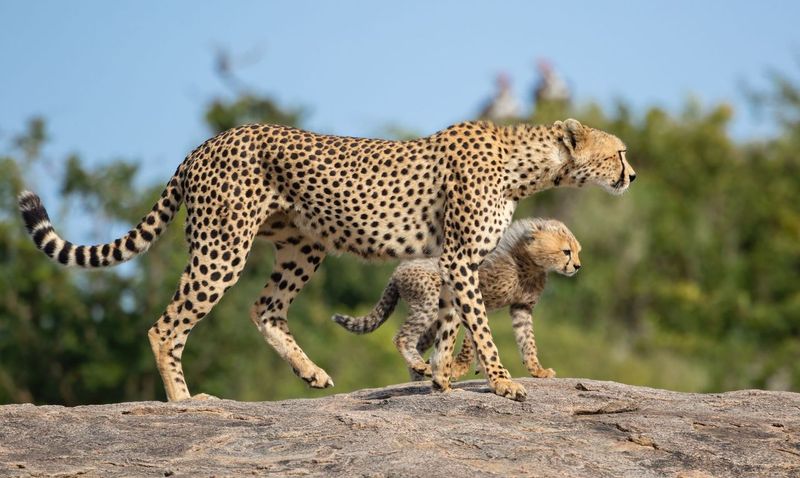
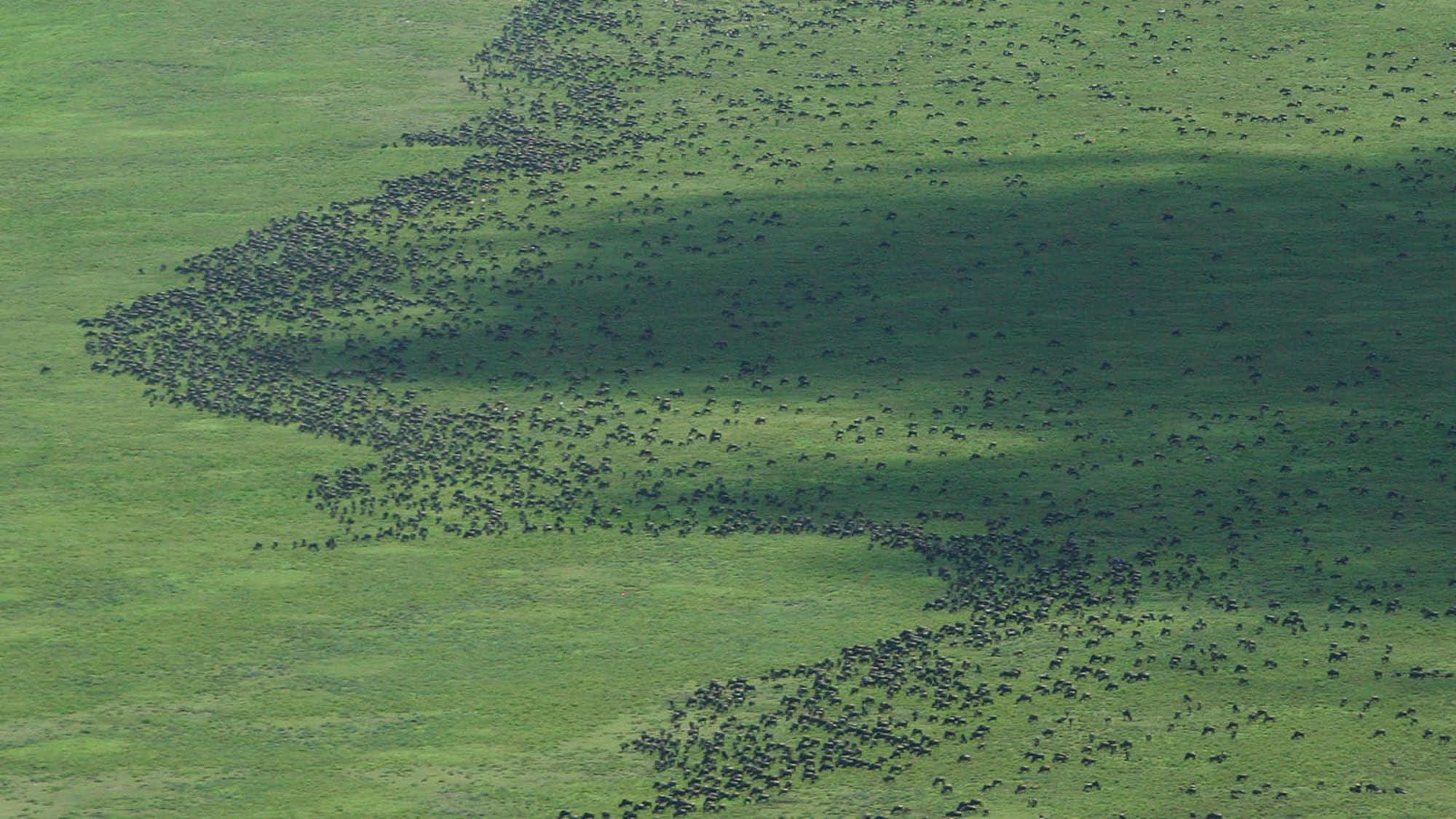
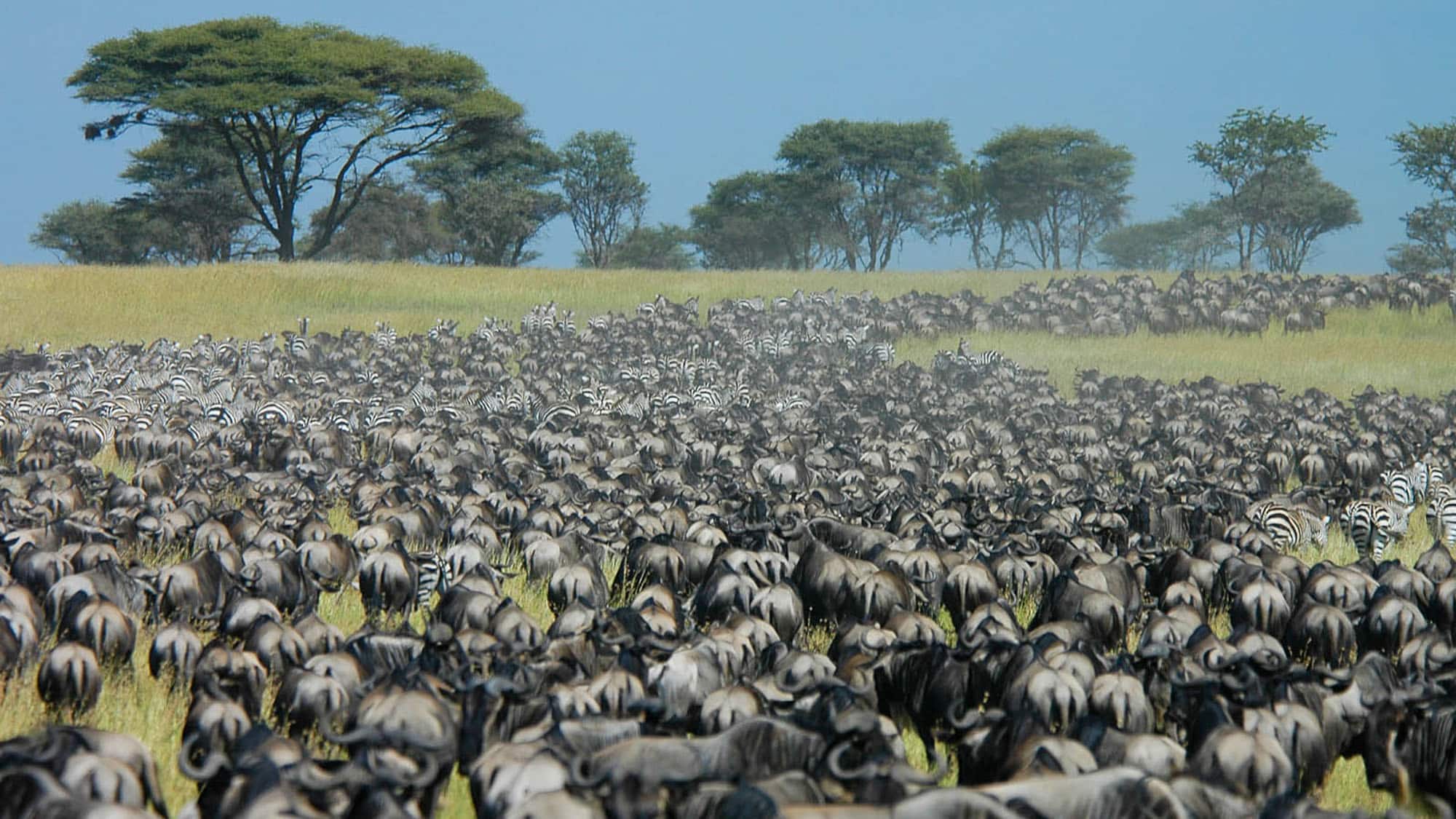
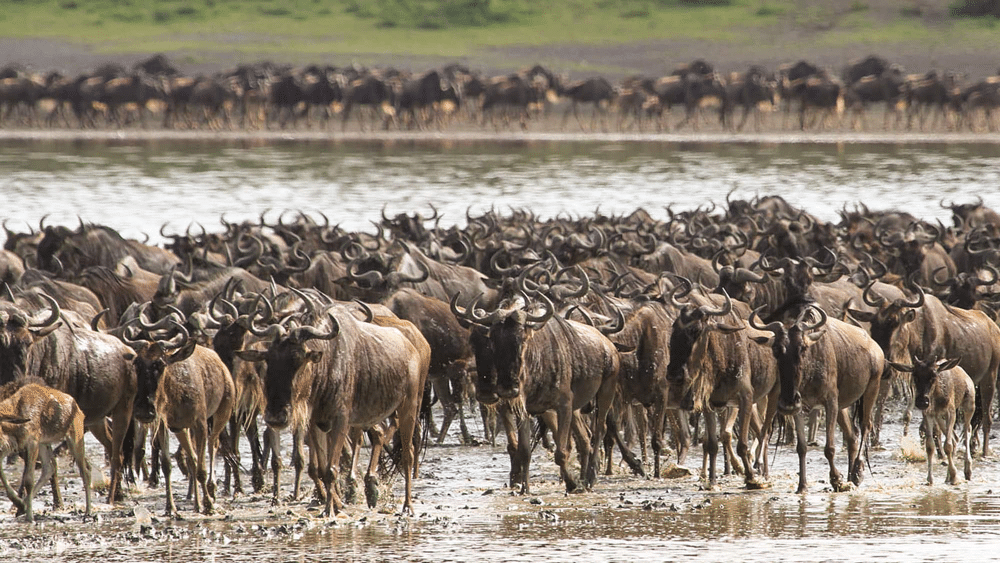
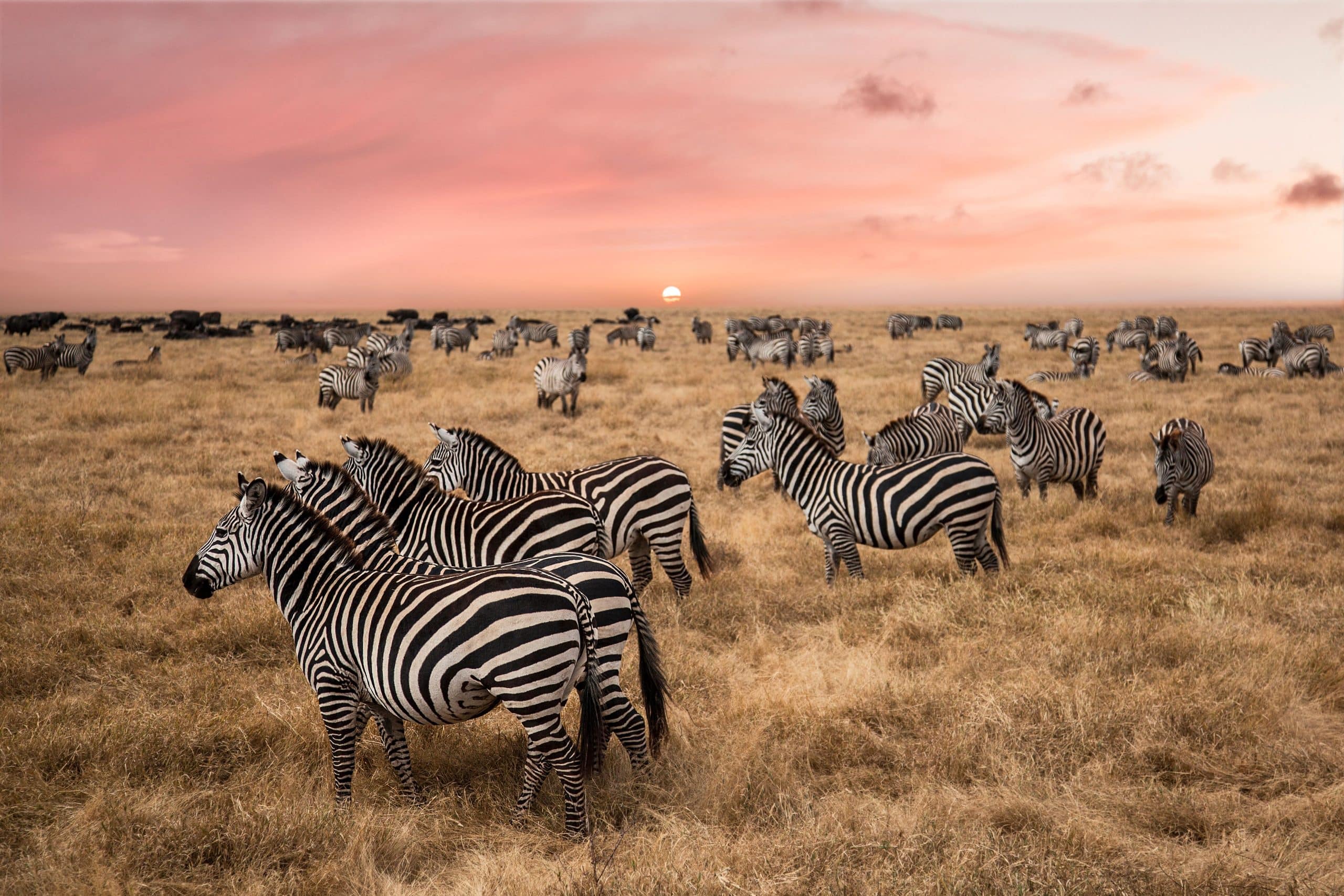
January marks the beginning of the green season in Tanzania. The Serengeti plains are a beautiful shade of green, dust levels are minimal and most wildlife species are easy to spot. January is one of the warmest months but the weather is still ideal for wildlife viewing. The famous migration is concentrated in massive numbers on the Serengeti plains, which in turn attracts large numbers of predators. January is the time of plenty and many animals time the birth of their families to coincide with the green season.
Occasional showers can be expected in January. The rains from early November to late March are usually sporadic and typically do not last for more then a few hours. There is a chance of heavier rain during this period but during most years the heavier rains fall in April. These expected sporadic showers do not usually pose much of an inconvenience while game driving. If it does rain, it will usually clear in 1-2 hours and more then likely the rain will be localized. It is rare that rain clouds will settle over a large area for an extended period of time.
Rain falls in different amounts over various locations throughout Northern Tanzania. The Ngorongoro Crater, Tarangire and Lake Manyara receive higher rainfall then many parts of the Serengeti. There is a steep rainfall gradient in the Serengeti from the dry southeast to the wet northwest. The winds that bring rain blow from the east. The Ngorongoro Highlands block much of the rain from reaching the eastern and southern plains of the Serengeti. However, the western and northern parts of the Serengeti receive a much greater amount (2-3 times more) of participation as compared to the southern and eastern Serengeti. The wetter western and northern Serengeti areas are affected by Lake Victoria. This means that in the southern Serengeti where you should ideally focus your January safari, the rains should not be an issue and it will rain substantially less then the other areas of the Serengeti and Tanzania.
Temperatures are pleasant with an average high of 83 degrees and an average low of 60 degrees. However, the rim of the Ngorongoro Crater can get quite cold at night and in the early morning. Visitor numbers will be moderately high in mid January and very high in the beginning of January with the New Year’s crowd. The good news is that the vast majority of people are on package tours staying at the main lodges and zipping around the main roads in only a few popular areas. With careful planning we can customize your safari so you will encounter more lions than people in even the beginning of January.
February 

February is one of the most popular months in Tanzania and marks the middle of the green season. The Serengeti plains are a beautiful shade of green, dust levels are minimal and most wildlife species are easy to spot. February is the warmest month of the year and the famous migration is concentrated in massive numbers on the Serengeti plains, which in turn attracts large numbers of predators. February is the time of plenty and many animals time the birth of their families to coincide with the green season.
Occasional showers can be expected in February. The rains from early November to late March are usually sporadic and typically do not last for more then a few hours. There is a chance of heavier rain during this period but during most years the heavier rains fall in April. These expected sporadic showers do not usually pose much of an inconvenience while game driving. If it does rain, it will usually clear in 1-2 hours and more then likely the rain will be localized. It is rare that rain clouds will settle over a large area for an extended period of time.
Rain falls in different amounts over various locations throughout Northern Tanzania. The Ngorongoro Crater, Tarangire and Lake Manyara receive higher rainfall then many parts of the Serengeti. There is a steep rainfall gradient in the Serengeti from the dry southeast to the wet northwest. The winds that bring rain blow from the east. The Ngorongoro Highlands block much of the rain from reaching the eastern and southern plains of the Serengeti. However, the western and northern parts of the Serengeti receive a much greater amount (2-3 times more) of participation as compared to the southern and eastern Serengeti. The wetter western and northern Serengeti areas are affected by Lake Victoria. This means that in the southern Serengeti where you should ideally focus your February safari, the rains should not be an issue and it will rain substantially less then the other areas of the Serengeti and Tanzania.
Temperatures are pleasant with an average high of 83 degrees and an average low of 60 degrees. However, the rim of the Ngorongoro Crater can get quite cold at night and in the early morning. Visitor numbers will be moderately high in February. This is a popular time to visit the parks as it coincides with the wildebeest calving season. February is certainly an excellent time to visit but there other months do offer equivalent or better game viewing. The good news is that the vast majority of people are on package tours staying at the main lodges and zipping around the main roads in only a few popular areas. With careful planning we can customize your safari so you will encounter more lions than people.
March 

March is situated towards the end of the green season and offers some of the best wildlife viewing opportunities out of the entire year. The Serengeti plains are a beautiful shade of green, dust levels are minimal and most wildlife species are easy to spot. The famous migration is concentrated in massive numbers on the Serengeti plains, which in turn attracts large numbers of predators. March is the time of plenty and many animals time the birth of their families to coincide with the green season.
The rains from early November to late March are usually sporadic and typically do not last for more then a few hours. These expected sporadic showers do not usually pose much of an inconvenience while game driving. There is a chance of heavier rain during this period but during most years the heavier rain falls in late March and April. If it does rain, it will usually clear in 1-2 hours and more then likely the rain will be localized. It is rare that rain clouds will settle over a large area for an extended period of time. Late March usually heralds the beginning of the so called ‘long rains’ which simply does not mean much of anything in the Serengeti and is more applicable to other areas in East Area. However, there is risk of heavier rain in late March, which may pose an inconvenience while game driving. This risk is mitigated by the fact that it tends to rain less on the Serengeti plains where the best wildlife viewing is located during March. We strongly recommend longer duration safaris during late March, April and early May. We view the extra night or two as insurance against the potential of sour weather having a negative impact on any one day.
Rain falls in different amounts over various locations throughout Northern Tanzania. The Ngorongoro Crater, Tarangire and Lake Manyara receive higher rainfall then many parts of the Serengeti. There is a steep rainfall gradient in the Serengeti from the dry southeast to the wet northwest. The winds that bring rain blow from the east. The Ngorongoro Highlands block much of the rain from reaching the eastern and southern plains of the Serengeti. However, the western and northern parts of the Serengeti receive a much greater amount (2-3 times more) of participation as compared to the southern and eastern Serengeti. The wetter western and northern Serengeti areas are affected by Lake Victoria. This means that in the southern Serengeti where you should ideally focus your March safari, the rains should not be an issue and it will rain substantially less then the other areas of the Serengeti and Tanzania.
Temperatures are pleasant with an average high of 83 degrees and an average low of 60 degrees. However, the rim of the Ngorongoro Crater can get quite cold at night and in the early morning. Visitor numbers drop off dramatically in the beginning of March and by late March the parks are relatively empty of tourists. March is certainly an excellent time to visit with few tourists around, green landscapes and superb wildlife viewing opportunities.
April 

April marks the end of the green season and the beginning of the low season in Tanzania. The weather is ideal and the occasional thundershower rarely impedes game viewing. There is hardly anyone around in the parks, wildlife concentrations are at their highest and the landscape is lush green (great for photography). It’s a little industry secret that April is arguably the best time in Tanzania for the safari enthusiast. It’s a great time to get ‘off the beaten path’ and explore the remote corners of the parks.
There is a chance of heavy rain during April and lighter showers can be expected for a few hours every day or every other day. However, when it does rain, it will usually clear in 1-2 hours and more then likely the rain will be localized. It is rare that rain clouds will settle over a large area for an extended period of time. The highest amounts of precipitation are historically seen in April for most parts of East Africa though not in the Southern Serengeti. The greatest amounts of precipitation are historically recorded in March in the Southern Serengeti. This is the season of the so-called ‘long rains’, which simply does not mean much of anything in the Serengeti and is more applicable to other areas in East Area. There is a risk that the heavier rains will pose an inconvenience on game drives. This risk is mitigated by the fact that it tends to rain less on the Serengeti plains where the best wildlife viewing is located during April. Additionally, we believe the month April offers the finest game viewing opportunities out of the entire year. We strongly recommend longer duration safaris during April. We view the extra night or two as insurance against the potential of sour weather having a negative impact on any one day.
Rain falls in different amounts over various locations throughout Northern Tanzania. The Ngorongoro Crater, Tarangire and Lake Manyara receive higher rainfall then many areas of the Serengeti. There is a steep rainfall gradient in the Serengeti from the dry southeast to the wet northwest. The winds that bring rain blow from the east. The Ngorongoro Highlands block much of the rain from reaching the eastern and southern plains of the Serengeti. However, the western and northern parts of the Serengeti receive a much greater amount (2-3 times more) of participation as compared to the southern and eastern Serengeti. The wetter western and northern Serengeti areas are affected by Lake Victoria. This means that in the southern Serengeti where you should ideally focus your April safari, the rains should not be an issue and it will rain substantially less then the other areas of the Serengeti and Tanzania.
Temperatures are pleasant with an average high of 83 degrees and an average low of 60 degrees. However, the rim of the Ngorongoro Crater can get quite cold at night and in the early morning. Visitor numbers drop off dramatically at the beginning of March and by April the parks are completely empty of tourists. April and May see the fewest visitors of any month and lodging costs are substantially reduced. There is hardly anyone around in the parks, wildlife concentrations are at their highest in the Southern Serengeti, and the landscape is a lush green. April is certainly one of our favorite times to take a safari!
May 

May heralds the beginning of the dry season in Tanzania and the start of the northward migration season. Dry conditions prevail and the occasional afternoon or evening thundershower is a welcome relief. Wildlife viewing can be tremendous in May when the migration is on the move and the great herds pour through the Central and Westerns regions of the Serengeti. With pleasant temperatures and extraordinary wildlife viewing, May is one of the most popular months in Tanzania for a safari.
May heralds the end of the wet season, which lasts from about the beginning of November to mid May. By mid May, the weather generally begins to clear and all the parks begin their season of change. There is a chance of heavy rain in the beginning of May and lighter showers can be expected for a few hours every other day during the remainder of May. However, when it does rain, it will usually clear in 1-2 hours and more then likely the rain will be localized. It is rare that rain clouds will settle over a large area for an extended period of time. May is the end of the season of the so-called ‘long rains’, which simply does not mean much of anything in the Serengeti and is more applicable to other areas in East Area. There is a risk that the heavier rains will pose an inconvenience on game drives especially during the beginning of May. This risk is mitigated by the fact that it tends to rain less on the Serengeti plains where the best wildlife viewing is located during May. Additionally, we believe the month of May offers superb game viewing opportunities. We strongly recommend longer duration safaris during the beginning May. We view the extra night or two as insurance against the potential of sour weather having a negative impact on any one day.
Rain falls in different amounts over various locations throughout Northern Tanzania. The Ngorongoro Crater, Tarangire and Lake Manyara receive higher rainfall then many parts of the Serengeti. There is a steep rainfall gradient in the Serengeti from the dry southeast to the wet northwest. The winds that bring rain blow from the east. The Ngorongoro Highlands block much of the rain from reaching the eastern and southern plains of the Serengeti. However, the western and northern parts of the Serengeti receive a much greater amount (2-3 times more) of participation as compared to the southern and eastern Serengeti. The wetter western and northern Serengeti areas are affected by Lake Victoria. This means that in the southern Serengeti where you should ideally focus your May safari, the rains should not be an issue and it will rain substantially less then the other areas of the Serengeti and Tanzania.
Temperatures are pleasant with an average high of 81 degrees and an average low of 56 degrees. However, the rim of the Ngorongoro Crater can get quite cold at night and in the early morning. Visitor numbers drop off dramatically at the beginning of March and during April and May the parks are completely empty of tourists. April and May see the fewest visitors of any month and lodging costs are substantially reduced. There is hardly anyone around in the parks, wildlife concentrations are at their highest in the Southern Serengeti, and the landscape is a lush green. May is one of our favorite times to take a safari!
June 

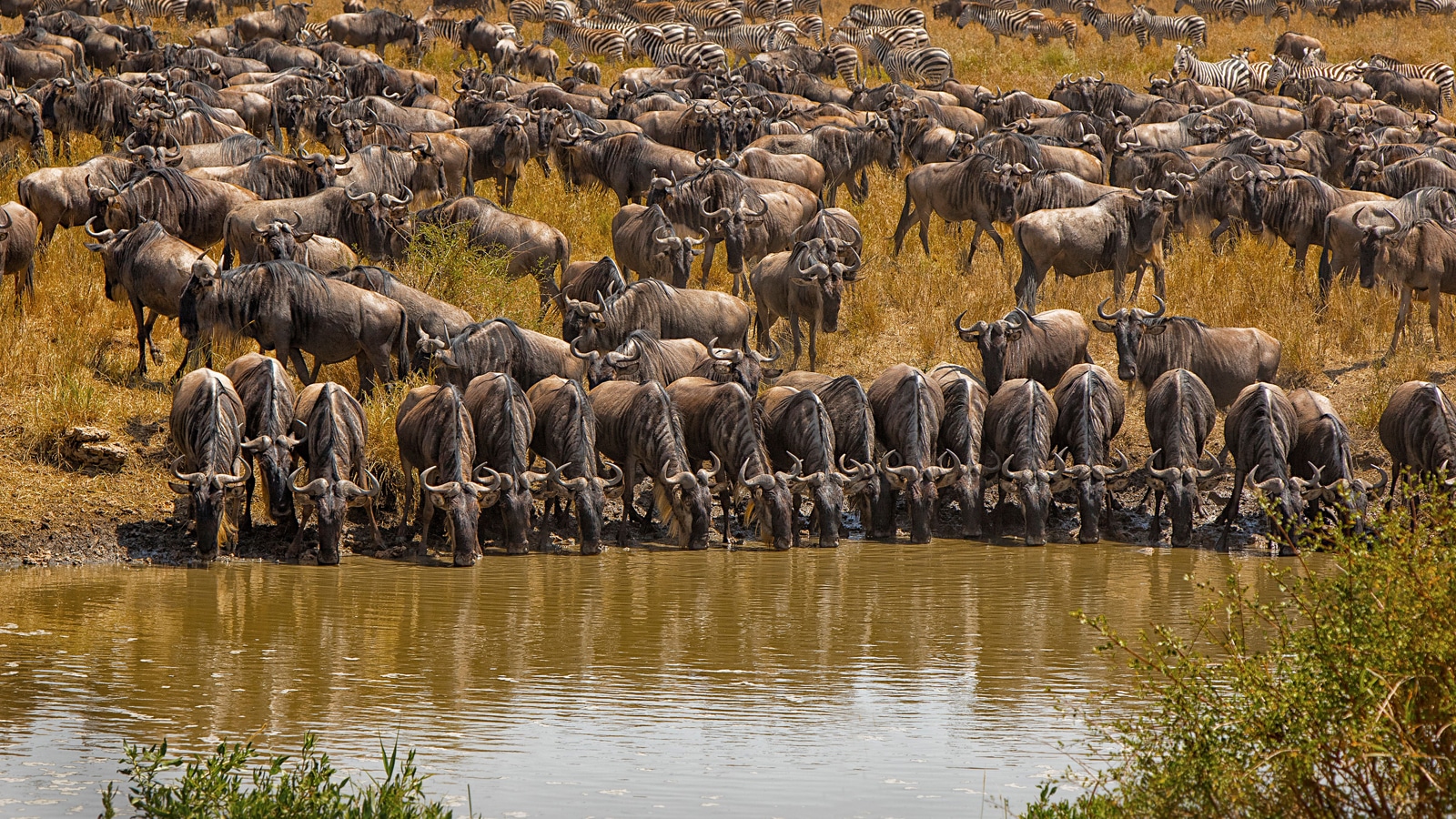
June marks the beginning of the dry season in Tanzania and the start of the northward migration season. Dry conditions prevail and the occasional afternoon or evening thundershower is a welcome relief. Wildlife viewing can be tremendous in June when the migration is on the move and the great herds pour through the Central and Westerns regions of the Serengeti. Additionally, resident animals become concentrated around the remaining sources of water making many species easy to spot.
Early June marks the beginning of the dry season, which lasts from about the end of May to the end of October. By early June, the skies have cleared and all the parks have begun their season of change. The landscape changes dramatically as the parks dry out starting first with the plains and last with the woodlands. The weather will be mostly sunny with only a slight chance of rain.
Temperatures are pleasant with an average high of 81 degrees and an average low of 56 degrees. However, the rim of the Ngorongoro Crater can get quite cold at night and in the early morning. Visitor numbers drop off dramatically at the beginning of March and during April and May the parks are completely empty of tourists. Visitor numbers are still low in the beginning of June but begin to rise to moderately high numbers at the end of June.
July 

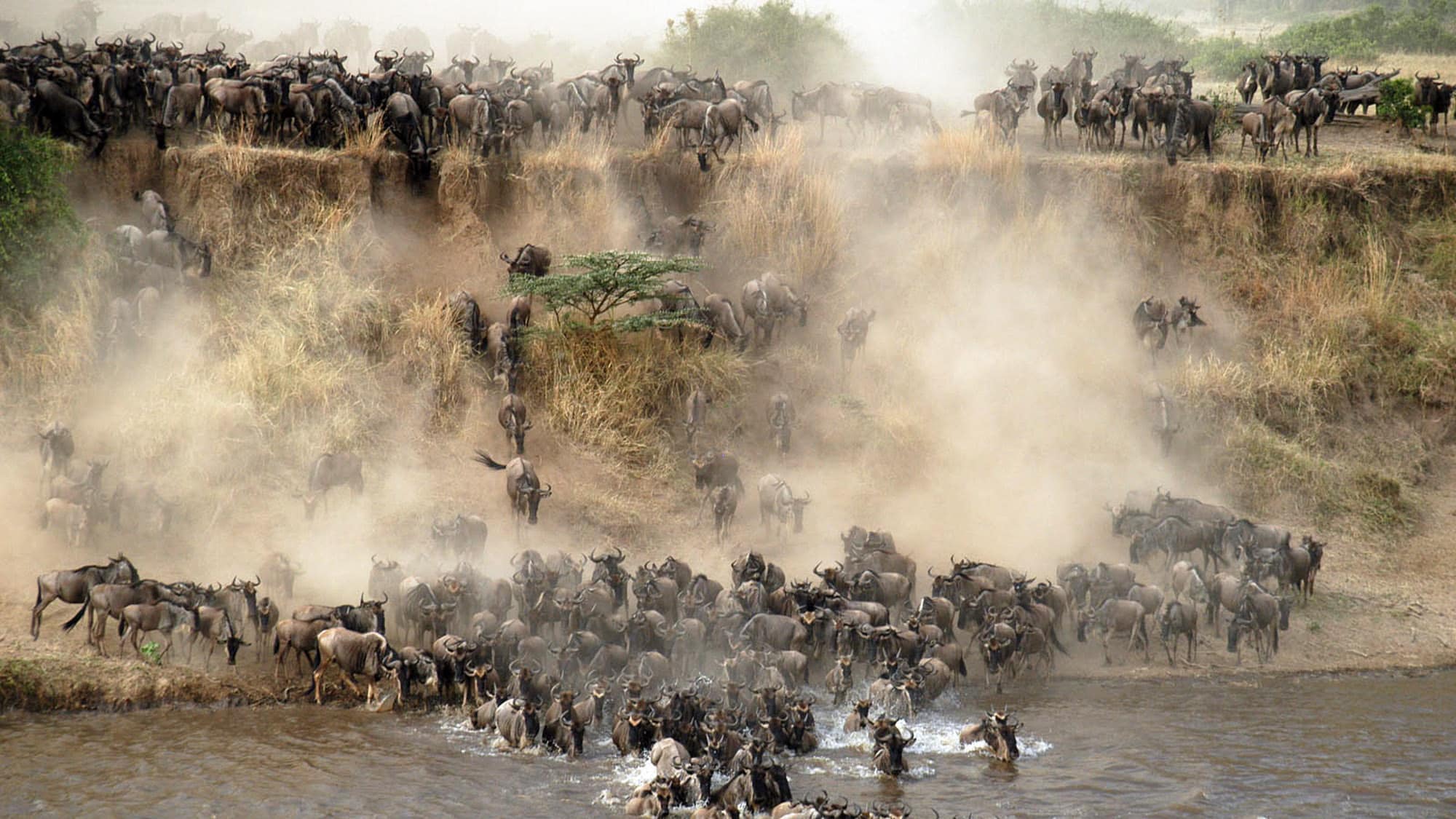
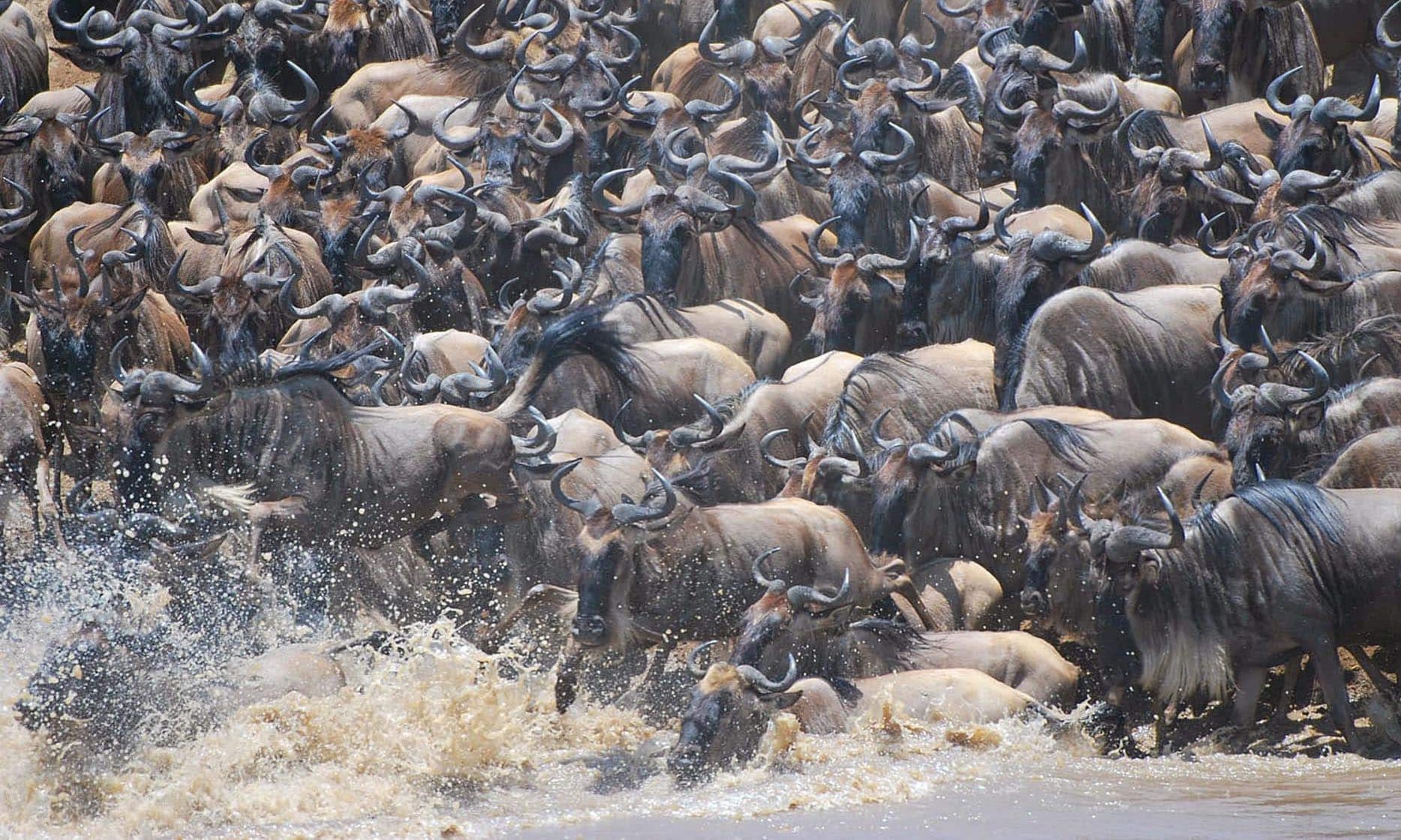
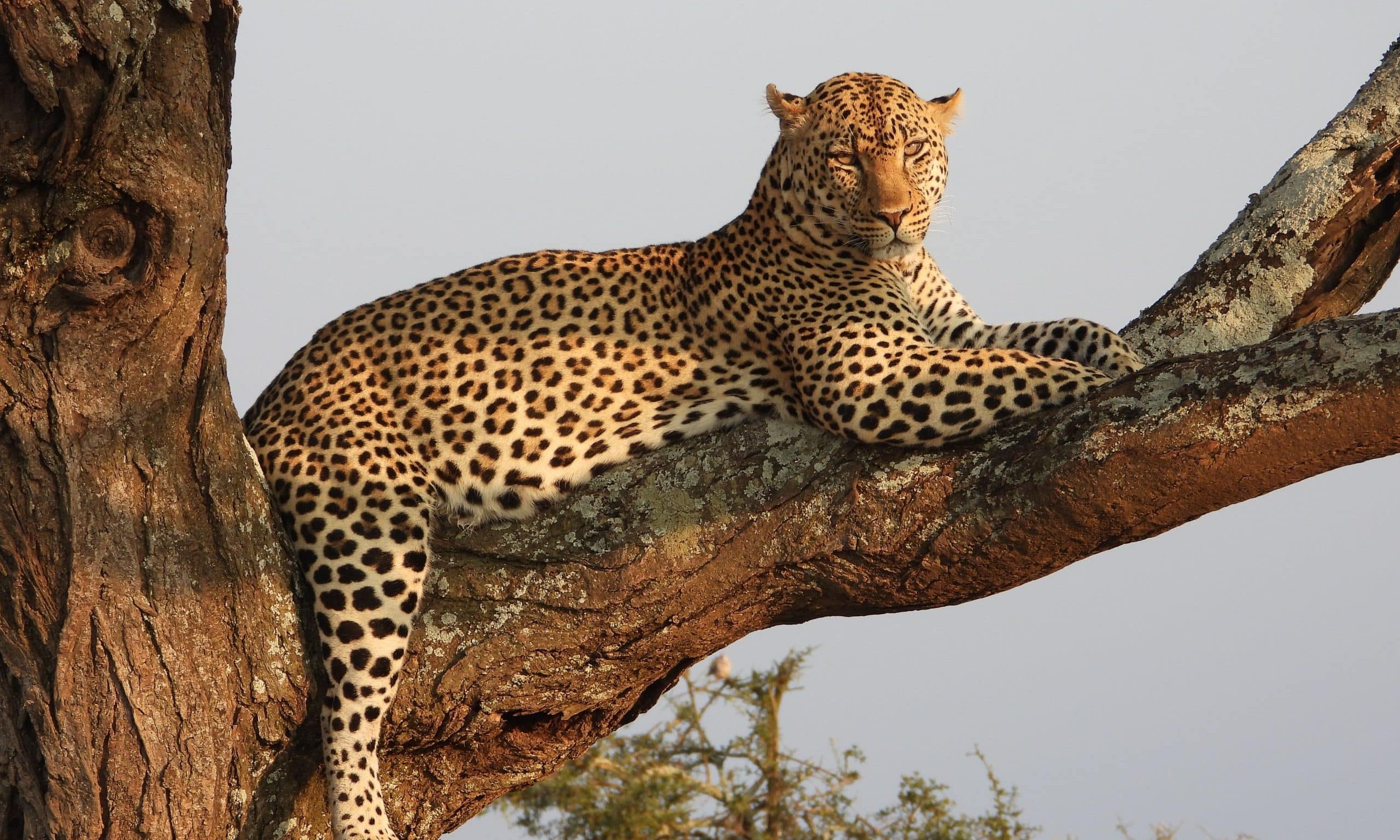
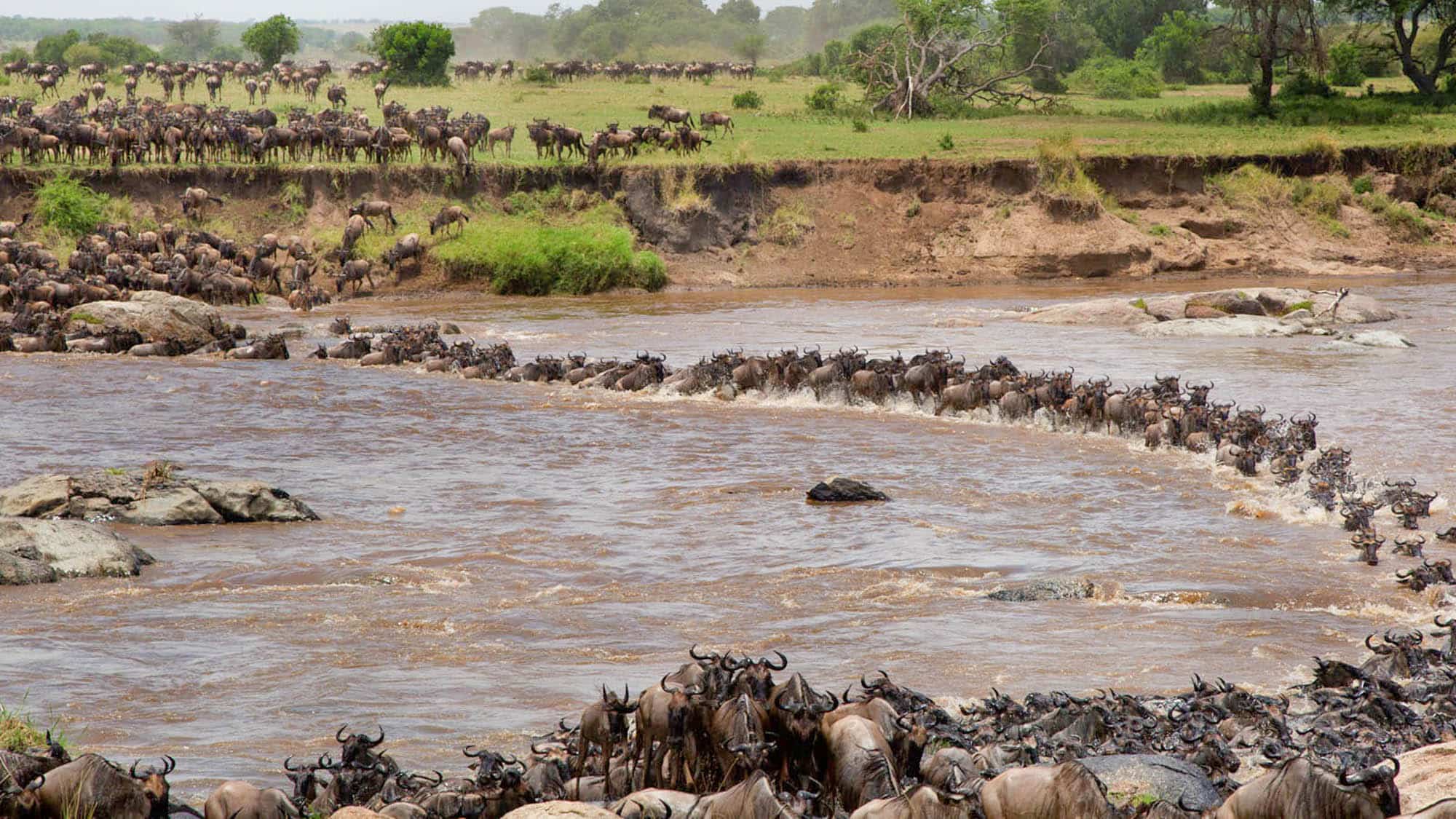
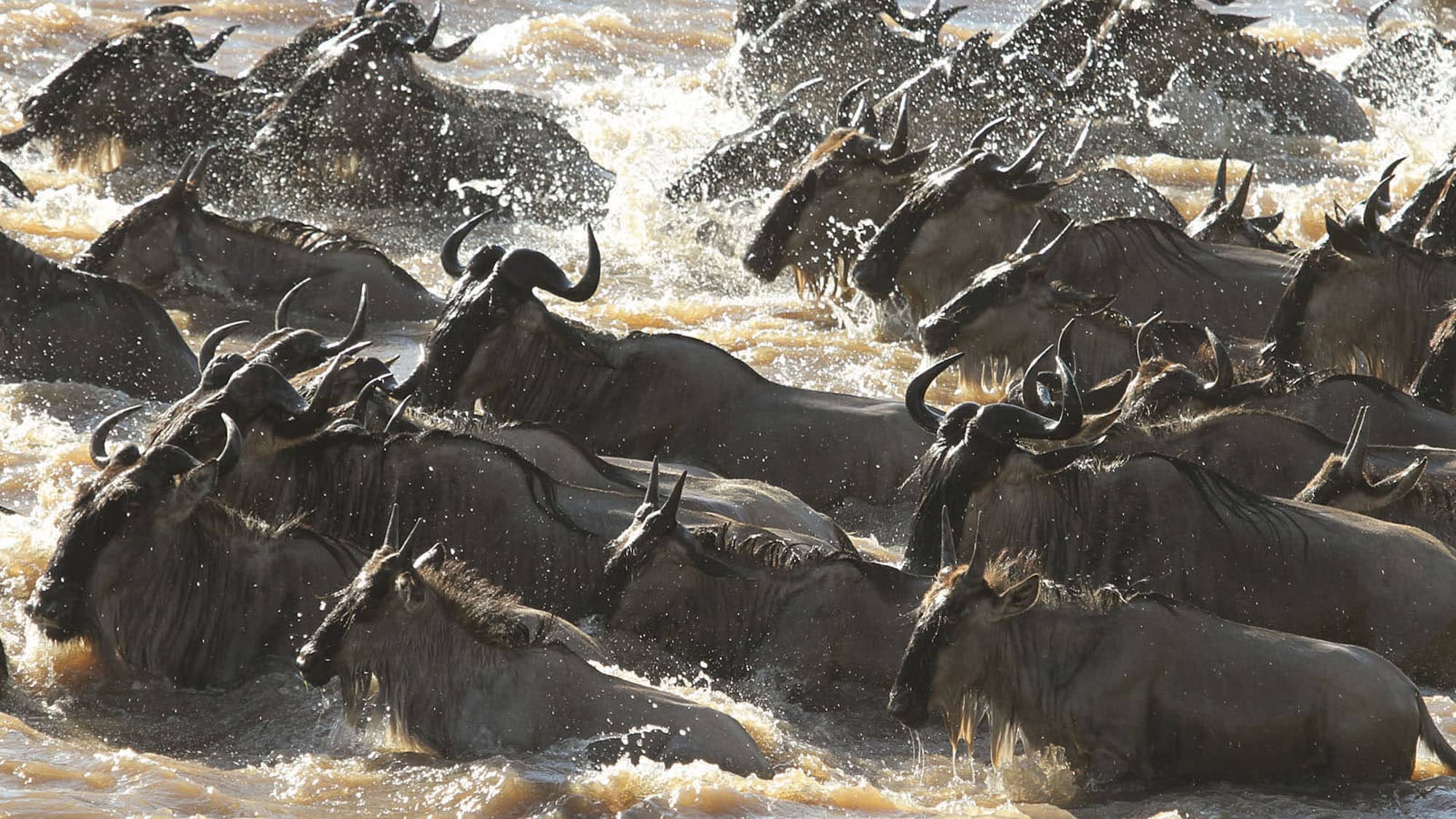
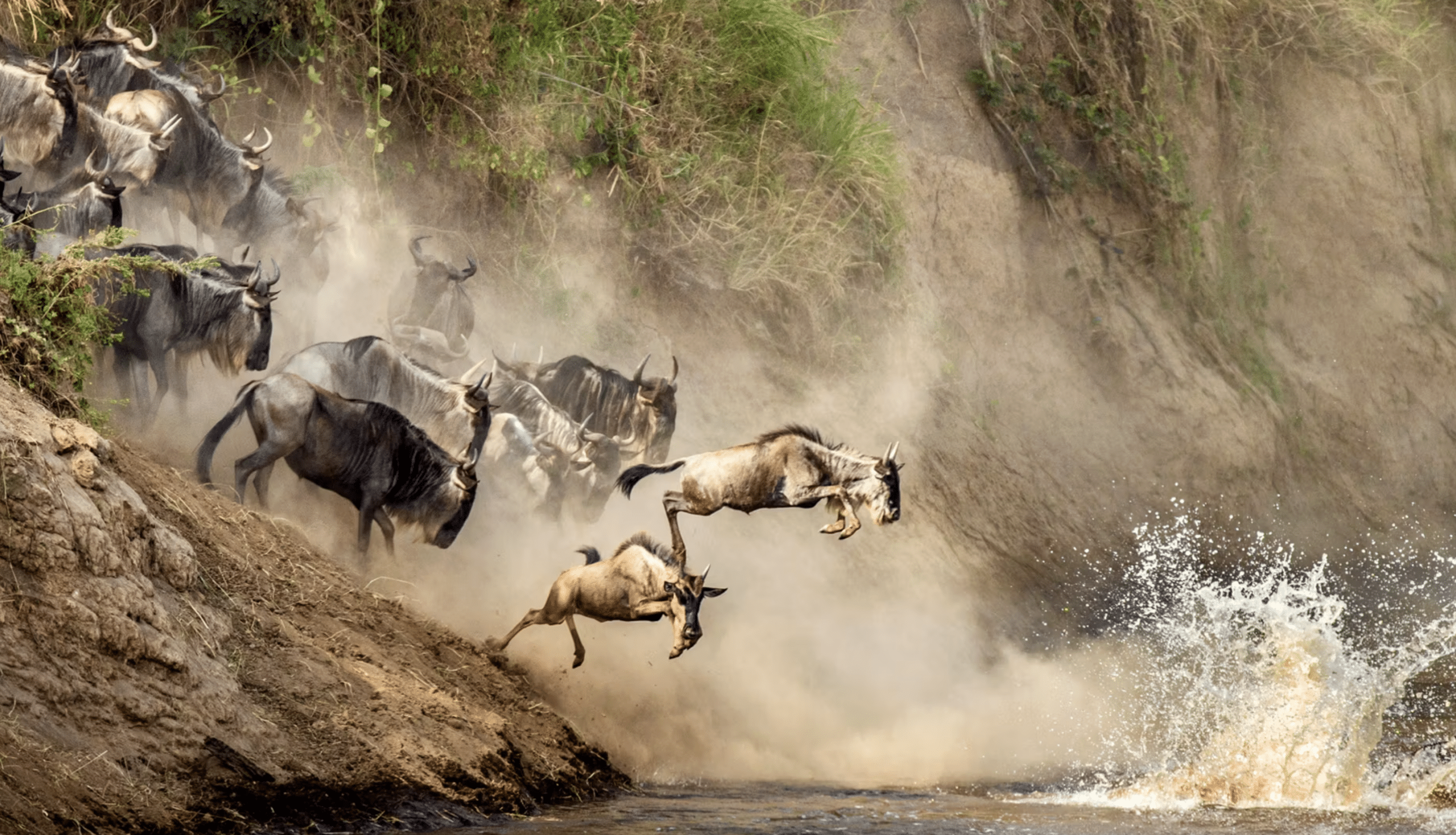
The dry season including July is arguably the best time to plan a safari in Tanzania. With hardly any rainfall during this time of year, the weather and associated driving conditions are fairly predictable, and the grass and foliage are sparse which can make it a bit easier to spot some of the more elusive wildlife such as the big cats. The Great Migration will be surging through the pristine Northern Serengeti, which is an inherently beautiful area. This is also the time of the famous river crossings along the Mara River.
The weather in July can be characterized as dry and sunny. The landscape is now in stark contrast to the green season of only two months prior. The long grass is dying back and as the season progresses more and more animals congregate in the woodlands and around the remaining permanent sources of water.
Temperatures are pleasant with an average high of 83 degrees and an average low of 60 degrees. However, the rim of the Ngorongoro Crater can get quite cold at night and in the early morning. Visitor numbers increase dramatically over July and they peak in August. The good news is that the vast majority of people are on package tours staying at the main lodges and zipping around the main roads in only a few popular areas. With careful planning we can customize your safari so you will encounter more lions than people in even the busiest months of July and August.
August 

The dry season including August is arguably the best time to plan a safari in Tanzania. With hardly any rainfall during this time of year, the weather and associated driving conditions are fairly predictable, and the grass and foliage are sparse which can make it a bit easier to spot some of the more elusive wildlife such as the big cats. The Great Migration will be surging through the pristine Northern Serengeti, which is an inherently beautiful area. This is also the time of the famous river crossings along the Mara River.
The weather in August is dry and sunny. The landscape is parched as the dry season has completely taken hold. The long grasses have died back, which makes game viewing easier and many of the animals congregate in the woodlands and around the remaining sources of water.
Temperatures are pleasant with an average high of 81 degrees and an average low of 55 degrees. However, the rim of the Ngorongoro Crater can get quite cold at night and in the early morning. Visitor numbers increase dramatically over July and they peak in August. August is the busiest month of the year. The good news is that the vast majority of people are on package tours staying at the main lodges and zipping around the main roads in only a few popular areas. With careful planning we can customize your safari so you will encounter more lions than people in even the busiest months of July and August.
September 

September is situated towards the end of the dry season and offers some of the best wildlife viewing opportunities out of the entire year. Resident animals become concentrated around the remaining sources of water making many species easy to spot, especially the big cats. The Great Migration will be surging through the pristine Northern Serengeti, which is an inherently beautiful area. This is also the time of the famous river crossings along the Mara River. September is highly recommended!
Wildlife Highlights – SepThe weather in September is dry and sunny. The landscape is parched as the dry season has completely taken hold. The long grasses have died back, which makes game viewing easier and many of the animals congregate in the woodlands and around the remaining sources of water.
Temperatures are pleasant with an average high of 81 degrees and an average low of 55 degrees. However, the rim of the Ngorongoro Crater can get quite cold at night and in the early morning. Visitor numbers increase dramatically over July and they peak in August. Visitor numbers are at their highest in August but drop off dramatically in mid to late September. The good news is that the vast majority of people are on package tours staying at the main lodges and zipping around the main roads in only a few popular areas. With careful planning we can customize your safari so you will encounter more lions than people in even the busiest months.
October 

October is situated towards the end of the dry season and offers some of the best wildlife viewing opportunities out of the entire year. Resident animals become concentrated around the remaining sources of water making many species easy to spot, especially the big cats. The Great Migration will be surging through the pristine Northern Serengeti, which is an inherently beautiful area. This is also the time of the famous river crossings along the Mara River. October is highly recommended!
The weather in October is generally dry and sunny. However, occasional light showers may occur in late October. The landscape is parched as the dry season has completely taken hold. The long grasses have died back, which makes game viewing easier and many of the animals congregate in the woodlands and around the remaining sources of water.
Temperatures are pleasant with an average high of 83 degrees and an average low of 60 degrees. However, the rim of the Ngorongoro Crater can get quite cold at night and in the early morning. Visitor numbers are very high during the summer months of July, August and early September. As the summer holiday period comes to in end, visitor numbers drop off dramatically. By October, visitor numbers are relatively low, which combined with good game viewing opportunities makes this month an excellent choice for a safari.
November 

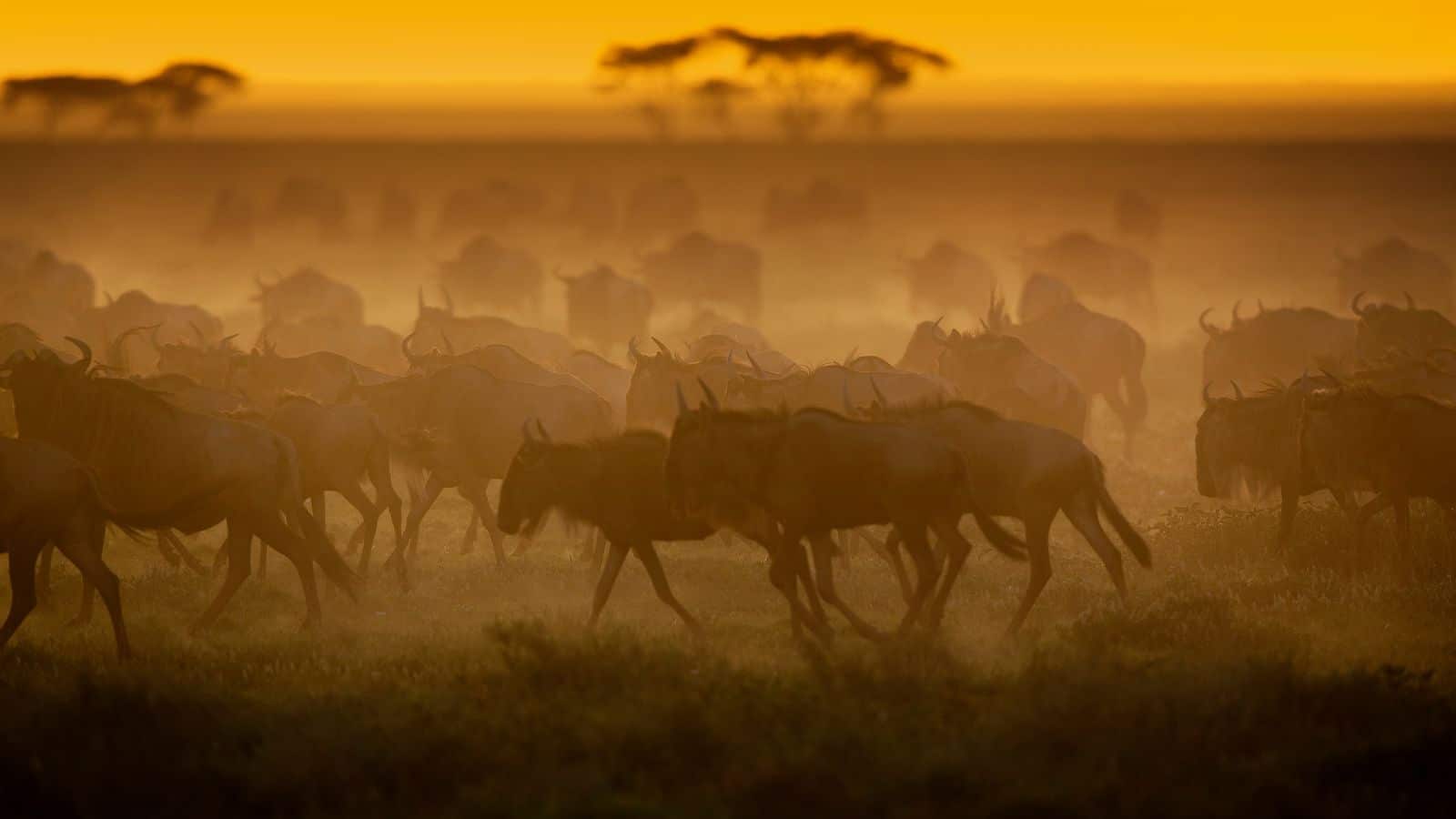
November marks the end of the dry season and the start of the southward migration season, when the great herds stream through the woodlands and flood onto the plains as stunning thunderclouds form in anticipation of the approaching green season. It is an amazing spectacle to see thousands of wildebeest, zebra and gazelle thundering southwards with lion, cheetah and spotted hyena in close pursuit. The weather is ideal in November and the occasional thundershower rarely impedes game viewing.
Occasional showers can be expected in November. In late November, towering thunderclouds form and herald the onset of the green season. November is a period of dramatic change as the rains transform the parched landscape.
The rains from early November to late March are usually sporadic and typically do not last for more then a few hours. There is a chance of heavier rain during this period but during most years the heavier rains fall in April. These expected sporadic showers do not usually pose much of an inconvenience while game driving. If it does rain, it will usually clear in 1-2 hours and more then likely the rain will be localized. It is rare that rain clouds will settle over a large area for an extended period of time.
Rain falls in different amounts over various locations throughout Northern Tanzania. The Ngorongoro Crater, Tarangire and Lake Manyara receive higher rainfall then many parts of the Serengeti. There is a steep rainfall gradient in the Serengeti from the dry southeast to the wet northwest. The winds that bring rain blow from the east. The Ngorongoro Highlands block much of the rain from reaching the eastern and southern plains of the Serengeti. However, the western and northern parts of the Serengeti receive a much greater amount (2-3 times more) of participation as compared to the southern and eastern Serengeti. The wetter western and northern Serengeti areas are affected by Lake Victoria.
Temperatures are pleasant with an average high of 83 degrees and an average low of 60 degrees. However, the rim of the Ngorongoro Crater can get quite cold at night and in the early morning. Visitor numbers are relatively low during November, which combined with good game viewing opportunities makes this month an excellent choice for a safari.
December 

December marks the beginning of the green season in Tanzania. The Serengeti plains are a beautiful shade of green, dust levels are minimal and most wildlife species are easy to spot. The weather is ideal for wildlife viewing and the famous wildebeest migration is concentrated in massive numbers on the Southern and Eastern Serengeti plains, which in turn attracts large numbers of predators. December is the time of plenty and many animals time the birth of their families to coincide with the green season.
Occasional showers can be expected in December. The rains from early November to late March are usually sporadic and typically do not last for more then a few hours. There is a chance of heavier rain during this period but during most years the heavier rains fall in April. These expected sporadic showers do not usually pose much of an inconvenience while game driving. If it does rain, it will usually clear in 1-2 hours and more then likely the rain will be localized. It is rare that rain clouds will settle over a large area for an extended period of time.
Rain falls in different amounts over various locations throughout Northern Tanzania. The Ngorongoro Crater, Tarangire and Lake Manyara receive higher rainfall then many parts of the Serengeti. There is a steep rainfall gradient in the Serengeti from the dry southeast to the wet northwest. The winds that bring rain blow from the east. The Ngorongoro Highlands block much of the rain from reaching the eastern and southern plains of the Serengeti. However, the western and northern parts of the Serengeti receive a much greater amount (2-3 times more) of participation as compared to the southern and eastern Serengeti. The wetter western and northern Serengeti areas are affected by Lake Victoria. This means that in the southern Serengeti where you should ideally focus your December safari, the rains should not be an issue and it will rain substantially less then the other areas of the Serengeti and Tanzania.
Temperatures are pleasant with an average high of 83 degrees and an average low of 60 degrees. However, the rim of the Ngorongoro Crater can get quite cold at night and in the early morning. Visitor numbers will be low in early December and very high in late December with the New Year’s crowd. The good news is that the vast majority of people are on package tours staying at the main lodges and zipping around the main roads in only a few popular areas. With careful planning we can customize your safari so you will encounter more lions than people in even late December.