
Ground Water Forest
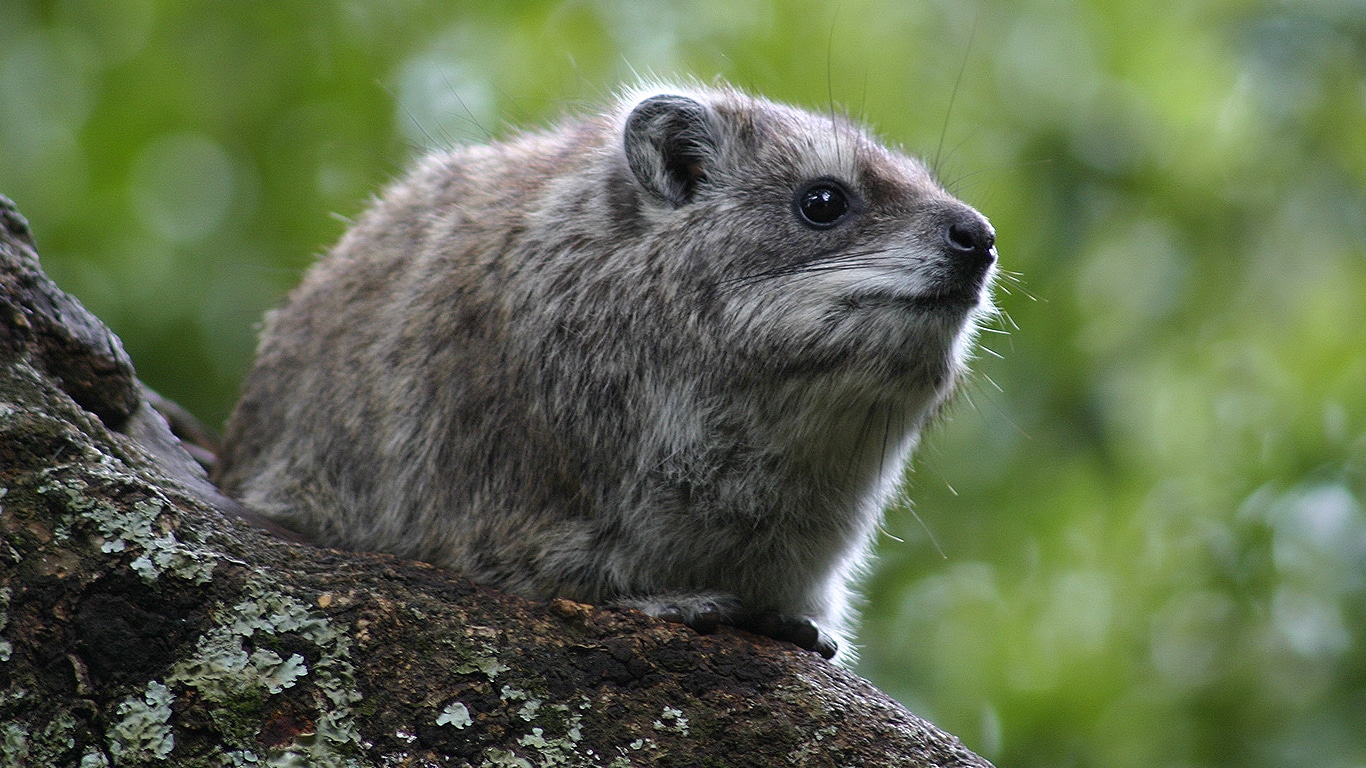
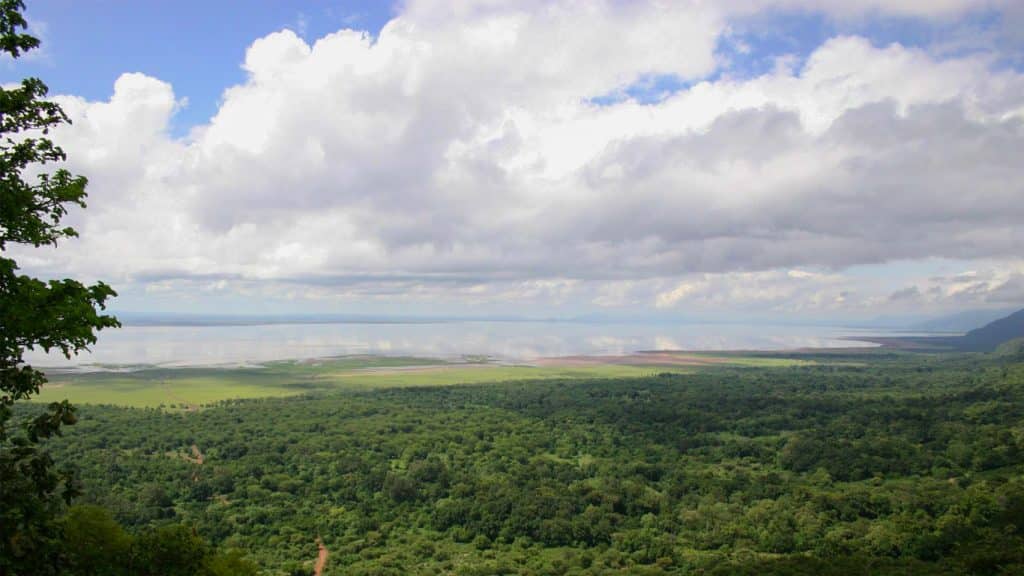
A lush, jungle-like oasis at the base of the Great Rift Escarpment, the Ground Water Forest is fueled by subterranean streams from the Ngorongoro Highlands. It is home to three primate species and boasts the highest concentration of baboons in Africa.
Details
Upon making the descent from the ridge of the Great Rift escarpment, the first of the unique habitats you encounter is the jungle-like Ground Water Forest. This isn’t a traditional rainforest; it is a biological anomaly nurtured by a permanent supply of water from a high water table. Sunlight filters through a towering canopy of mahogany and wild date palms, dancing over a verdant carpet of wild hibiscus and ginger. Freshwater springs spill directly from the volcanic rock of the rift wall, while gnarled vines and mossy cover drape the branches, giving the forest an ancient, mysterious allure.
The Subterranean Lifeline
The survival of this “swamp forest” is a geological fluke involving a “water relay” from the highlands. In their book Among the Elephants, Iain and Oria Douglas-Hamilton detail this fascinating hydrological cycle:
“The luxuriant forest could not be classified as a rain forest, since Manyara was a relatively arid area with an average rainfall of less than twenty inches. In fact, under such a climatic regime, it was only possible for the forest to grow because it was well-watered by innumerable streams. These issued from springs all along the foot of this part of the Rift wall, but the water originated some thirty miles away from the Ngorongoro Highlands.
Rain falling there was prevented from running away too quickly by a thick cloak of mountain forest. It trickled down to the roots and through layers of porous volcanic soil and rock, until it hit an impermeable layer of rock which finally surfaced at the foot of the escarpment within Manyara. Therefore, the Ground Water Forest, as it was named, with all its natural wealth, was dependent on water falling well outside it. If the Ngorongoro Forest were ever to be cut down the Manyara Ground Water Forest might well wither into extinction.”
As you drive through the park, the road serves as a dramatic ecological boundary. To your left, the towering forest thrives on the high water table; to your right, the steeply rising rift wall is blanketed in drought-resistant vegetation, including the hulky, primitive forms of Baobab trees stretching their gnarled branches to the sky.
Primate Paradise
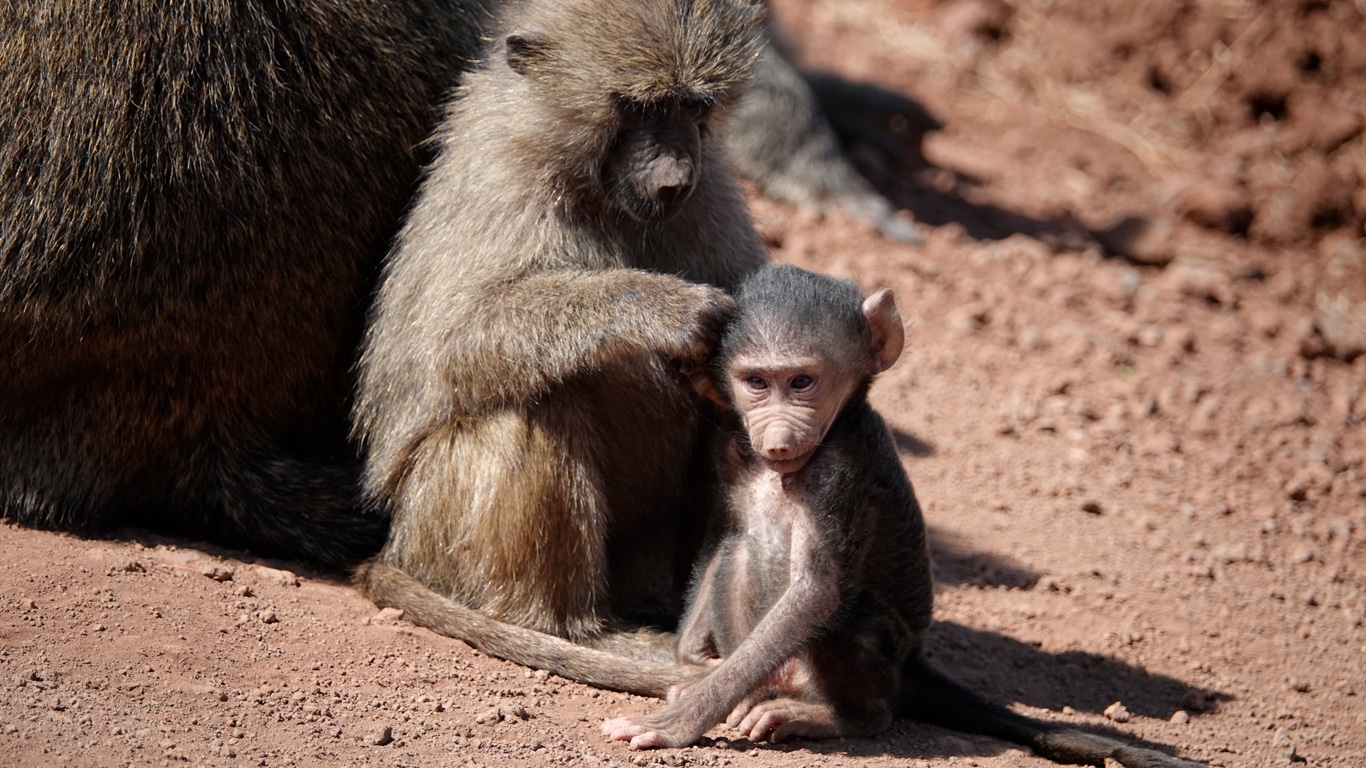
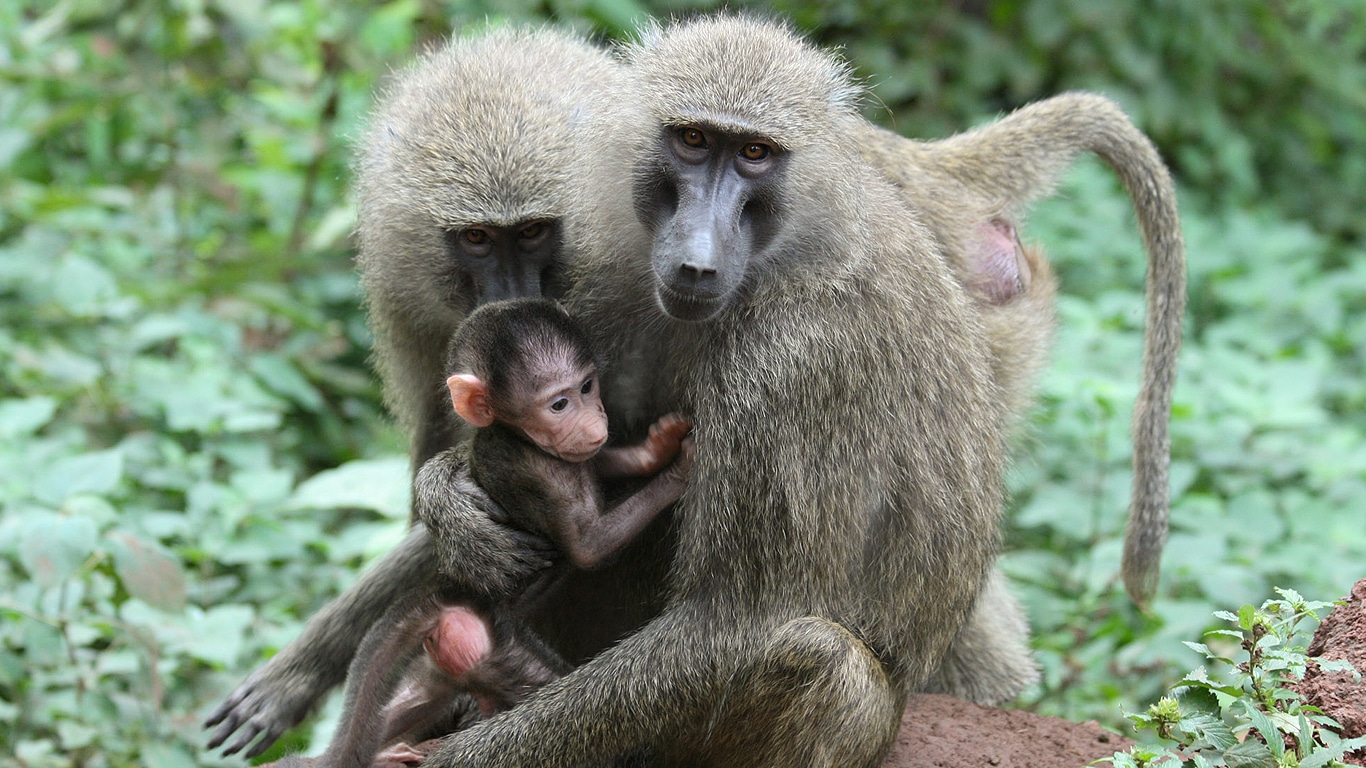
This moisture-rich habitat supports an incredible diversity of life, most notably the highest concentration of baboons in Africa.
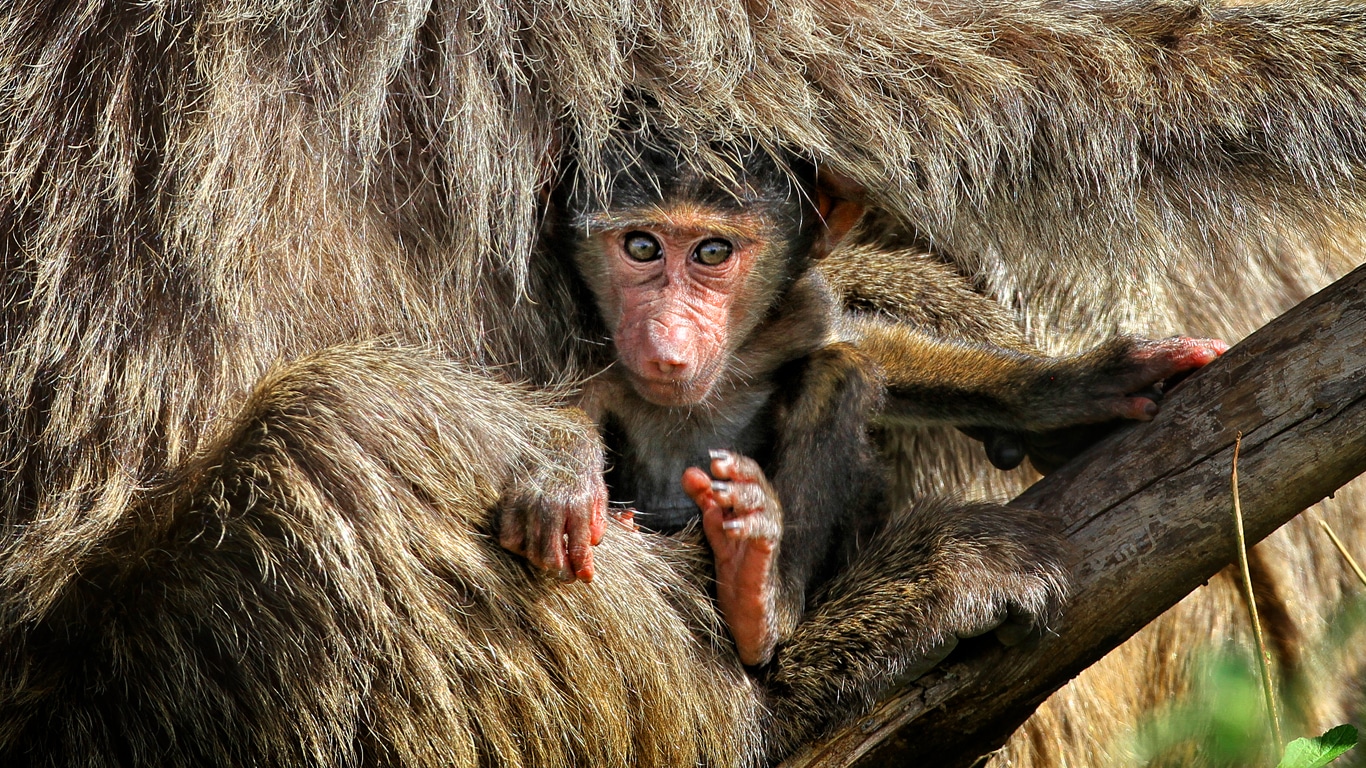
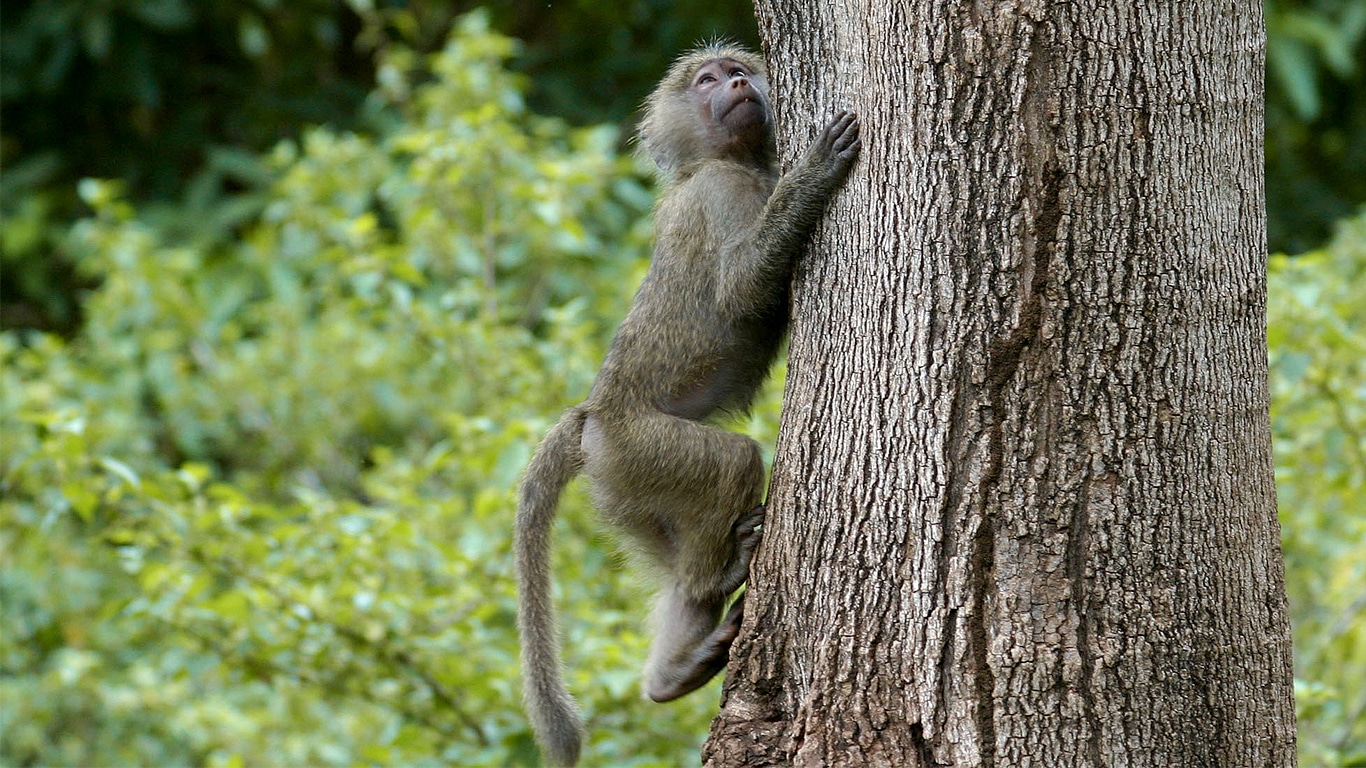
- The Baboon Capital: Massive troops of baboons are the forest’s most vocal residents. You will see them practicing acrobatics in the trees or trekking down the road with inquisitive babies riding “jockey-style” on their mothers’ backs.
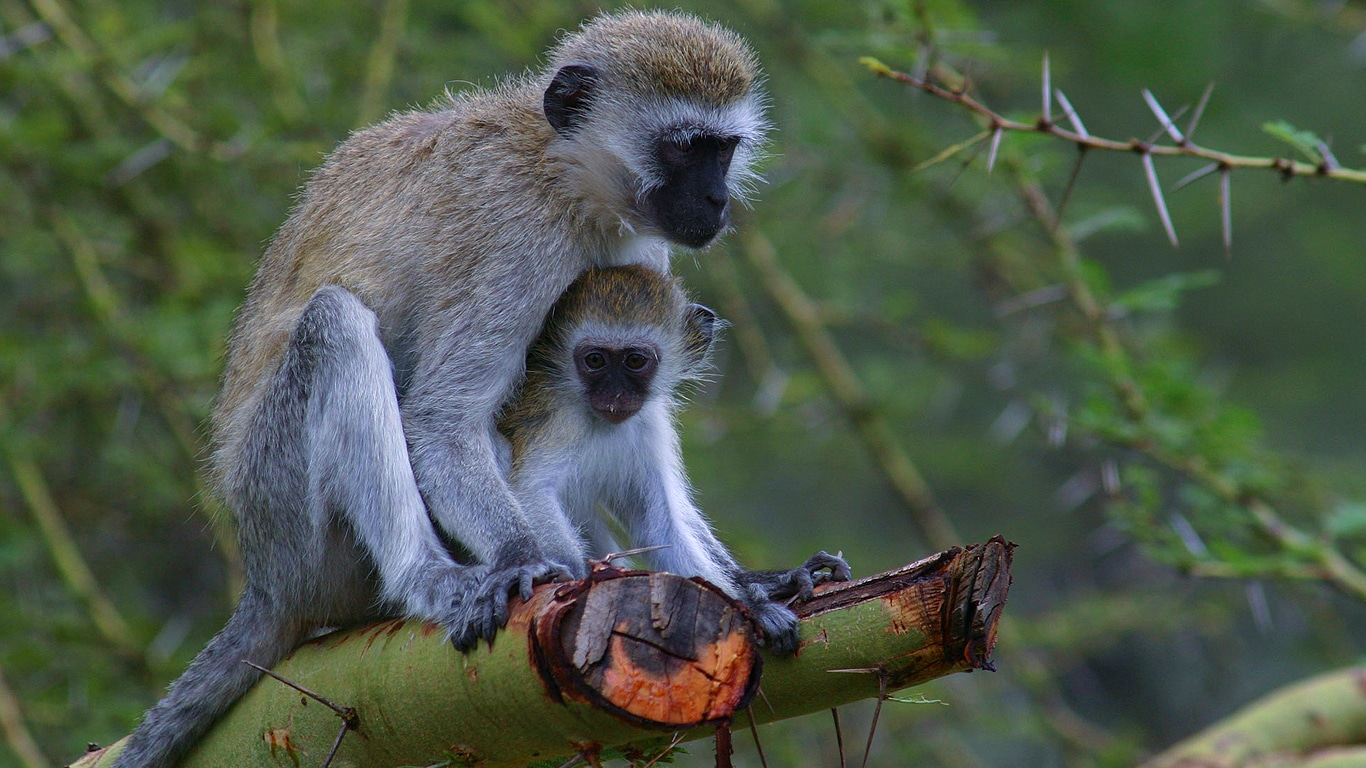
- The Rare Blue Monkey: The elevated walkway around the visitor’s center at the park gate is the premier spot to observe the stunning Blue Monkey. These shy primates, along with playful Vervet monkeys, thrive in the shady shadows of the mahogany branches.
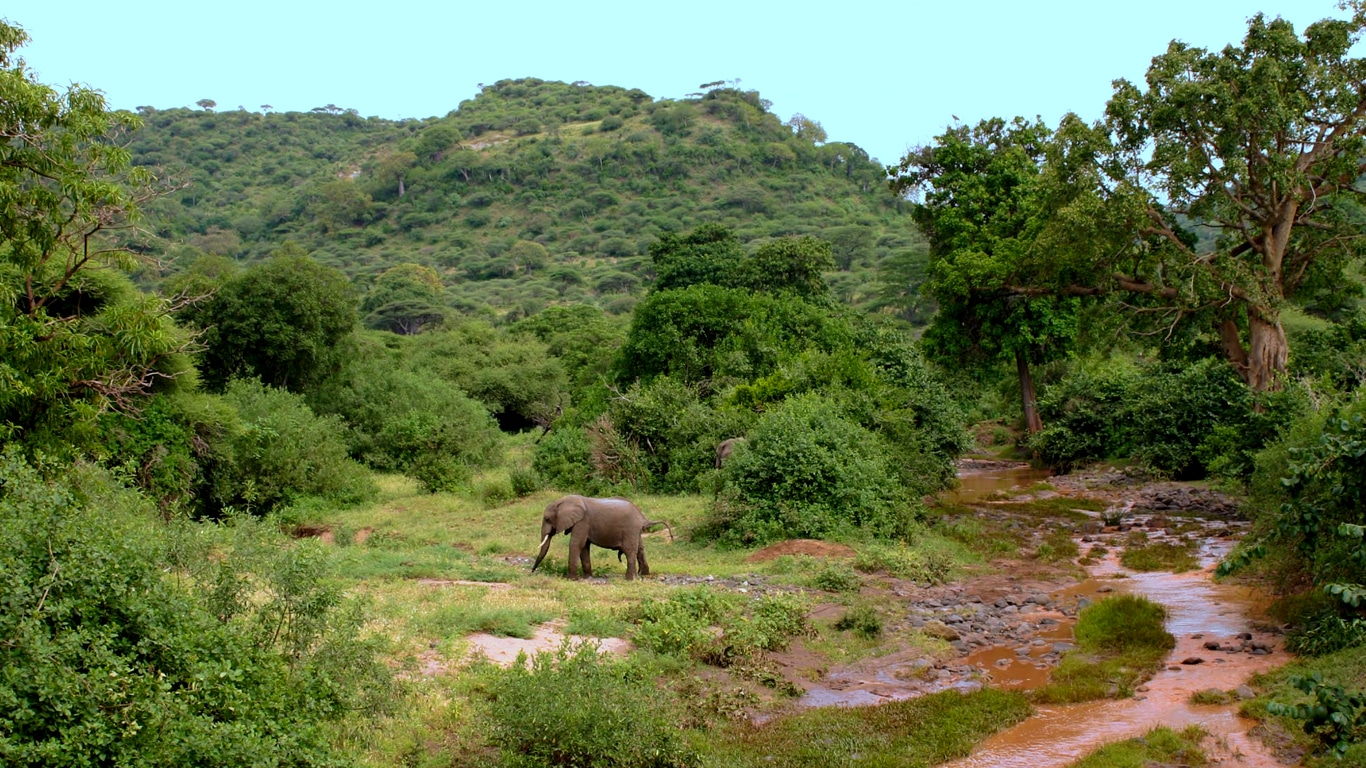
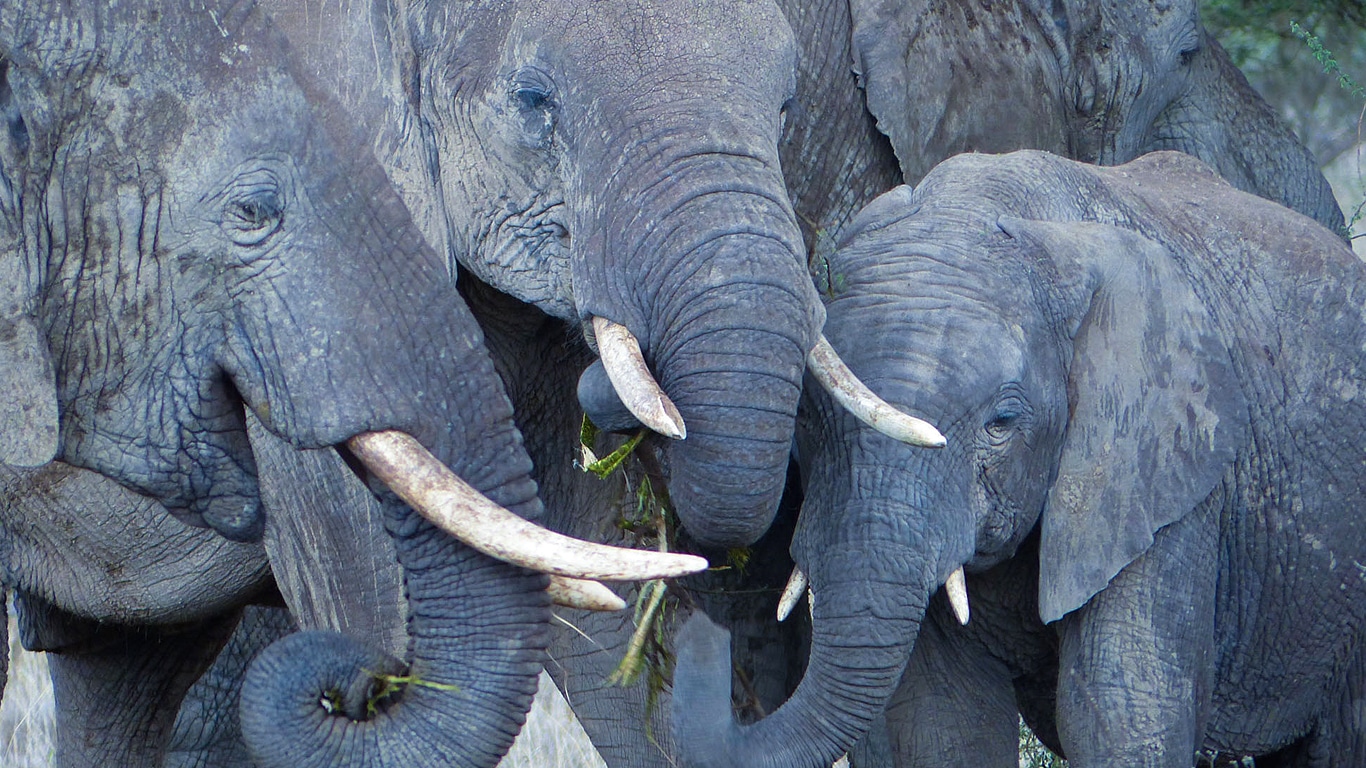
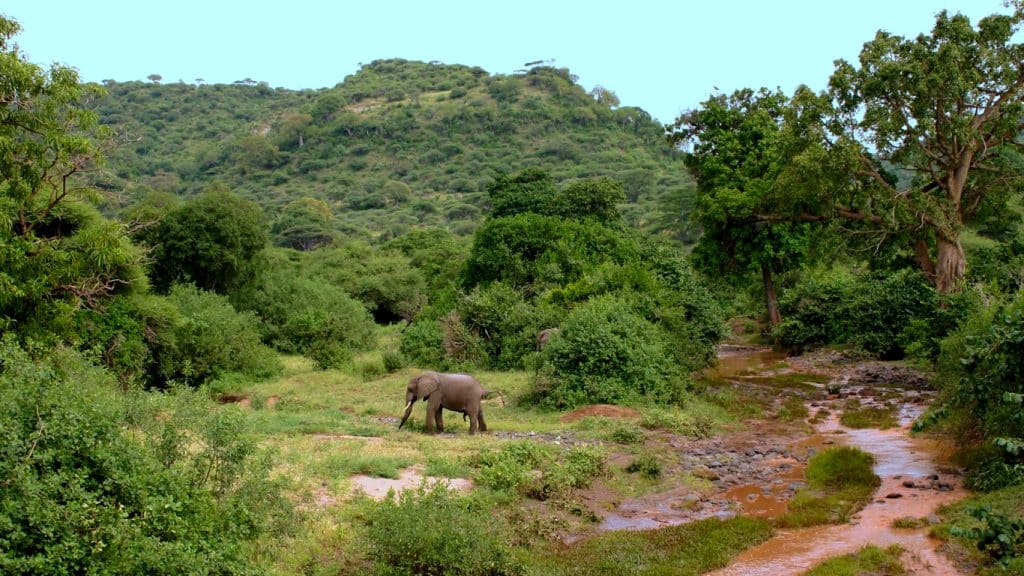
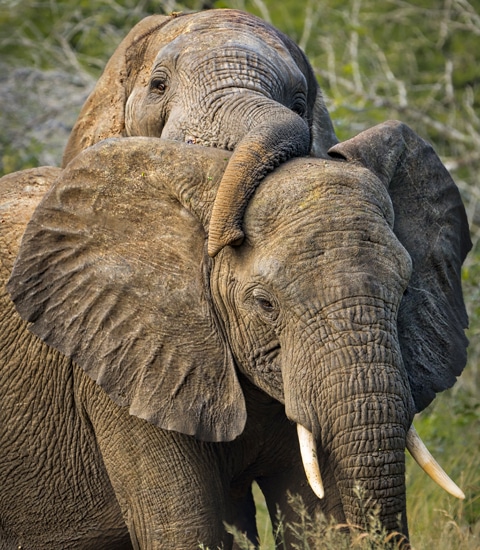
- Forest Giants: Elephants are frequent visitors, drawn by the permanent springs. It is a common and thrilling sight to see them munching through the dense wild ginger or drinking from pools formed by the seeping groundwater.
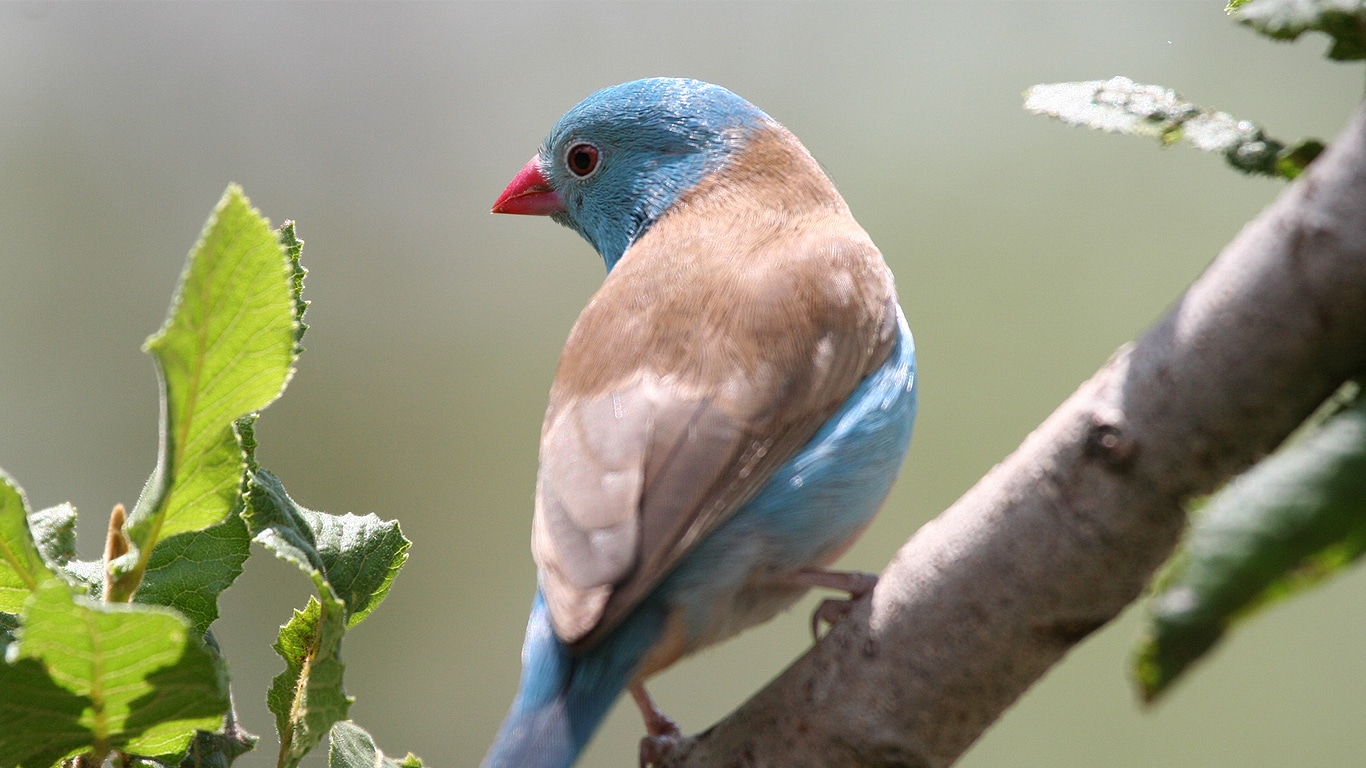
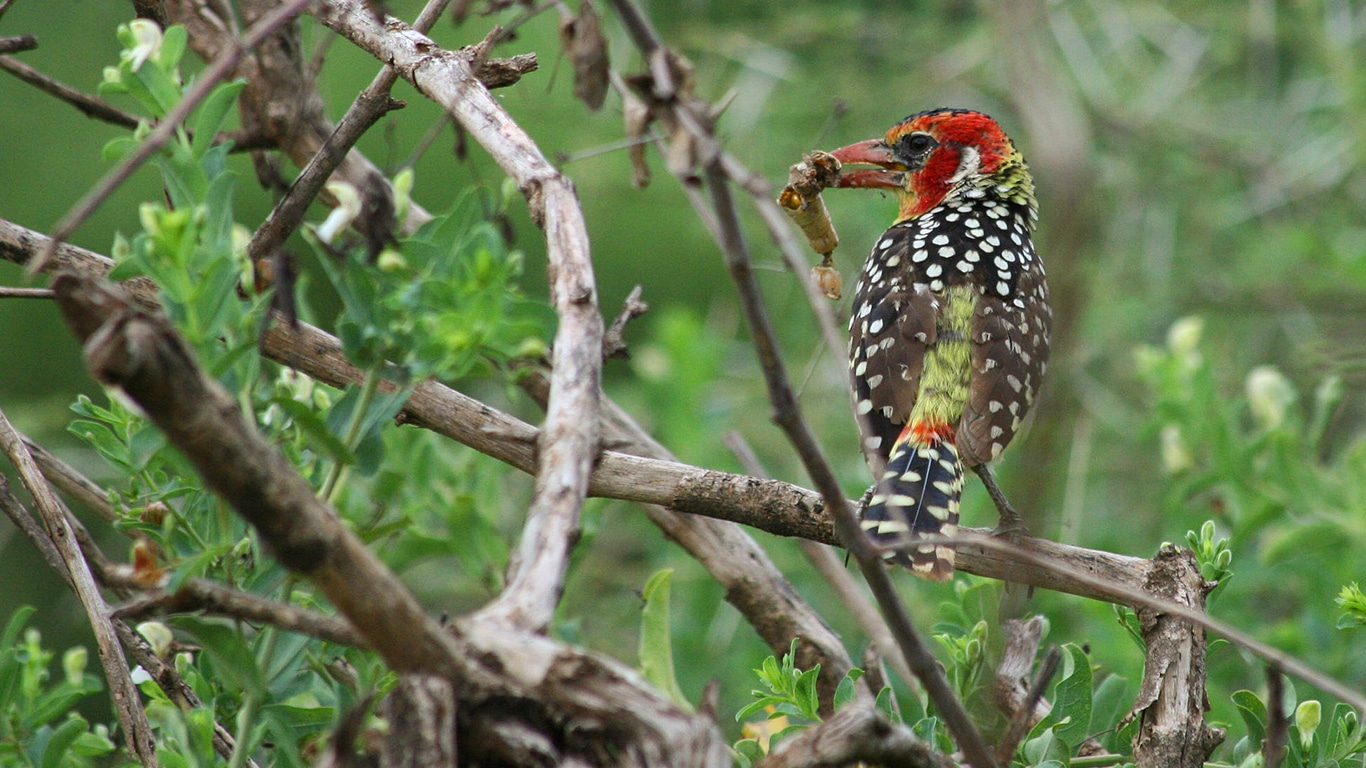
- Avian Brilliance: Colorful birds flit through the canopy, including the vibrant Lilac-breasted Roller and Silvery-cheeked Hornbills. The contrast of their plumage against the deep emerald forest makes for spectacular photography.
Seasonal Highlights
| Month | Season | Weather | Wildlife Sightings | Rec. |
|---|---|---|---|---|
| Jan | Green Season | 60 - 85 F Mostly sunny with few showers |
Elephant, Baboons, Giraffe, Impala, Birding | Yes |
| Feb | Green Season | 60 - 85 F Mostly sunny with few showers |
Elephant, Baboons, Giraffe, Impala, Birding | Yes |
| Mar | Green Season | 60 - 83 F Mostly sunny with few showers |
Elephant, Baboons, Giraffe, Impala, Birding | Yes |
| Apr | Green Season | 60 - 83 F Mostly sunny with few showers |
Elephant, Baboons, Giraffe, Impala, Birding | Yes |
| May | Northward Migration | 56 - 81 F Mostly sunny |
Elephant, Baboons, Giraffe, Impala, Birding | Yes |
| Jun | Beginning of Dry Season | 56 - 81 F Mostly sunny |
Elephant, Baboons, Giraffe, Impala, Birding | Yes |
| Jul | Dry Season | 60 - 83 F Mostly sunny |
Elephant, Baboons, Giraffe, Impala, Birding | Yes |
| Aug | Dry Season | 55 - 81 F Mostly sunny |
Elephant, Baboons, Giraffe, Impala, Birding | Yes |
| Sep | Dry Season | 55 - 81 F Mostly sunny |
Elephant, Baboons, Giraffe, Impala, Birding | Yes |
| Oct | Dry Season | 60 - 83 F Mostly sunny |
Elephant, Baboons, Giraffe, Impala, Birding | Yes |
| Nov | Southward Migration | 60 - 83 F Mostly sunny with few showers |
Elephant, Baboons, Giraffe, Impala, Birding | Yes |
| Dec | Beginning of Green Season | 60 - 83 F Mostly sunny with few showers |
Elephant, Baboons, Giraffe, Impala, Birding | Yes |
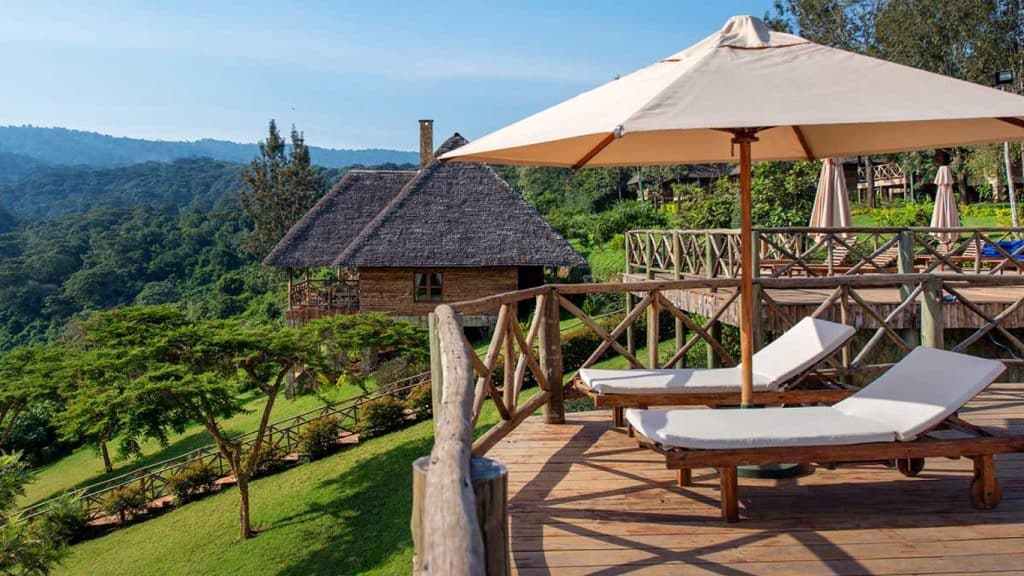
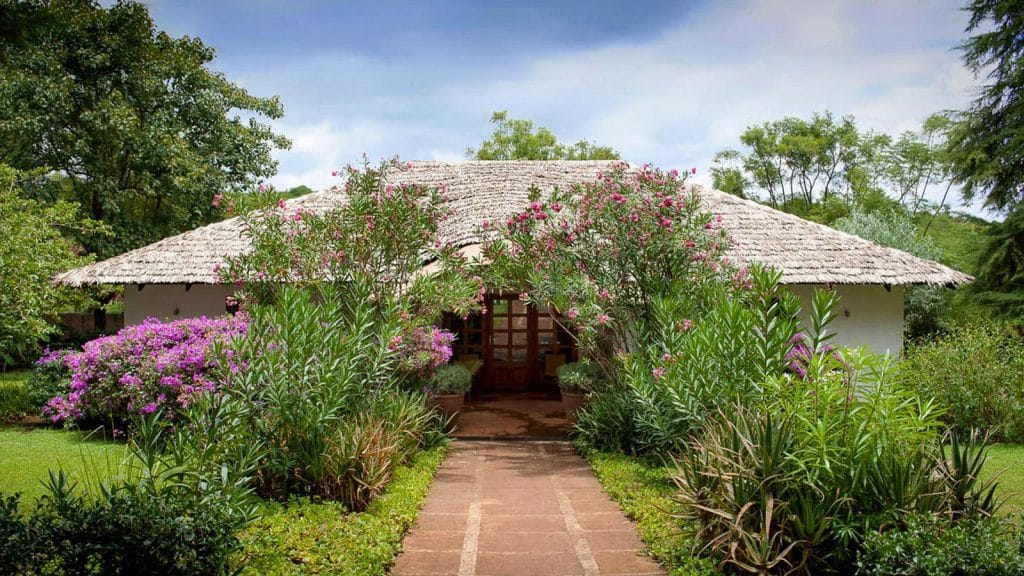
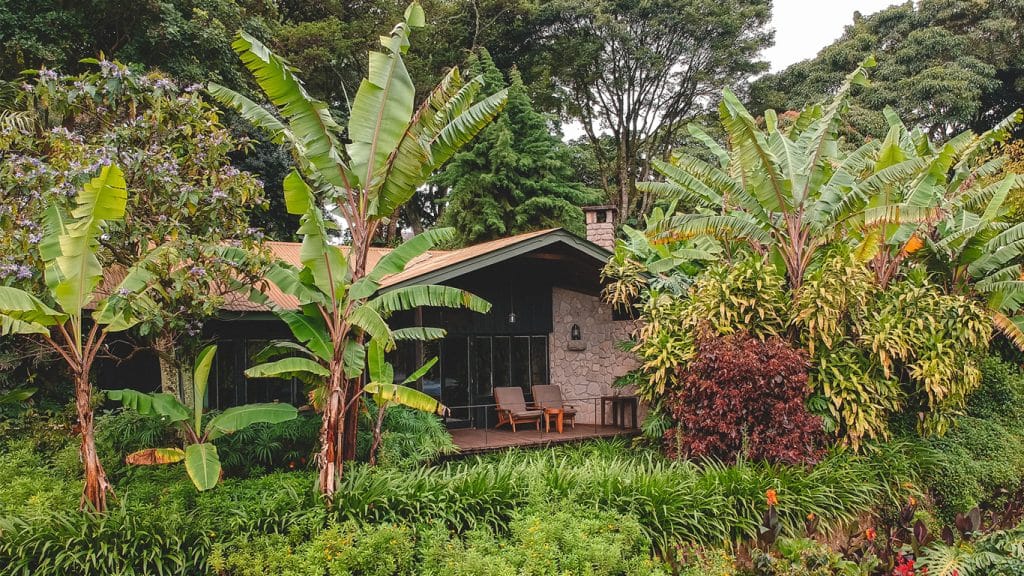
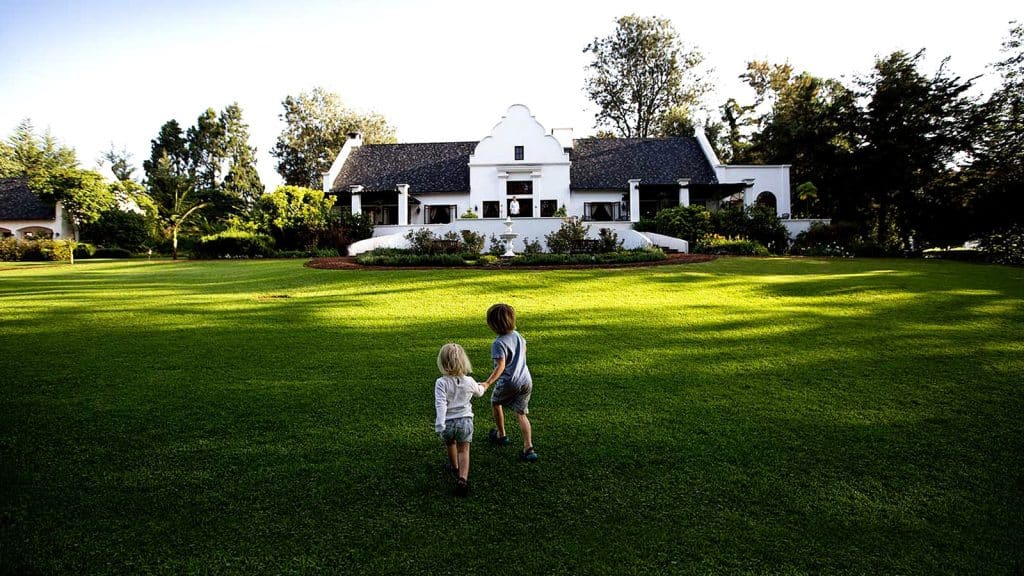
Nearby Lodges
Nearby Attractions


What are you waiting for?
Create Your Own Itinerary
Receive instant day-by-day trip details designed just for you including rates, seasonal highlights, guest testimonials, photos & more!
Get In Touch
Our Safari Specialists Are Ready to Help Kickstart Your Adventure
Toll-Free
US Office
31244 Palos Verdes Dr. West, Suite 239 Rancho Palos Verdes, CA 90275
Hours: Daily 8AM - 8PM PST
Drop Us A Line
Leave your contact info below